
New report highlights changes that are needed to support one of the state’s largest salmon populations
Contact:
Dr. Natalie Stauffer-Olsen, California Science Director, Trout Unlimited, 707-696-9839, natalie.stauffer-olsen@tu.org Dylan Silver, California Communications Manager, Trout Unlimited, 530-318-8851 dylan.silver@tu.org
Trout Unlimited, with leadership from Applied River Sciences and support from Riverbend Sciences and River Science and Restoration, recently released new flow recommendations for the Lower Shasta River, a Klamath River tributary and critical Northern California salmon and steelhead spawning habitat. The Shasta River Canyon Instream Flow Assessment evaluates how different flow levels affect water temperature, fish growth and habitat quality in the lower section of the Shasta River. The report recommends seasonal minimum instream flows based on wet, normal and dry water years to support the recovery of native salmonid populations.
The report’s analysis and findings for the Shasta River represents the most robust science that’s been undertaken in this area in more than a decade, and it is the first flow recommendation published for this section of the Shasta since the Klamath dams were removed. The report will help inform the State Water Board’s flow setting process and the community at large about flows to support fish populations and the river’s ecosystem.
“This report provides a set of flow standards that are based on the best available science,” said Dr. Natalie Stauffer-Olsen. “We’re proud to be able to share this solid foundation of science with decisionmakers who will guide the ongoing restoration that is occurring in the Shasta River.”
The Shasta River once supported some of the most productive salmon runs in the Klamath Basin. Today, native salmon populations have declined dramatically, with coho salmon nearing extinction in the watershed. The study found that maintaining adequate summer flows is critical to keeping water temperatures within a range that salmon and steelhead can survive and thrive.
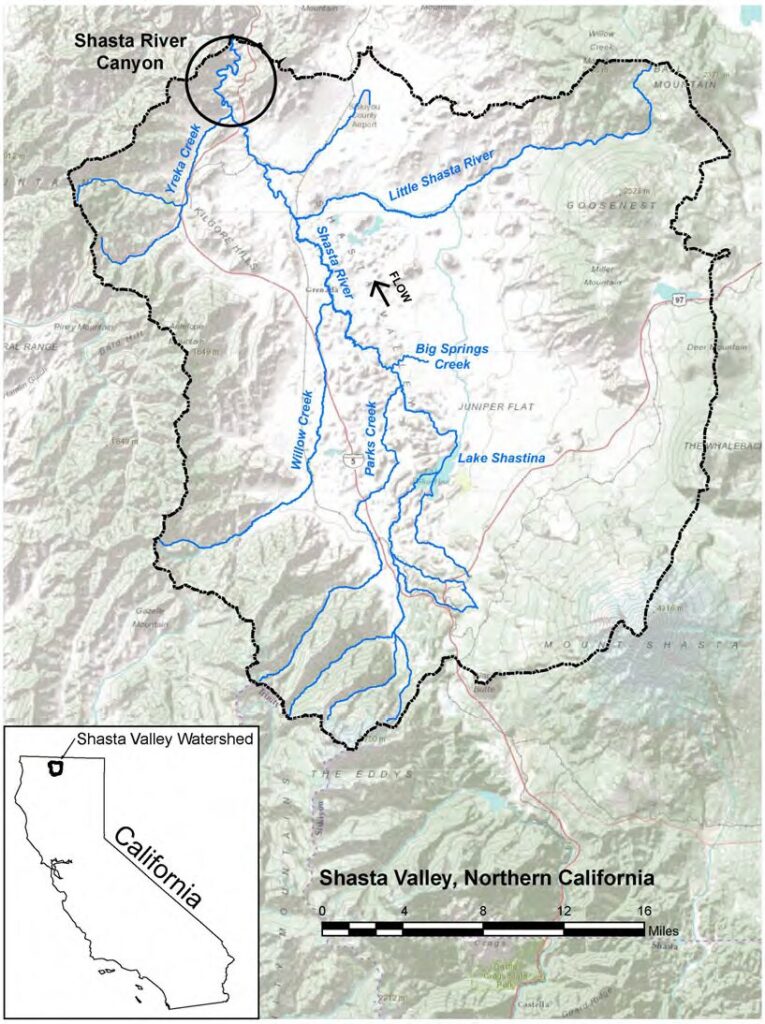
This flows assessment report is intended to provide the scientific foundation for future management decisions related to flows, temperature, and fish response to flow changes in the Shasta River. While the report identifies the flows needed to support healthy salmon populations, additional work will be required to determine how those recommendations can be implemented in a way that balances ecological and agricultural needs.
Stauffer-Olsen emphasizes the importance of a transparent, balanced approach to setting flow standards.
“We believe that when water users, fishers, landowners, Tribal nations, and concerned citizens are given accurate information and a space where they can discuss this information, set common goals, and decide on a process forward together, fish populations can thrive adjacent to thriving human communities,” she said.
Key Points:
- Assess existing conditions, including water temperature, of the Shasta River and offer insight into historical flows and native salmon populations.
- Provide a set of flow recommendations for the Shasta River Canyon that would create habitat conditions to support salmon population increases and long-term resilience, especially when combined with improved management of upstream water sources and implementation of other restoration activities.
- Offer a scientific foundation for establishing instream flow needs for native salmonids.
######
Trout Unlimited is the nation’s leading conservation organization working to care for and recover rivers and streams and their trout and salmon populations. We bring people together across the country to be champions for their rivers and help make our water cleaner and our communities healthier. Founded by a small band of Michigan anglers in 1959, we have grown into a national organization with more than 350 staff, 400 chapters, and 300,000 members and supporters. We bring science-driven restoration know-how, state and national policy muscle, and local volunteer energy to bear on behalf of clean water, healthy trout and salmon and thriving communities.