Unfortunately, early European settlement and agricultural practices took a heavy toll on the Driftless Area. The steep slopes, tight valleys and highly erosive soils were ill-suited to the intensive agricultural practices of European settlers and resulted in devastating erosion.
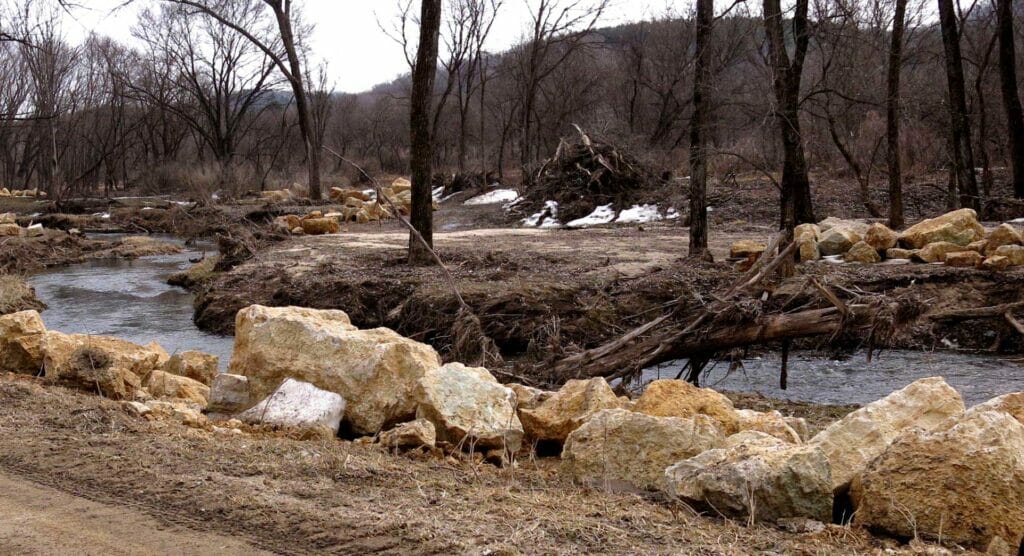
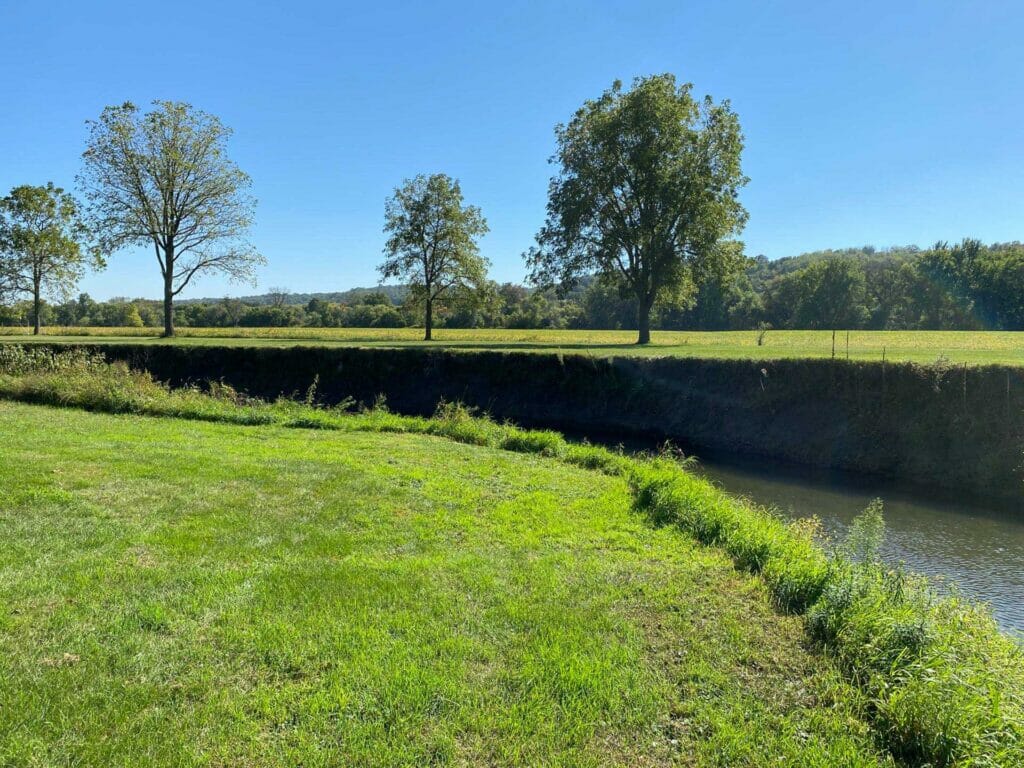
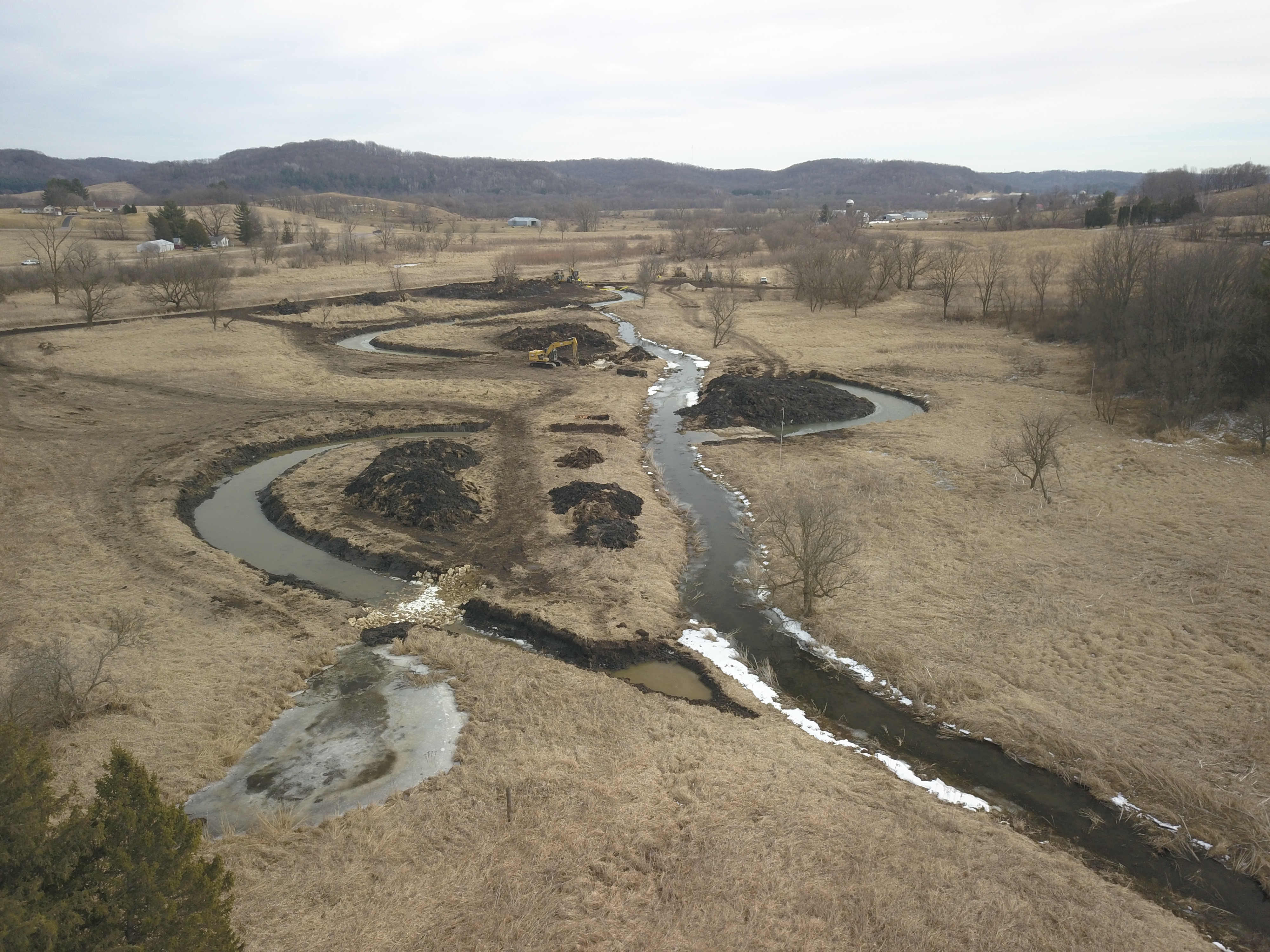
A thick layer of deposited sediment accumulated over time. Up to 15 feet of eroded soil blankets the valley floors in some areas. As a result, the now entrenched streams are no longer able to spread out across their floodplains to dissipate energy, resulting in continued erosion, frequent flooding, and serious damage to rivers and infrastructure in local communities.
The Driftless Area is still recovering from early land management practices such as plowing steep slopes, removal of natural vegetation, wetland loss, and channelization that led to significant erosion and sediment deposition across entire watersheds.
Modern practices such as intensive row crops, excessive fertilizer or pesticide use, drainage and water withdrawals paired with stresses from climate change and invasive species have caused excessive streambank erosion, sedimentation, and poor water quality that impact waters all the way to the Gulf of Mexico, where such practices have helped contribute to hypoxic waters.