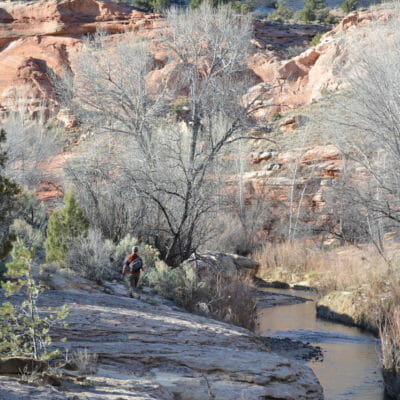
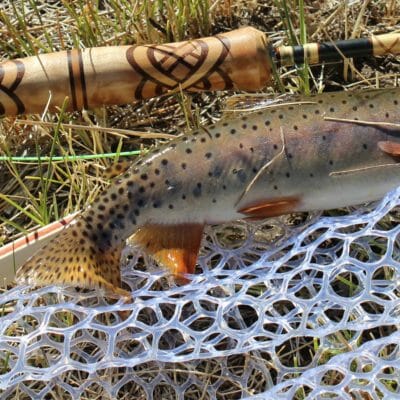
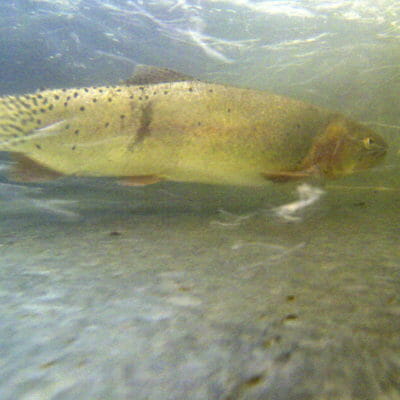
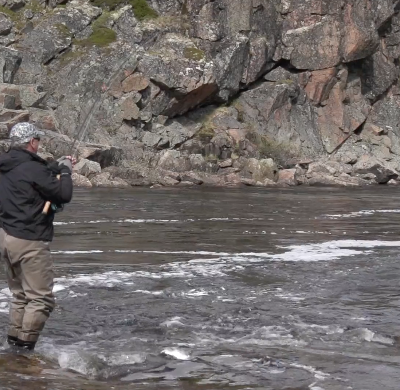
An angler walks along the Escalante River in southern Utah looking for native Colorado River cutthroat. Cliff Wirick photo. By Clint Wirick The red rock country of southern Utah is not often considered trout habitat for good reason. Many waters in the southern reaches of the second driest state of our country are too turbid…
Editor’s note: The TU Costa Five Rivers Program is sending five college students on a native trout odyssey across America this summer. Meet Jacob Lacy one of the five lucky participants. As a Colorado native I knew I’d end up finding something to take me outside and up to the mountains. With biking, hiking, and…
Johnson Lake will be the subject a giant fish removal project to hopefully prevent the spread of whirling disease in Banff National Park. How seriously are Alberta fisheries biologists taking the threat of whirling disease in Banff National Park? Very. They’re removing fish from Johnson Lake in order to prevent the spread of the parasite…
By Travis Banta It is safe to say we are a fishing family. Grandpa Lee crossed the Madison River to his favorite fishing hole in an old 1940’s era Ford pickup. Grandma Margaret hated that bridge because it was essentially a couple of 2×12 boards and she didn’t like guiding the tires of that old Ford…
For the first time in 50 years, Bonneville cutthroat trout in Utah’s Weber River were able to ascend Strawberry Creek, an important spawning tributary, thanks to a major conservation effort in Northern Utah. Since 2012, Trout Unlimited has worked closely with many partners in the Weber River Basin to reduce habitat fragmentation and allow native…
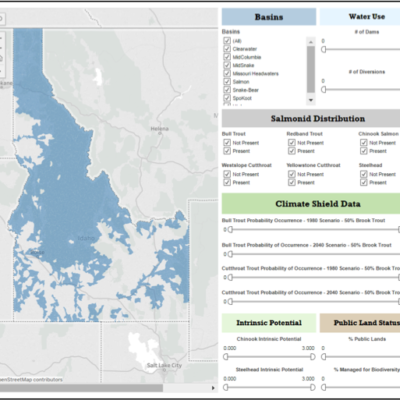
By Sean McFall A recent collaboration between Trout Unlimited’s Idaho Water Project and Science Program will help ensure that projected impacts of climate change are incorporated into water resource work in Idaho. While there are many different threats to Idaho’s native fishes, the growing impacts of climate change are projected to be the greatest existential…
Imagine a river system where management depends on the lightest possible human footprint. Where trees aren’t cut. Trails aren’t improved. Rivers left to flow on their own to the sea. Such a place exists, about an hour’s chopper ride from the Russian city of Murmansk, on the remote Kola Peninsula, where Atlantic salmon, arctic char,…