
What parent hasn’t dangled a reward in hopes of encouraging a child to accomplish something?
Chris Myhrum fondly remembers such an enticement from his childhood.
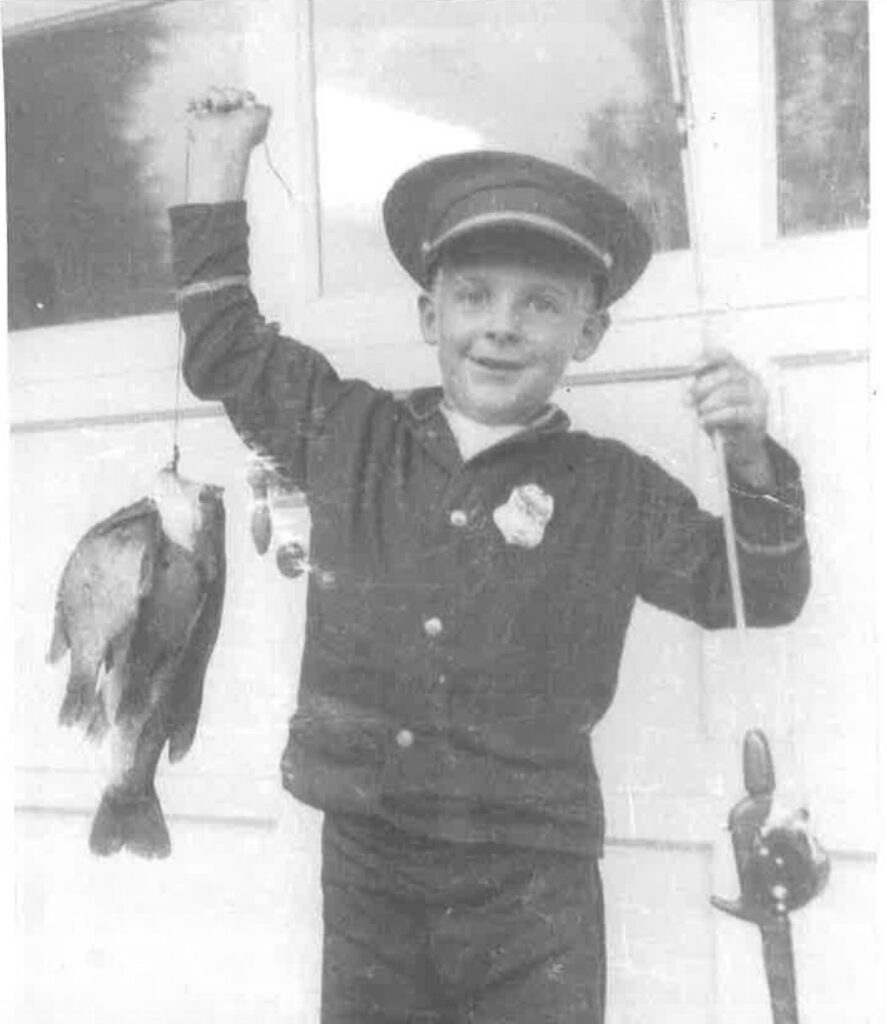
“Our neighbors had a pool with no shallow end,” he said. “I’d jump in and just hang on the edge. My dad said, ‘If you swim across this pool, I’ll buy you a fly rod.’”
Myhrum was only 5 years old. But he was already fascinated with fly fishing. And he was tired of having to share a rod with his two older sisters during fishing trips to another family friend’s pond. He held onto the pool edge, summoning his courage.
“Finally, I went and, paddling like a frantic dog, I got across,” Myhrum said, chuckling. “Sure enough, on the way home we stopped at Baum’s Sporting Goods, and he bought me a nice little fiberglass fly rod.”
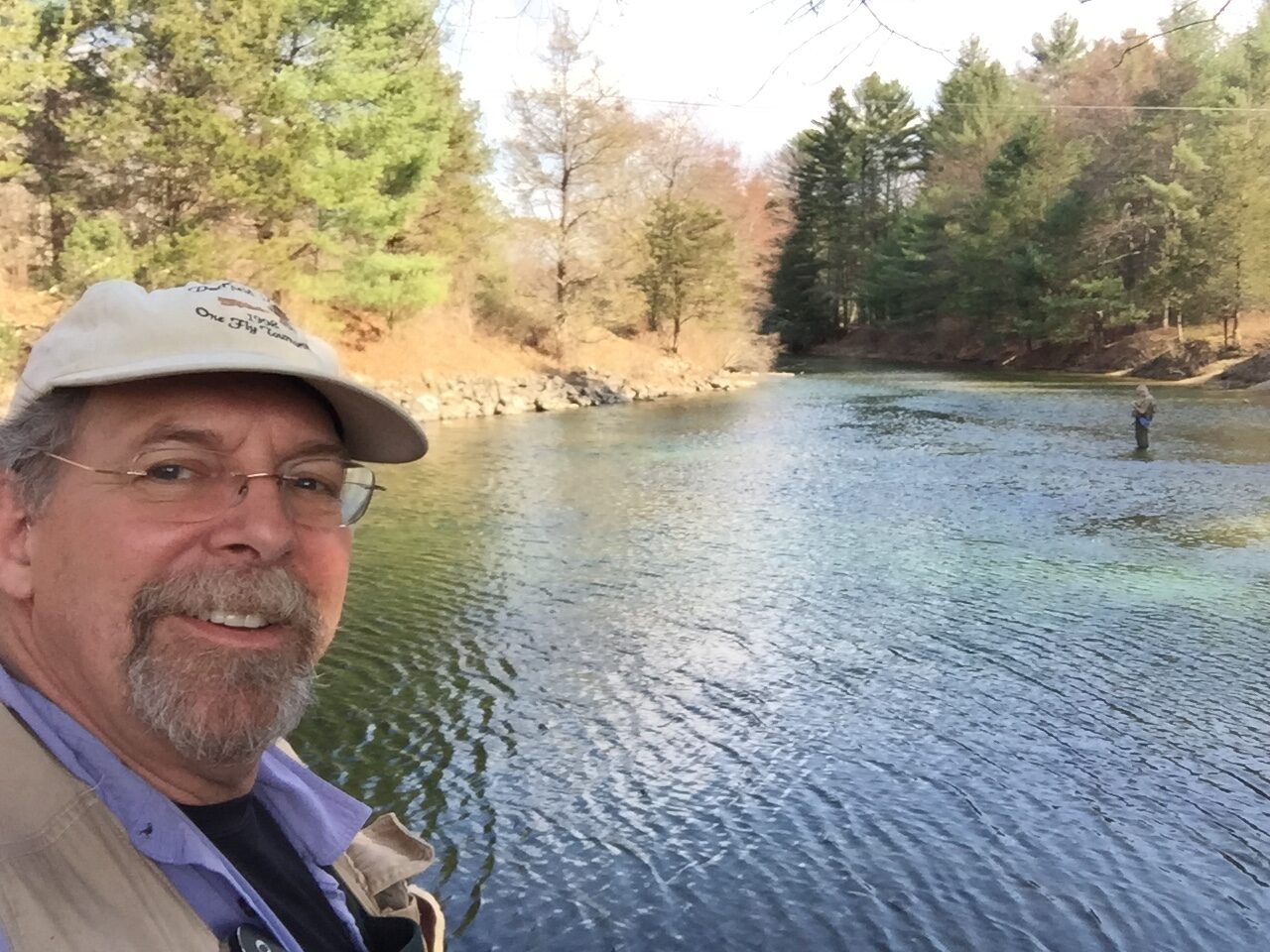
The rod is long gone, but Myhrum’s love of fly fishing remains strong. So, too, does his commitment to protecting and restoring the wild and wonderful places where the fish he loves to chase swim.
Doggy paddling no more
So, when members of the Deerfield Watershed Trout Unlimited chapter reached out to Myhrum for help negotiating flows in a river section to help the Deerfield River’s wild trout, Myhrum let go of the pool edge and started paddling.
He was anything but a frantic dog. A skilled environmental attorney, Myhrum deftly navigated the challenge. Critically, he did so on a pro-bono basis.
“Sometimes, even when you have the law on your side, particularly when dealing with multi-billion dollar international companies, you need some stick to defeat their mentality of pushing around the little guy,” said former Deerfield chapter president Kevin Parsons, who is also an attorney and was instrumental in bringing Myhrum aboard for the effort. “Given that Chris was not billing us, the common threat of being outspent by the competition was not in play.”
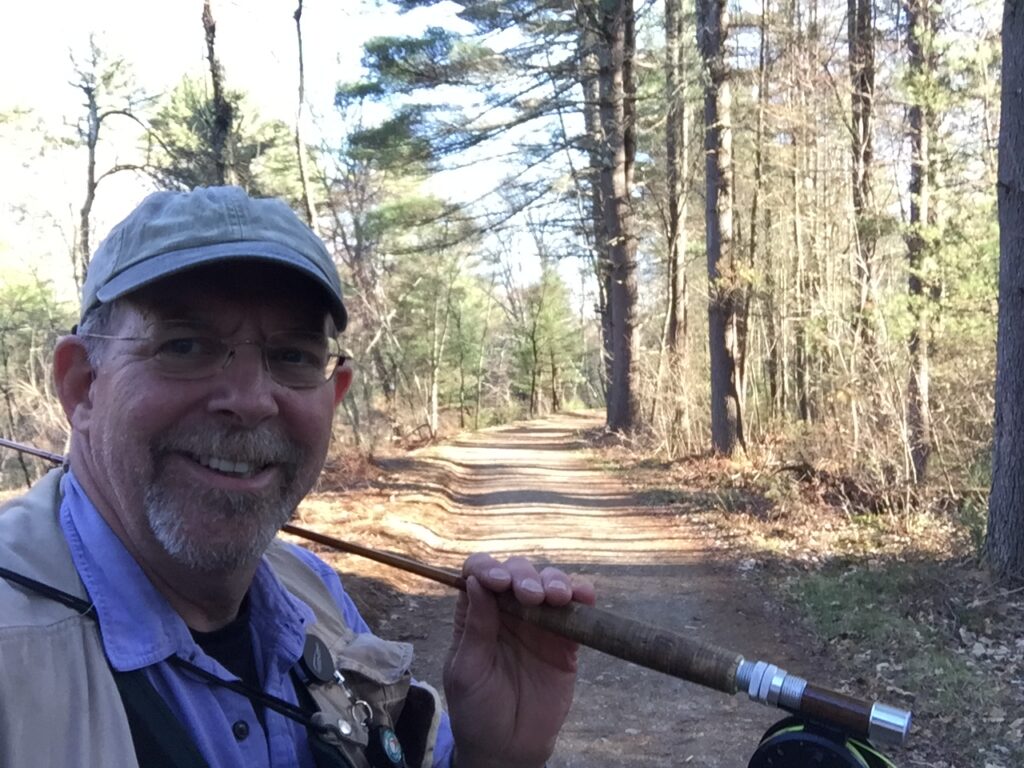
After more than a year of negotiations in the mediation process — and Myhrum donating approximately $50,000 worth of legal services — an agreement was recently reached to ensure minimum flows that sets the stage for that stretch to become a stellar wild trout fishery.
“Without a doubt, but for Chris’s acumen and reputation within the Department of Environmental Protection, I believe the results we were able to achieve would have been in doubt,” Parsons said.
Early passion
When he was that fly fishing-obsessed youngster, Myhrum lived in Bedford, N.Y.
“The Mianus River ran right through town, and it was wonderful fishing,” he recalled. “I was really young, like 6 or 7, but my dad got us out there fishing early. And my mom and her family were also accomplished fly anglers.”
Myhrum’s dad was a TV director who worked in New York City. He directed episodes of “Sesame Street” for years, as well as the Guy Lombardo New Year’s Eve special.
The family had a vacation home in Vermont, eventually moving to Peru, Vermont, full-time.
“Dad commuted to the city weekly,” Myhrum said.
They fished waters around their home, such as the Battenkill, and occasionally traveled to more distant locales, including a trip to fish for landlocked Atlantic salmon in the Caniaspiscau River north of Toronto in Ontario.
“It was my first experience wading in water up to my waist and actually having to look up at a fish that had jumped so high it was above my head,” Myhrum remembered.
Drawn to environmental law
After graduating from NYU, Myhrum headed to Massachusetts for law school at Boston College.
An internship with a Boston firm that specialized in environmental law started him down that path. Hazardous waste regulations are, he says, “mind-numbing.”
“I majored in Latin and Greek in college, so I was used to sitting and working very meticulously,” he said with a light laugh. “I paid some dues.”
After clerking for a federal judge for three years immediately after law school, Myhrum spent 30 years at Bulkley, Richardson and Gelinas, a modest-sized firm in Springfield, building relationships and constantly learning before striking out on his own in 2011.
“I wanted to see if I could do it,” said Myhrum, who at 72 is still working hard. “And it’s worked out very well.”
Deerfield comes calling
The Deerfield Watershed chapter has gone all in with their home river, a TU Priority Water.
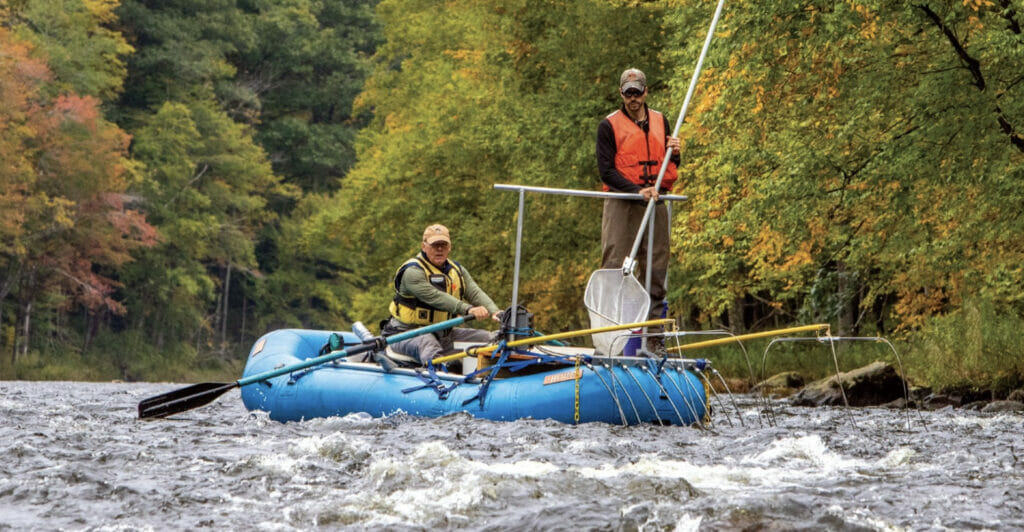
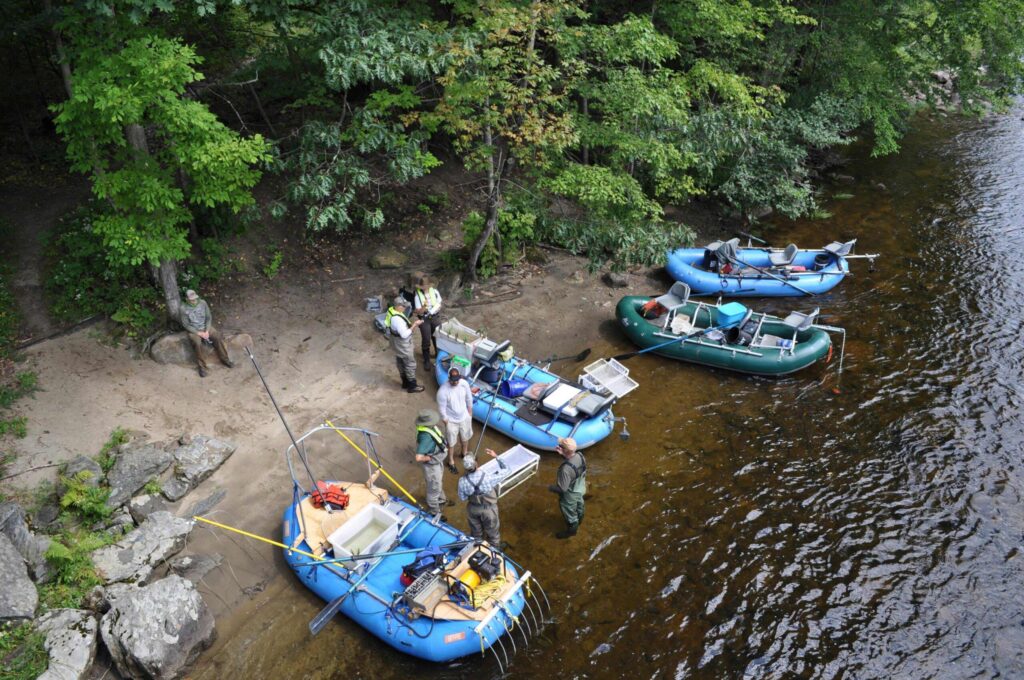
Among other things, on a shoestring budget, the chapter initiated a telemetry study that proved brown trout are successfully spawning in the river.
The chapter was also able to document that trout spawning redds were becoming de-watered when dam-controlled flows.
“The Chapter’s commitment to science and their field work really tipped the scales, so to speak,” Myhrum said. “Generating the science was the foundation for advocacy. They really did an amazing job.”
With the river’s Bear Swamp pump storage hydro project undergoing a Federal Energy Regulatory Commission relicensing review, that provided an opportunity to push for more robust minimum flows.
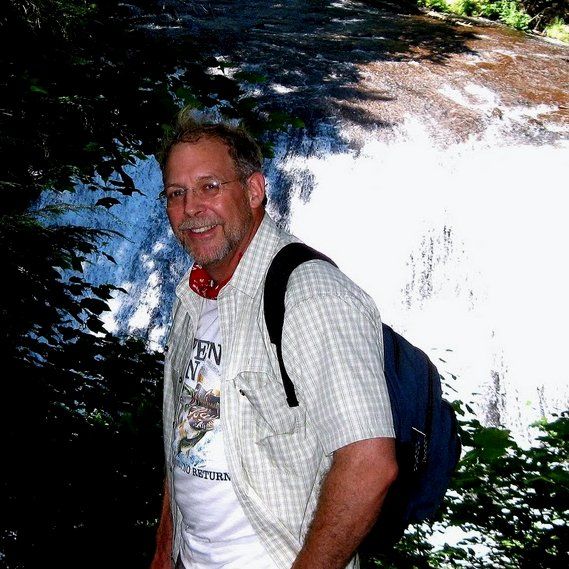
Parsons said the best opportunity for addressing flow problems was the Massachusetts Department of Environmental Protection’s 401 Water Quality certification procedure.
When the state denied dam owner Brookfield’s 401 certification request, the company appealed, setting the stage for a mediation process.
“We knew we had the goods to demand better winter flows to keep the redds covered,” Parsons said. “But we also knew we needed an attorney who was experienced with the Massachusetts DEP administrative process.”
An expert comes aboard
Enter Myhrum, a board member of the Pioneer Valley chapter who lives in Longmeadow, Mass.
“We were able to find Chris, and being an angler who fished the Deerfield, he agreed,” Parsons said. “It was obvious during the process that Chris had a lot of credibility with the Brookfield attorneys and the administrative agency. Along with his knowledge of the administrative process and the law, we were able to negotiate from a position of strength.”
Myhrum himself credits Brookfield’s attorneys for their professionalism during the process, which concluded recently with an agreement from Brookfield to maintain winter flows at 225 cubic feet per second, a figure that will keep those brown trout redds under water during the critical wintertime egg incubation period. The company will also contribute $125,000 to a fund to support additional ecological studies. Infrastructure to support the newly required flow regime will be upgraded over the next three years.
The Deerfield Watershed chapter, itself a winner of TU’s prestigious Gold Trout Award for their work on the Deerfield, presented Myhrum with its Bob Anderson Conservation Award.
Myhrum is humble in his appreciation of the recognition.
“It took a lot of time, but it was a lot of fun because the Deerfield Watershed chapter people were so committed,” he said. “And once things started to move the right way, we were able to see that we were going to get a result that was really good for the river.”
Although the Deerfield isn’t Myhrum’s home river, he fishes it from time to time. He is eager to be out on the water over the coming years to experience the stream and its continued improvement as wild trout water.
“I’m looking forward to seeing where it is going to end up,” said Myhrum, who is much older and wiser than that fly fishing-obsessed 5-year-old, but every bit still as passionate. “Even when the science gives you an idea of how things are going to turn out, you never really know until it happens.”
The Deerfield River
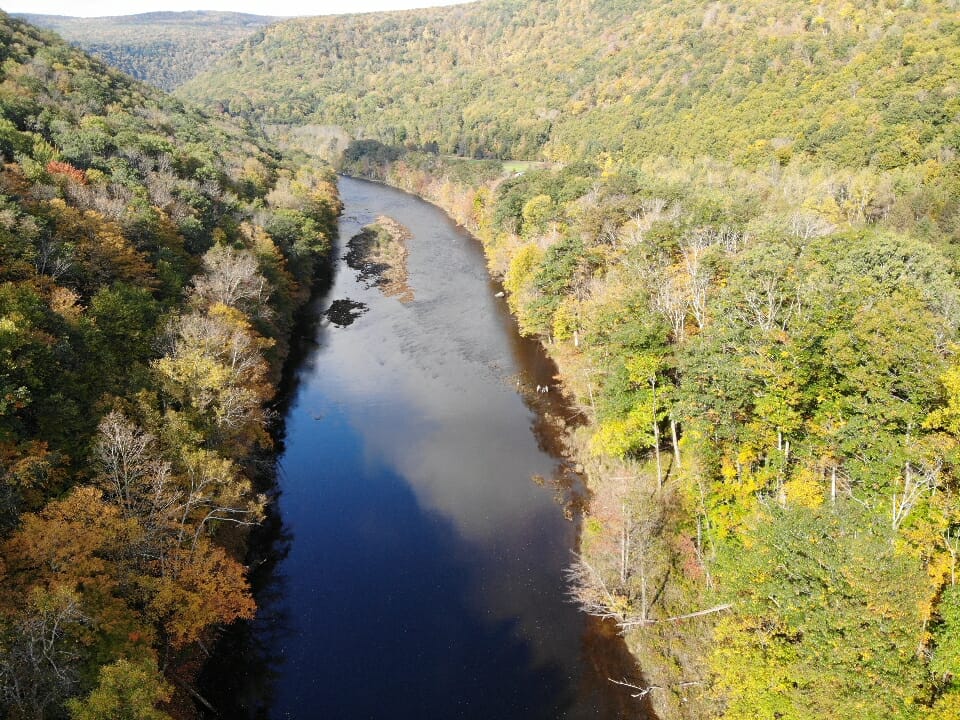
The heavily dammed Deerfield River is sometimes called the “hardest working river in New England.” The same dams that create hydropower contribute cold, trout-supporting water to the river, supporting excellent trout fishing in the river’s upper reaches.
The river is stocked in some sections, but also supports wild brown, rainbow and brook trout.
The Massachusetts Department of Wildlife recently halted stocking in the 17-mile tailwater stretch below Fife Brook Dam, which anglers hope can help the wild brown fishery in that section get even better.
The Deerfield features excellent hatches of mayflies, stoneflies and caddis, and dry fly action in the spring and early summer can be outstanding. Wade-fishing can be impractical, if not impossible, during power generation. Float fishing during higher flows can produce exciting streamer action.
Brook trout are the least prevalent species in the Deerfield River, but abound in the Deerfield’s tumbling mountain tributaries. Over the past decade, TU’s local chapters and the Massachusetts Council have pooled resources, supporting the purchase of more than 250 acres of land that protects these native, wild fish. Our conservation staff have also actively worked on several habitat restoration projects on these very streams – adding structure, deep=pool refugia and large wood to help the brook trout thrive.
Finally, don’t rule out the lower river for great smallmouth bass fishing from spring through fall.

The same free-flowing rivers that sustain trout and salmon bring clean water into our homes, give life to vibrant communities and feed a passion for angling and the outdoors.
But today our fisheries and rivers face enormous challenges. At Trout Unlimited, we are doing something about it, and we need your help. Sign up to be a champion for the rivers and fish we all love and help us unlock the unlimited power of conservation.