
Coldwater Conservation in King County
TU’s King County Team advances science-based conservation to protect and restore the rivers, streams, lakes, and watersheds that sustain native fish, wildlife, and communities throughout King County. By integrating ecological research, habitat restoration, environmental education, and collaborative partnerships, we work to address today’s conservation challenges while building healthier, more resilient freshwater ecosystems for future generations.
What We Do
Conservation challenges are complex and require more than a single solution. Our team brings together science, restoration, education, community engagement, and strategic partnerships to develop practical, locally driven solutions that improve watershed health across King County. From researching emerging environmental threats and restoring critical habitat to engaging volunteers and supporting community stewardship, we work alongside agencies, tribes, nonprofits, businesses, educators, and local residents to ensure conservation efforts are grounded in both sound science and lasting collaboration.
On This Page
Science
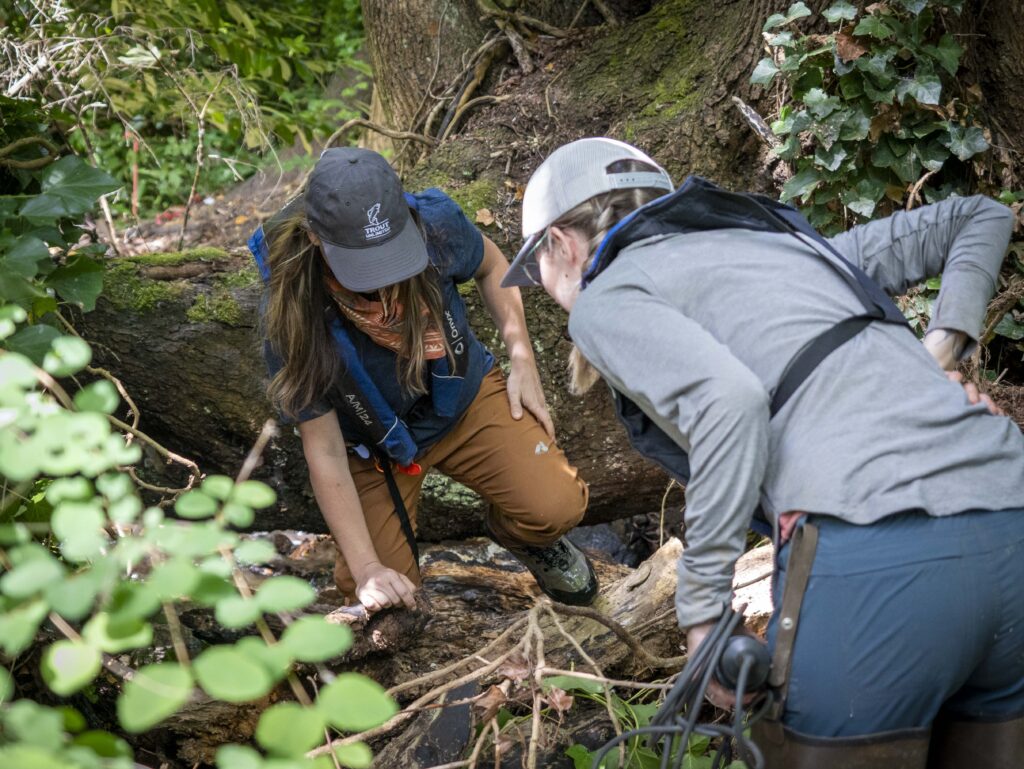
Our science program provides the foundation for effective conservation. We conduct ecological research, watershed monitoring, and data-driven assessments that help identify emerging threats, evaluate restoration outcomes, and guide management decisions. From water quality and stormwater contaminants to fish populations and aquatic ecosystems, our work generates the knowledge needed to protect and restore freshwater resources throughout King County. By combining rigorous science with collaborative partnerships, we help ensure conservation actions are informed by the best available data.
Current Research & Monitoring Projects:
Habitat Restoration
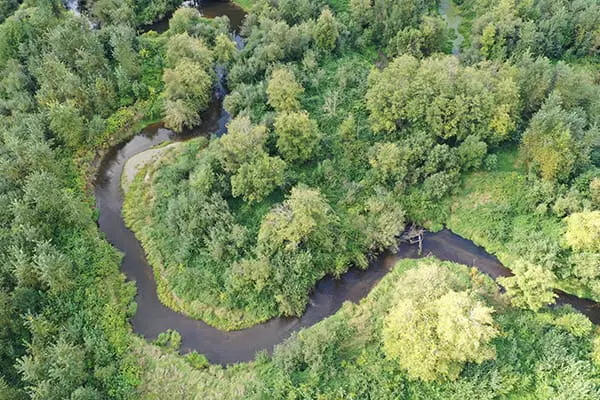
Healthy watersheds require healthy habitat. Our restoration efforts focus on improving rivers, streams, wetlands, and shorelines through projects that enhance water quality, reconnect habitat, reduce pollution, and increase ecosystem resilience. Working alongside public agencies, private landowners, community organizations, and volunteers, we develop and implement restoration projects that support salmon recovery, improve aquatic ecosystems, and strengthen the long-term health of King County’s watersheds.
Current Restoration Projects:
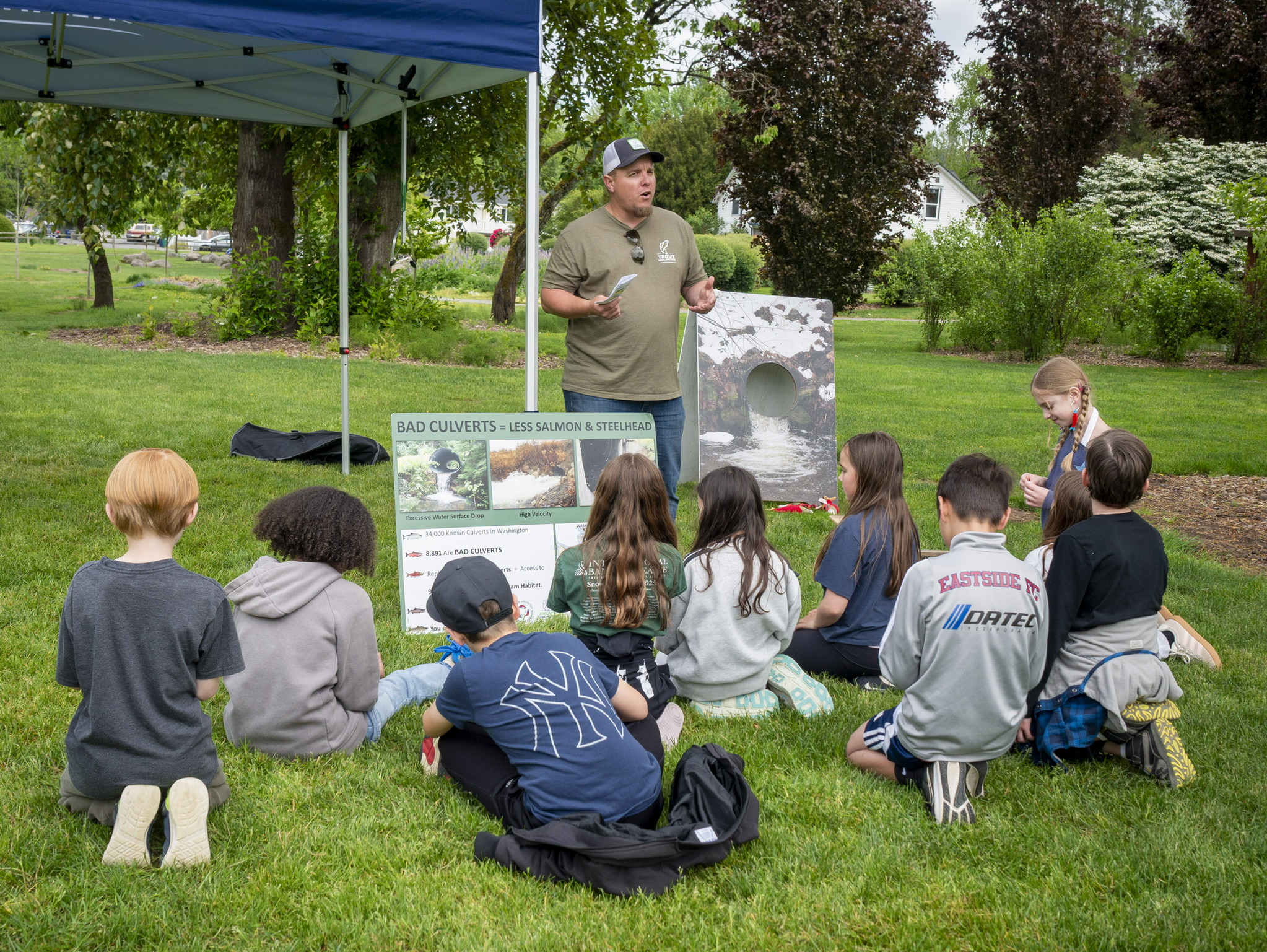
Community Engagement
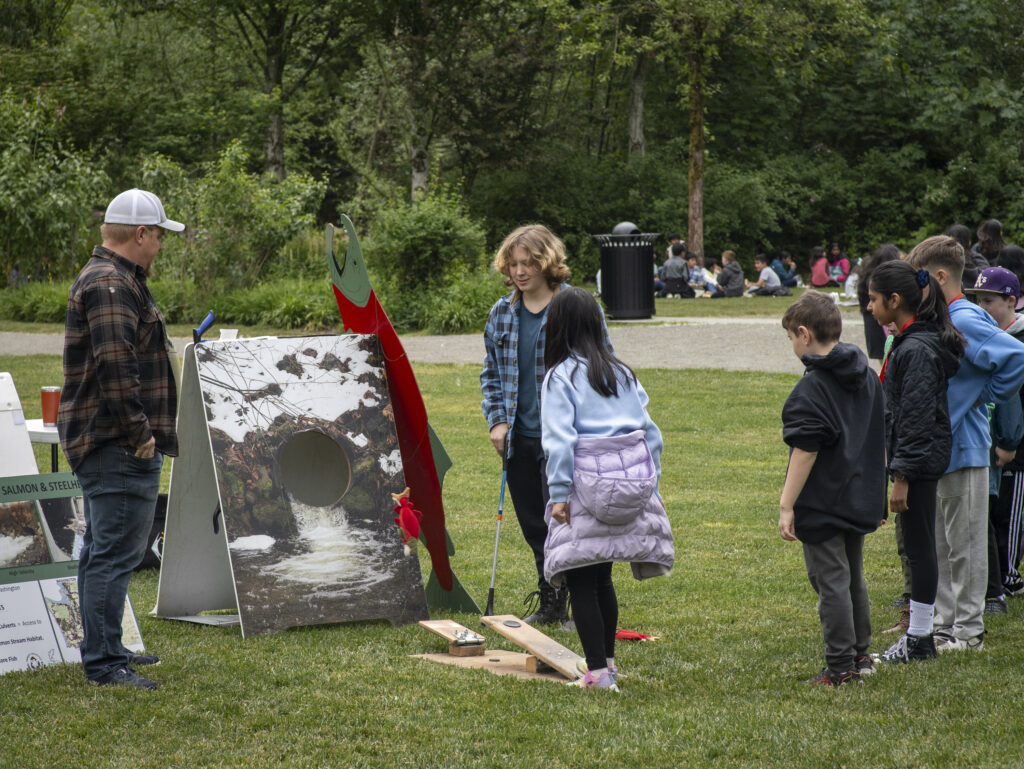
Lasting conservation begins with an informed and engaged community. Through educational programs, volunteer stewardship, public events, and collaborative partnerships, we connect people with the watersheds where they live, work, and recreate. Whether leading hands-on restoration projects, supporting citizen science, or building relationships with schools, businesses, and local organizations, we empower communities to become active partners in protecting the freshwater ecosystems that sustain both people and wildlife.
Learn more about our engagement and community events:
Our Approach
Healthy watersheds require more than restoration alone. Lasting conservation depends on understanding ecosystems, building strong partnerships, and applying science to real-world challenges. Our team works alongside local governments, tribes, state and federal agencies, nonprofit organizations, academic institutions, businesses, and community volunteers to design and implement projects that are both scientifically rigorous and locally relevant.
Our work encompasses ecological monitoring, habitat restoration, stormwater research, fisheries conservation, environmental education, grant-supported initiatives, and community stewardship. Every project is built through collaboration, recognizing that the most effective conservation solutions emerge when diverse partners bring together their expertise, resources, and shared commitment to protecting our natural resources.
As King County continues to grow, our work is strengthened by Trout Unlimited’s grassroots conservation network. Working alongside the volunteers and leadership of the Three Rivers Chapter of Trout Unlimited, we connect community passion with scientific expertise to develop, implement, and sustain meaningful conservation projects across the region.
We work with funders and agencies including the Washington Department of Ecology, Washington Department of Fish and Wildlife, King County, the Washington State Recreation and Conservation Office, the King County Flood Control District, the Puget Sound Partnership, and other public and private funders to secure funding for science, restoration, stormwater, education, and community conservation projects throughout King County.
Where We Work
The King County Conservation Team works throughout two of western Washington’s most ecologically significant watersheds: the Lake Washington – Cedar- Sammamish- Watershed and the Snoqualmie-Skykomish Watershed. Together, these basins support iconic salmon and trout populations while providing clean water, recreation, and essential ecosystem services for millions of people.
Across these watersheds, we collaborate with local governments, state and federal agencies, tribes, nonprofit organizations, academic institutions, and community partners to advance science-based conservation. Our work includes habitat restoration, stormwater mitigation, water quality monitoring, fisheries research, environmental education, community engagement, and projects that improve watershed resilience in the face of a changing climate.

Lake Washington – Cedar- Sammamish Watershed
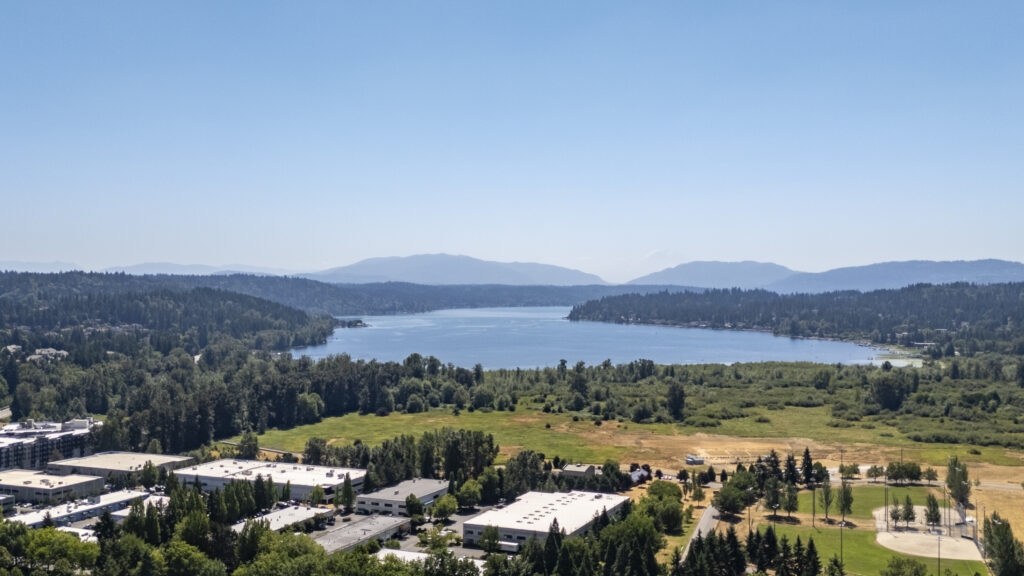
The Lake Washington -Cedar- Sammamish Watershed encompasses more than 700 square miles and includes Lake Washington, Lake Sammamish, the Cedar River, Issaquah Creek, Bear Creek, and dozens of tributary streams that provide critical habitat for salmon, trout, and other native aquatic species. As one of the most urbanized watersheds in Washington, it faces challenges including stormwater pollution, habitat fragmentation, invasive species, and climate-driven changes to streamflow and water quality.
Our team works throughout the watershed to improve aquatic habitat, investigate emerging environmental threats such as 6PPD-quinone, support kokanee and salmon recovery, monitor water quality, implement innovative stormwater solutions, and engage local communities in protecting the waters they depend on.
Snoqualmie-Skykomish Watershed
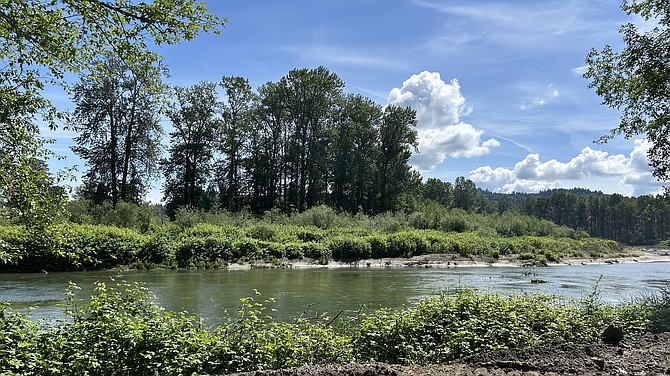
The Snoqualmie-Skykomish Watershed stretches from the Cascade Mountains to the Puget Lowlands, encompassing some of western Washington’s most productive rivers, forests, and floodplains. These waters provide essential habitat for Chinook, coho, steelhead, bull trout, and numerous other native species while supporting agriculture, recreation, and local communities.
Working alongside regional partners, we help restore habitat, improve watershed resilience, support fisheries conservation, monitor ecosystem health, and engage volunteers in stewardship activities that protect these rivers for future generations.
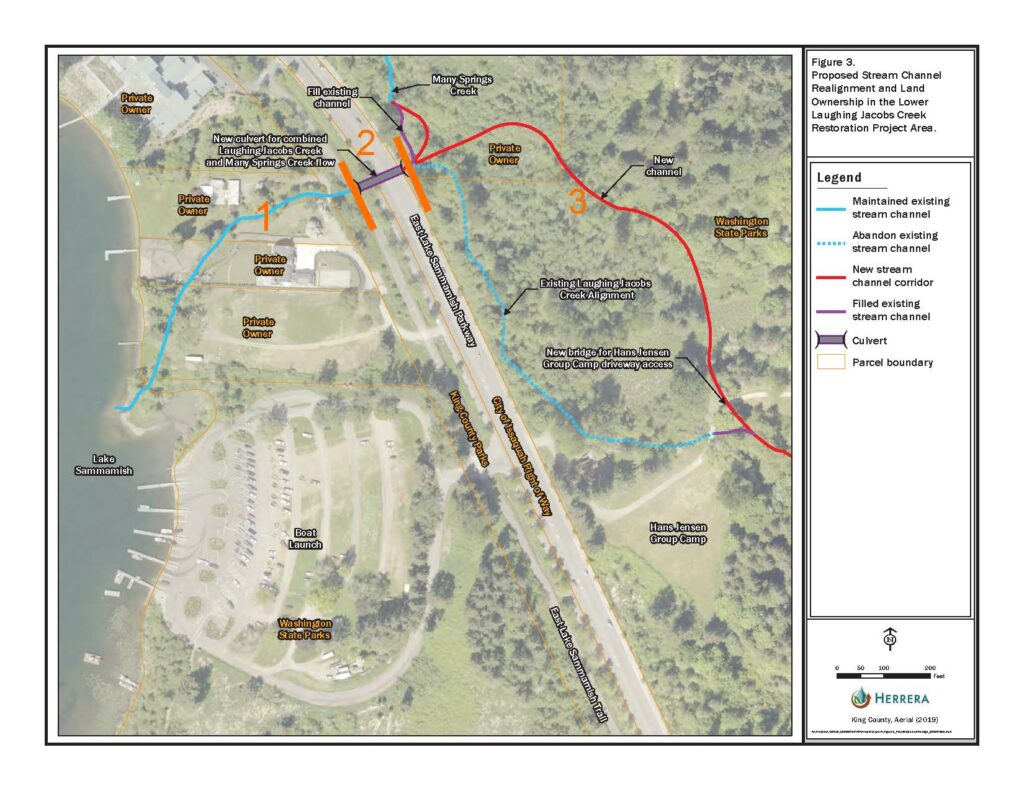
Work is underway to advance restoration of Laughing Jacobs Creek from Lake Sammamish upstream through Lake Sammamish State Park. The project is being implemented in three reaches and will improve fish passage, salmon habitat, floodplain function, and flood resilience. Current work includes habitat restoration in the lower creek (Reach 1) and design and permitting for Reaches 2 and 3, including replacement of two fish-passage barrier culverts, stream channel improvements, and restoration through the Hans Jensen area of the State Park.
Laughing Jacobs Creek is an important tributary to Lake Sammamish, and restoring it provides an opportunity to address several watershed challenges together. Removing fish-passage barriers will reconnect upstream habitat, while restoring the channel and floodplain will improve habitat conditions, water quality, and the creek’s ability to accommodate high flows. Taken together, the three reaches provide a coordinated approach to restoring the creek from its mouth at Lake Sammamish upstream into the State Park, creating more connected and resilient habitat for salmon and other aquatic species.
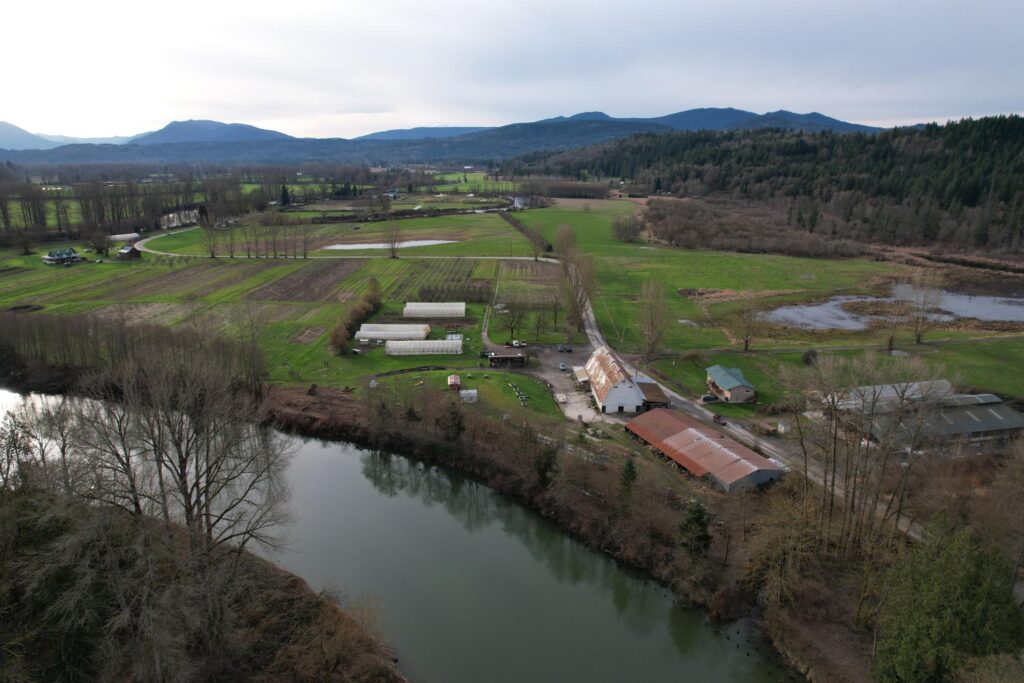
Trout Unlimited has partnered with Jubilee Farms and the Snoqualmie Tribe to restore 1,500 feet of river bank on the Snoqualmie River. Work is currently focused on controling noxious weeds to prepare for plantings of native trees and shrubs to benefit water quality, and provide habitat for wildlife.
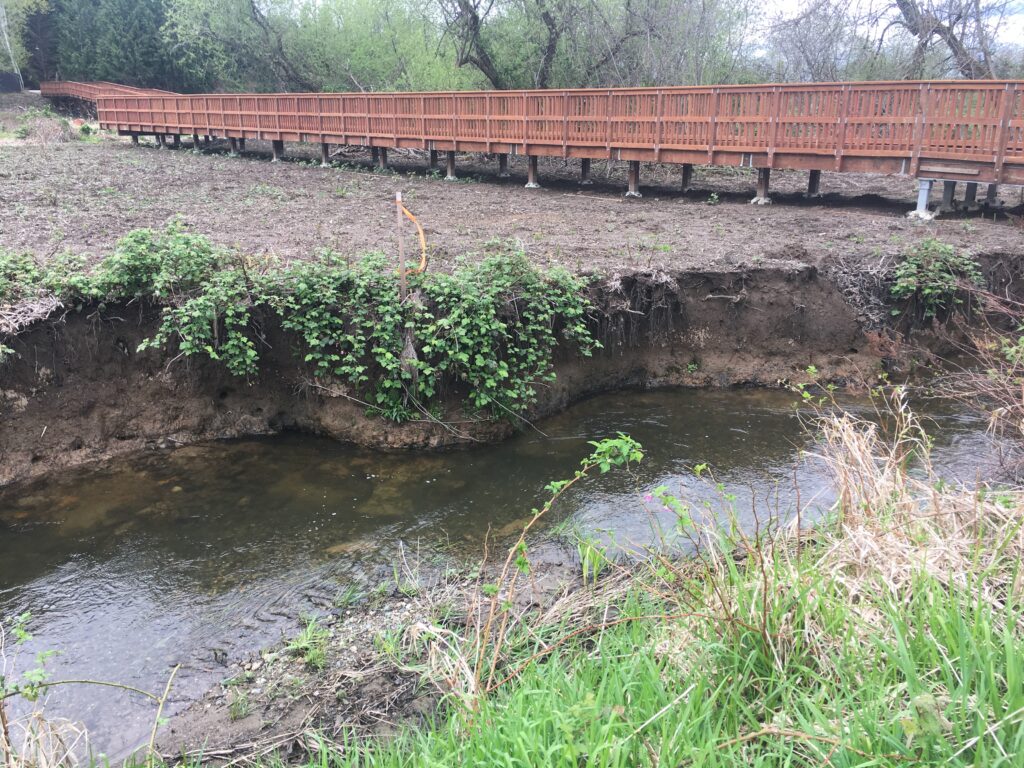
Trout Unlimited is working with project partners to advance flood risk reduction and salmon habitat improvement efforts along Tibbetts Creek in Issaquah. Tibbetts Creek is one of the larger tributaries to Lake Sammamish and has been heavily altered by past land use, including channel straightening, reduced floodplain connection, limited riparian buffer, and sediment impacts. These changes have contributed to localized flooding, erosion, degraded stream habitat, and reduced resilience as the watershed continues to urbanize.
Our current work focuses on evaluating existing conditions and developing restoration concepts for key areas of Tibbetts Creek, including the Anthology Open Space and Maple Street areas. This includes field surveys, stream and wetland assessments, geomorphic analysis, hydraulic modeling, and coordination with landowners, the City of Issaquah, technical partners, and other stakeholders. The goal is to identify practical restoration alternatives that reduce flood risk to public and private property, improve floodplain function, protect infrastructure, and create better habitat for salmon and other aquatic species.
This feasibility and conceptual design work will help guide future project phases, including design, permitting, funding, and eventual construction. When completed, these efforts will support a healthier and more resilient Tibbetts Creek by reconnecting natural stream processes, improving water quality, enhancing riparian and instream habitat, and linking together past and planned restoration investments throughout the watershed.
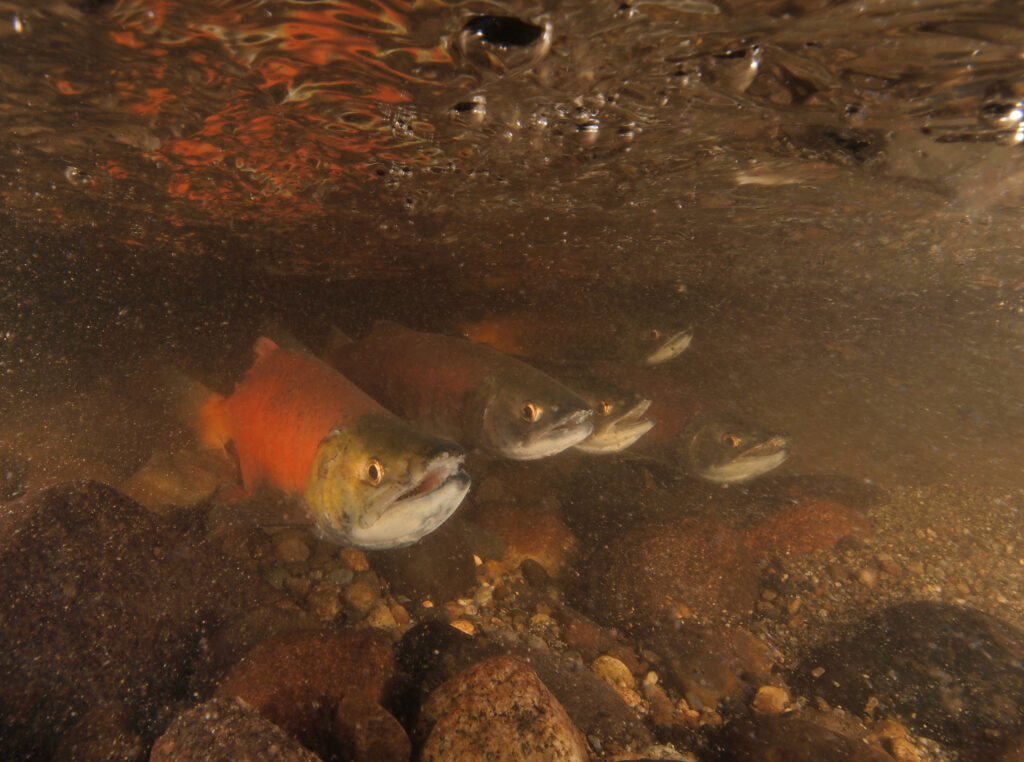
Lake Sammamish is home to a unique population of native kokanee salmon—affectionately known as the “little red fish.” Kokanee are the freshwater form of sockeye salmon, spending their entire lives in Lake Sammamish and its tributaries. Once abundant throughout the watershed, the population declined dramatically due to habitat loss, fish passage barriers, changing lake conditions, predation, and other pressures. In 2017, just 19 adult kokanee returned to spawn, bringing the population dangerously close to extinction.
Since 2007, the Lake Sammamish Kokanee Work Group has brought together the Snoqualmie Tribe, King County, local cities, state and federal agencies, nonprofit organizations, and community members to recover the population. Recovery efforts include restoring spawning streams, removing fish passage barriers, improving water quality and habitat, monitoring kokanee throughout their life cycle, reducing threats in the lake, and using hatchery supplementation and innovative tools such as remote stream incubators to protect the population while natural production recovers.
Those efforts are showing encouraging results. More than 8,300 adult kokanee returned to spawn during the 2024–25 run, an extraordinary increase from the historic low just seven years earlier. While the population remains vulnerable and continued recovery work is needed, the return of the little red fish demonstrates what sustained, watershed-wide collaboration can accomplish.
Lake Sammaish Kokanee —
At Trout Unlimited, we believe the best way to inspire the next generation of conservation leaders is to connect students with the streams, lakes, and wildlife in their own communities. Our K–12 education programs combine classroom learning with hands-on outdoor experiences that help students discover how healthy watersheds support clean water, thriving fish and wildlife, and resilient communities.
STREAM Connections is Trout Unlimited’s place-based environmental education program for the Lake Sammamish watershed. Standing for Science, Technology, Recreation, Engineering, Art, and Mathematics, STREAM Connections blends classroom learning with outdoor exploration, creativity, and meaningful conservation experiences. Through salmon in the classroom, field investigations, habitat restoration, and stewardship projects, students discover how forests, wetlands, streams, and lakes are connected—and how their own actions help protect water quality and the communities that depend on these shared waters.
Trout Unlimited and partners are working to better understand and manage non-native aquatic weeds in Lake Sammamish. Dense plants like Eurasian watermilfoil and Brazilian elodea have spread through the lake’s nearshore habitat, where they can provide cover for non-native predator fish that prey on juvenile salmon.
Through targeted weed treatments, SCUBA-based fish surveys, and long-term monitoring, this project is evaluating how aquatic weed control affects fish abundance, plant regrowth, and nearshore habitat conditions. The results will help guide future lake management decisions and explore aquatic weed control as a tool to support Chinook, kokanee, and other native salmonids.
One emerging threat to salmon in urban watersheds is 6PPD-quinone (6PPD-Q), a highly toxic chemical associated with vehicle tires. 6PPD is added to tires to prevent cracking and degradation; as tires wear and 6PPD reacts with ozone, it forms 6PPD-Q. During rainstorms, tire particles and 6PPD-Q can wash from roads and parking lots into nearby streams.
Research has shown that even very low concentrations of 6PPD-Q can be lethal to coho salmon within hours, and scientists continue to investigate its effects on other salmon species and aquatic life. For the highly urbanized Lake Sammamish watershed, understanding where and when 6PPD-Q enters local streams is an important part of protecting salmon and improving water quality. Monitoring can help identify pollution hotspots and guide future stormwater improvements and other strategies that reduce contaminated runoff before it reaches salmon-bearing waters.
Trout Unlimited’s King County program is working to better understand where 6PPD-q is entering local streams and identify solutions that protect salmon. Our work includes:
- Monitoring stormwater and streams for 6PPD-q during rain events.
- Deploying passive samplers and automated storm samplers to capture pollution during storms.
- Conducting salmon bioassays to evaluate how stormwater affects fish health.
- Partnering with agencies, researchers, and volunteers to develop science-based solutions that improve water quality and protect salmon habitat.
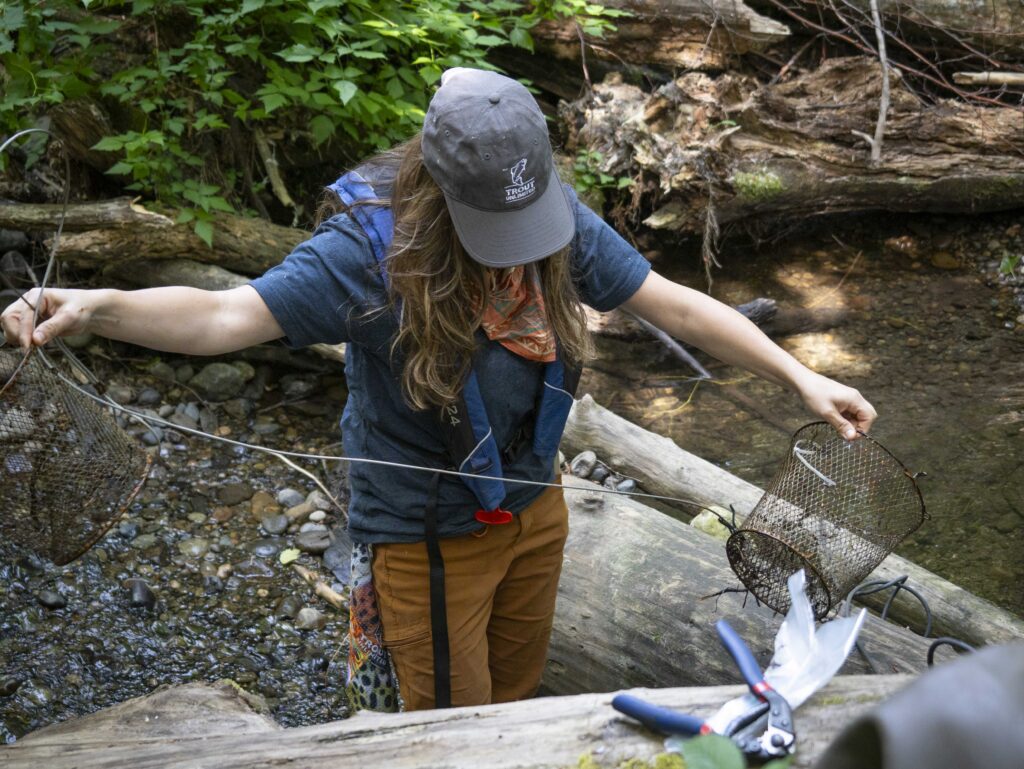
Together, these efforts help identify pollution hotspots, evaluate effective treatment methods, and support long-term recovery of coho salmon in King County.
The King County staff team works in partnership with the Three Rivers Chapter to advance science-based conservation throughout the region. While staff provide technical expertise, project management, grant administration, and scientific monitoring, the chapter brings passionate volunteers, local knowledge, and community leadership. Together, we develop and implement restoration projects, conduct watershed monitoring, engage the public through education and outreach, and build partnerships that protect and restore healthy rivers and fisheries. By combining professional staff support with dedicated volunteers, we are able to accomplish far more than either could alone.
The Lake Sammamish Partnership, formally known as the Lake Sammamish Urban Wildlife Refuge Partnership, is a collaborative network of organizations and community members working together to connect people with nature and inspire stewardship throughout the Lake Sammamish watershed. In 2013, the U.S. Fish & Wildlife Service designated the Partnership as one of the nation’s first Urban Wildlife Refuge Partnerships, recognizing the community’s grassroots efforts to help save the native Lake Sammamish kokanee salmon from extinction. That same spirit of collaboration continues to guide the Partnership today.
As the proud steward of the Partnership, Trout Unlimited convenes and supports a diverse coalition that includes local cities, King County, state and federal agencies, the Snoqualmie Tribe, conservation nonprofits, schools and universities, community organizations, businesses, volunteers, and thousands of residents who care deeply about the future of the watershed. Together, we work across organizational boundaries to improve habitat, restore streams and wetlands, protect water quality, expand environmental education, and create opportunities for people to experience and care for the outdoors.
While the Partnership’s work encompasses the entire watershed—from mountain streams and urban neighborhoods to wetlands, parks, and Lake Sammamish itself—its heart remains the Little Red Fish. The native kokanee salmon inspired the grassroots movement that led to the Partnership’s designation and continues to serve as a symbol of what’s possible when a community comes together around a shared purpose. By protecting the little red fish, we help create a healthier, more connected watershed for people and wildlife alike.
Whether you’re looking for volunteer opportunities, family-friendly events, educational programs, or ways to explore the watershed, the Lake Sammamish Partnership is your gateway to getting involved. Visit www.lakesammamishrefuge.org to discover upcoming events, explore partner organizations, and learn how you can make a difference. You can also follow LittleRedFish4Ever on Facebook and Instagram for stories, seasonal updates, and opportunities to connect with your shared watershed throughout the year.
Who We Are
Central Puget Sound Director
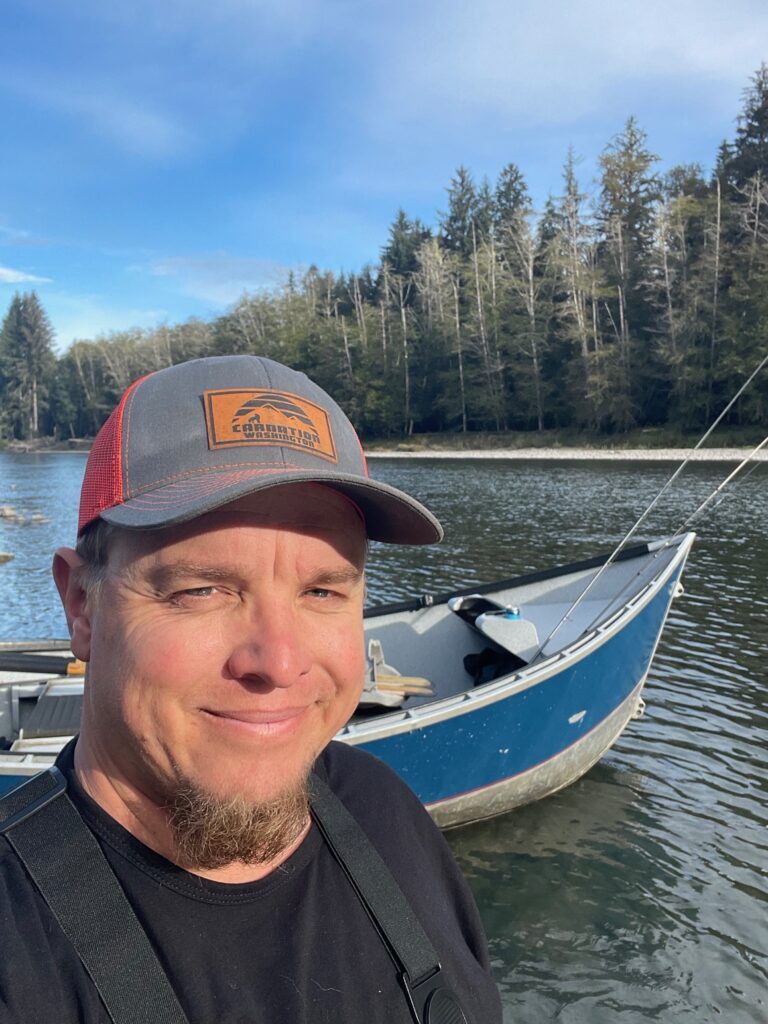
David Kyle
Issaquah, Washington
Dave serves as Trout Unlimited’s Central Puget Sound Director, leading conservation initiatives that protect and restore the region’s rivers, streams, and fisheries. With more than two decades of experience in Fisheries, habitat restoration, watershed planning, and collaborative conservation, he works alongside agencies, tribes, nonprofit organizations, and community partners to develop science-based solutions for salmon recovery and watershed resilience. Dave provides strategic leadership for Trout Unlimited’s King County conservation program while representing the organization on regional salmon recovery efforts and advancing partnerships that benefit fish, wildlife, and local communities.
Community Engagement & Partnerships Manager
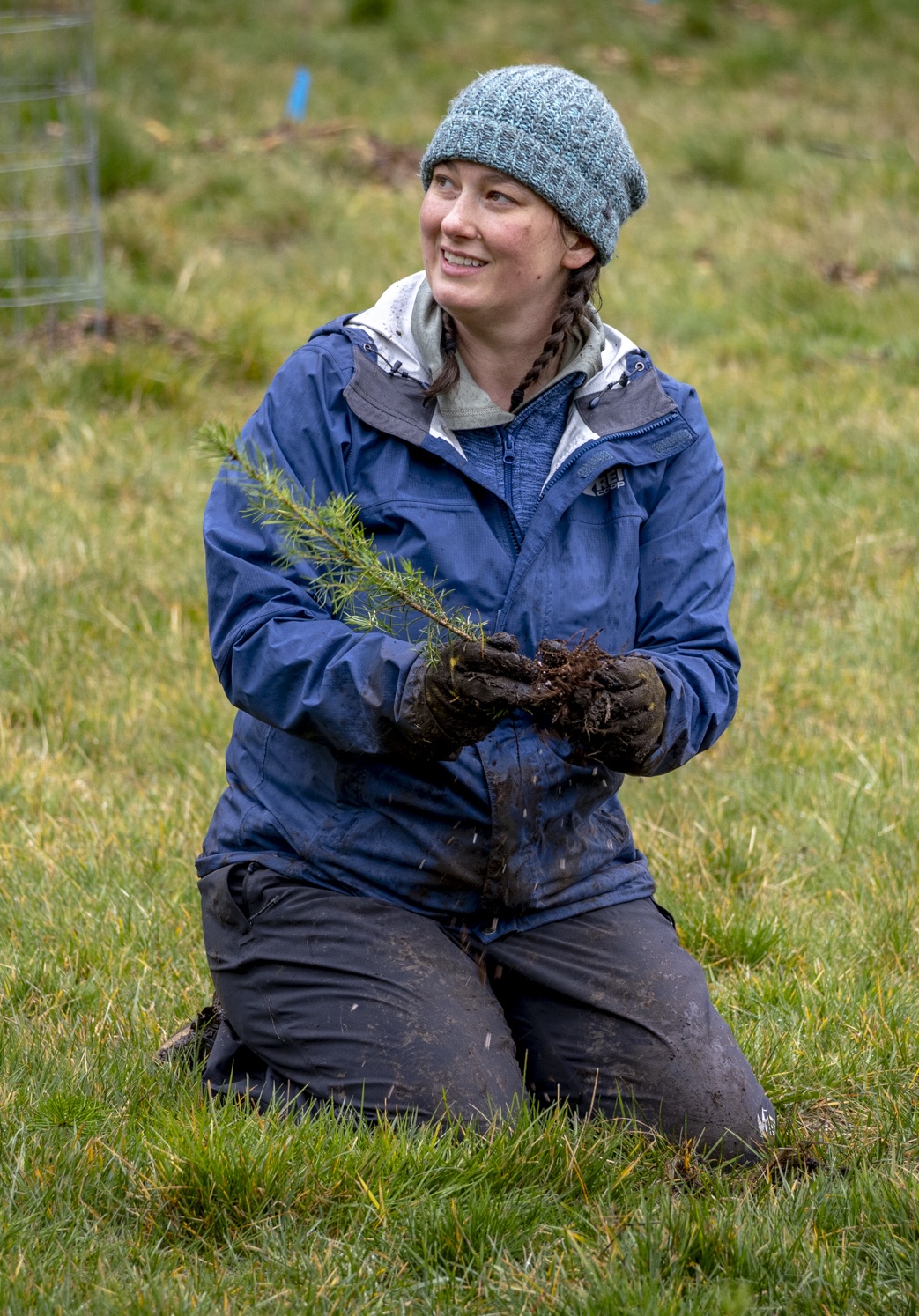
Alix Lee-Tigner
Issaquah, Washington
Alix leads community engagement and partnership development for Trout Unlimited’s King County conservation program, connecting people with meaningful opportunities to protect and restore local watersheds. She works collaboratively with volunteers, schools, nonprofit organizations, businesses, and public agencies to build lasting relationships that expand conservation impact throughout the region. From coordinating educational programs and stewardship events to cultivating strategic partnerships and supporting outreach initiatives, Alix is passionate about making conservation accessible, inclusive, and community driven.
Conservation Science Manager
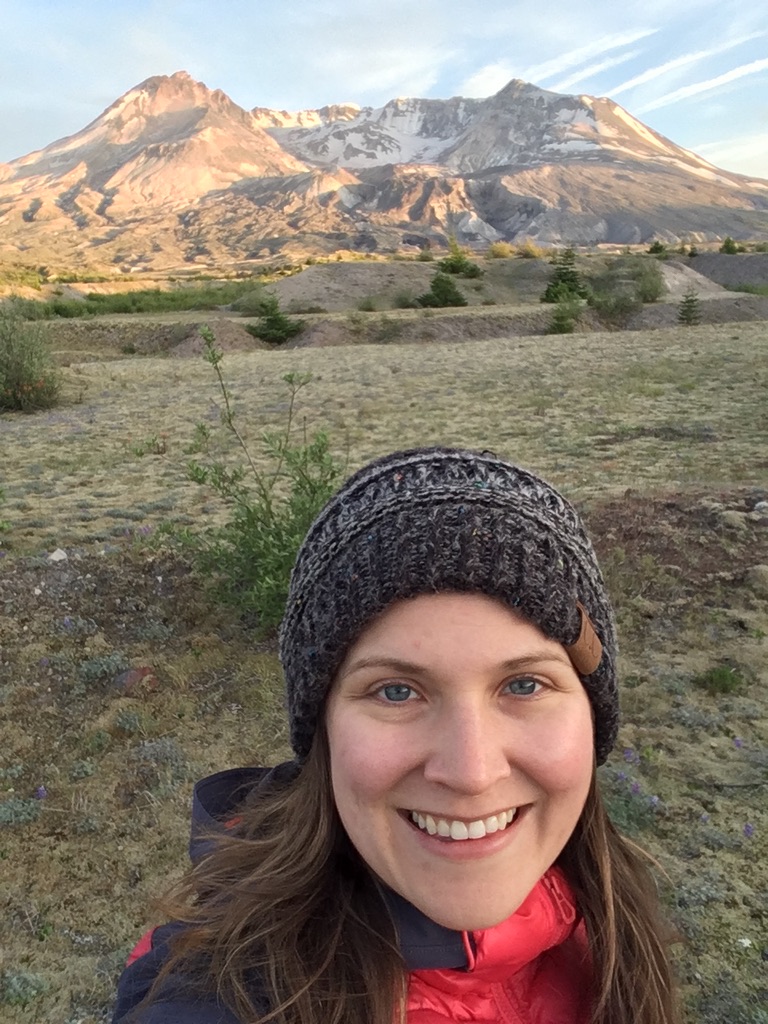
Katey Queen
Issaquah, Washington
Katey leads science-driven conservation initiatives that advance freshwater ecosystem restoration throughout King County. Her work integrates ecological research, watershed monitoring, habitat restoration, grant development, and collaborative project management to address emerging conservation challenges facing salmon, trout, and aquatic ecosystems. Katey works closely with agencies, researchers, community partners, and the Three Rivers Chapter of Trout Unlimited to develop innovative, science-based solutions that improve watershed health while connecting communities with the rivers and lakes they depend on.
Partnerships
- U.S. Fish & Wildlife Service
- Washington Department of Ecology
- Washington Department of Fish & Wildlife
- Washington State Parks
- King County
- City of Sammamish
- City of Issaquah
- City of Bellevue
- City of Redmond
- Snoqualmie Tribe
- Mid Sound Fisheries Enhancement Group
- Mountains to Sound Greenway Trust
- University of Washington Bothell
- University of Washington Seattle
- Friends of the Issaquah Salmon Hatchery (FISH)
- Friends of Lake Sammamish State Park
- Eastside Audubon
- Issaquah Alps Trails Club
- Sammamish Friends
- Lake Washington/Cedar/Sammamish Watershed (WRIA 8) Salmon Recovery Council
- King County Wastewater Treatment Division (WTD)
Events
Check out upcoming events in the area hosted by King County TU staff and local grassroots chapter Three Rivers and Puget Sound Women on the Fly