


Drought. Wildfire. Flooding. Excessive Heat. Low snowpack.
Look at any state in the West and you’re sure to find local examples of these extreme weather events and natural disasters. But while the challenges and headlines generated by these events are well known, the tools available to mitigate and combat their increasingly unpredictable impacts have received far less attention.
One such tool is a program rightly named WaterSMART, which is administered through the Bureau of Reclamation and directly benefits communities across the West.
Specifically, the WaterSMART program provides funding to irrigation infrastructure projects and other water-delivery, water conservation or watershed health projects that proactively mitigate conflicts over water scarcity, help ranchers and farmers and make our public lands and waters better able to withstand the impacts of extreme weather events and natural disasters. Beginning with the program’s first grants in 2010, WaterSMART has fostered collaborative, on-the-ground partnerships across rural, urban, agricultural and conservation interests for the past decade and a half.
Working smartly in Arizona
In Arizona, for example, Trout Unlimited (TU) initially received a nearly $200,000 Cooperative Watershed Management Program (CWMP) grant to study the ability to restore the Thompson-Burro Meadow—located about 25 miles west of Alpine, Arizona, in the Salt River headwaters—and how it could naturally store and release cold, clean water to the benefit of the Phoenix Valley downstream.
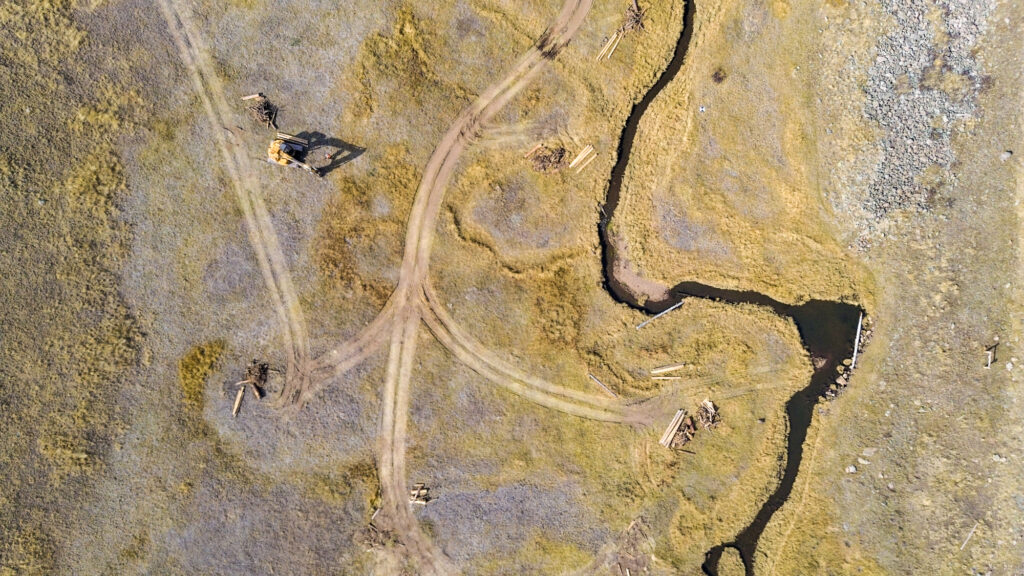
In other words, this type of WaterSMART grant supports local water management capacity and provides the funding necessary to prove the project’s viability. This helps get it shovel-ready by paying for the organization and collaboration of a local stakeholder group, engineering assessment and design and all the necessary permitting approvals, among other things.
Since this initial grant, this project has grown into the highest-priority restoration project for TU in Arizona in the coming years—totaling $1.8 million, employing local contractors, creating jobs in Apache County and directly benefitting the Phoenix metropolitan area’s water supply.
This investment in the meadow will also help the Salt River headwaters—an important tributary to the Colorado River—better withstand future drought and continue to feed water into Apache-Sitgreaves National Forest, which is still recovering for the 2011 Wallow Fire and boasts part of the largest contiguous ponderosa pine forest in the United States. This fire caused intense runoff from fire-impacted slopes that overwhelmed the watersheds and caused massive erosion and therefore water quality issues, destroyed habitat important for fish and wildlife and degraded floodplains’ ability to store groundwater.
It was the WaterSMART program that proved the viability of restoration in this area, advancing TU’s partnerships among federal, state and corporate supporters to undertake a major restoration project in the meadow to increase water table elevations, restore stream function, enhance water storage in a historic wet meadow, slow erosion, stabilize streambanks, decrease water temperatures and restore habitat for native Apache trout in the Apache-Sitgreaves National Forest.
All told – this initial federal grant will be responsible for initiating the restoration of 3.5 miles of stream and 128 acres in the national forest when completed.
WaterSMART at work across the West
In Montana, for example, TU is partnering with the Montana Natural Resource Damage Program and the Clark Fork Coalition to design infrastructure improvements to 10 irrigation diversion sites in the Upper Clark Fork River Basin that will provide fish and boat passage, screen ditches and improve water delivery. These improvements will benefit threatened bull trout and native Westslope cutthroat trout. Reclamation awarded $594,000 toward the project.
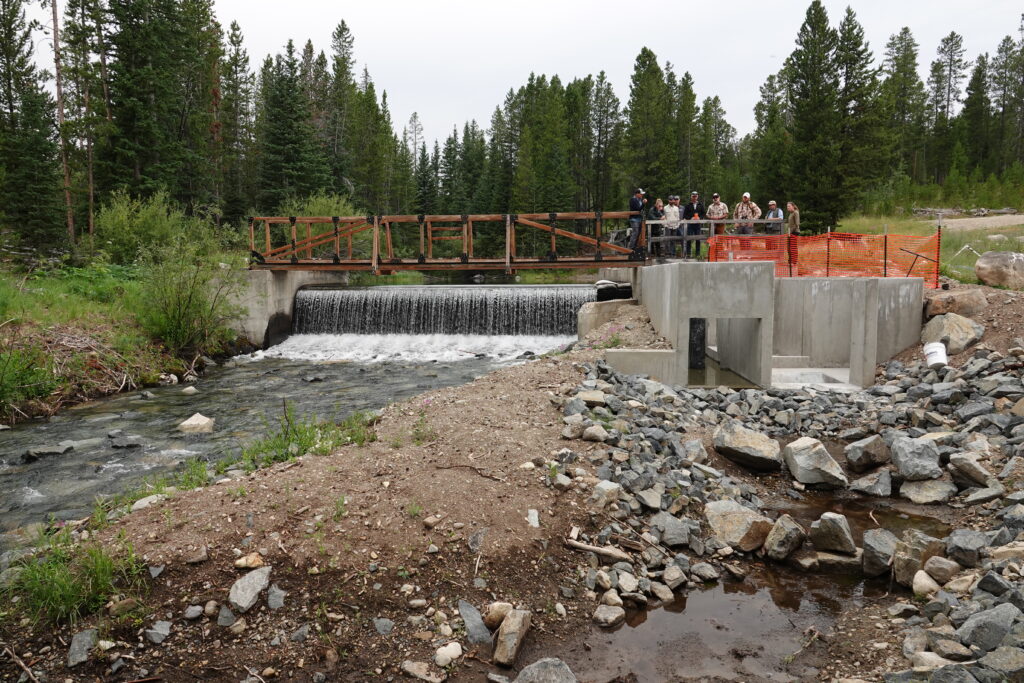
We’re also working with the City of Boise, Idaho, to provide fish passage and improve aquatic habitat in the Boise River. The project will expand and enhance side channels bypassing the Arrowrock dam, create fish passage at Barber Dam and reconnect 2.5 miles of the Boise River to riparian spawning habitat and a mile of side channel. Reclamation is funding $734,000 of the $1.1 million project.
In Utah, we’ve constructed around 1000 beaver-dam analogs to improve drought resilience and stream health in the Weber River watershed; reconnecting key habitats on the Ogden River by modernizing irrigation diversions and reconstructing important side-channel habitats and restoring floodplain function on sections of the Weber River itself.
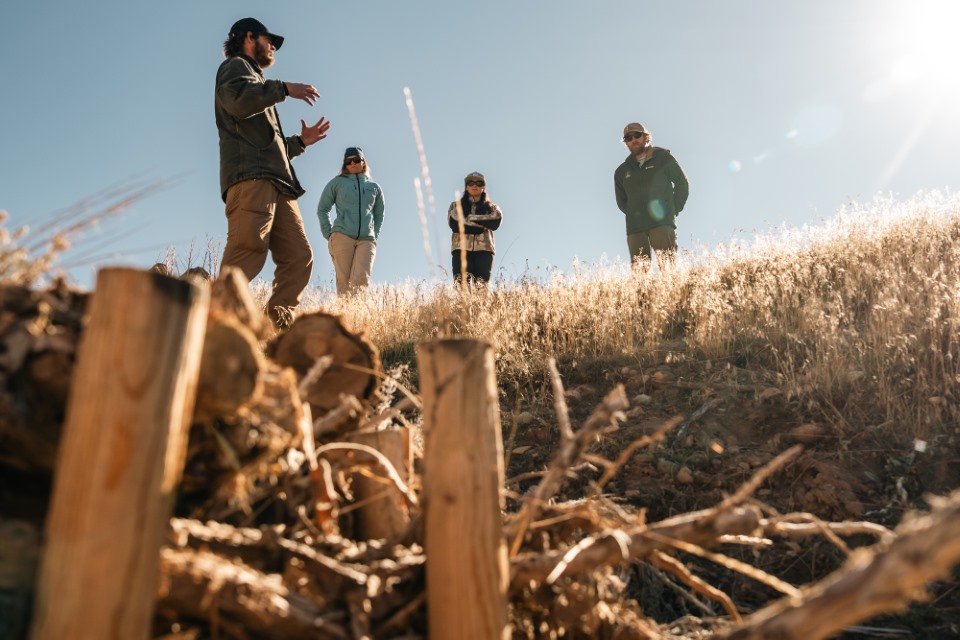
TU is also partnering with the Town of Pagosa Springs, Colorado, and the Upper San Juan Watershed Enhancement Partnership (WEP) to improve more than two miles of the San Juan River by preserving aquatic habitat in the face of declining flows and warming temperatures. This is especially important because the San Juan boasts notable fishing and recreation opportunities and serves as a significant economic driver to this small, rural community. Reclamation is funding $1.175 million of the $1.5 million project.
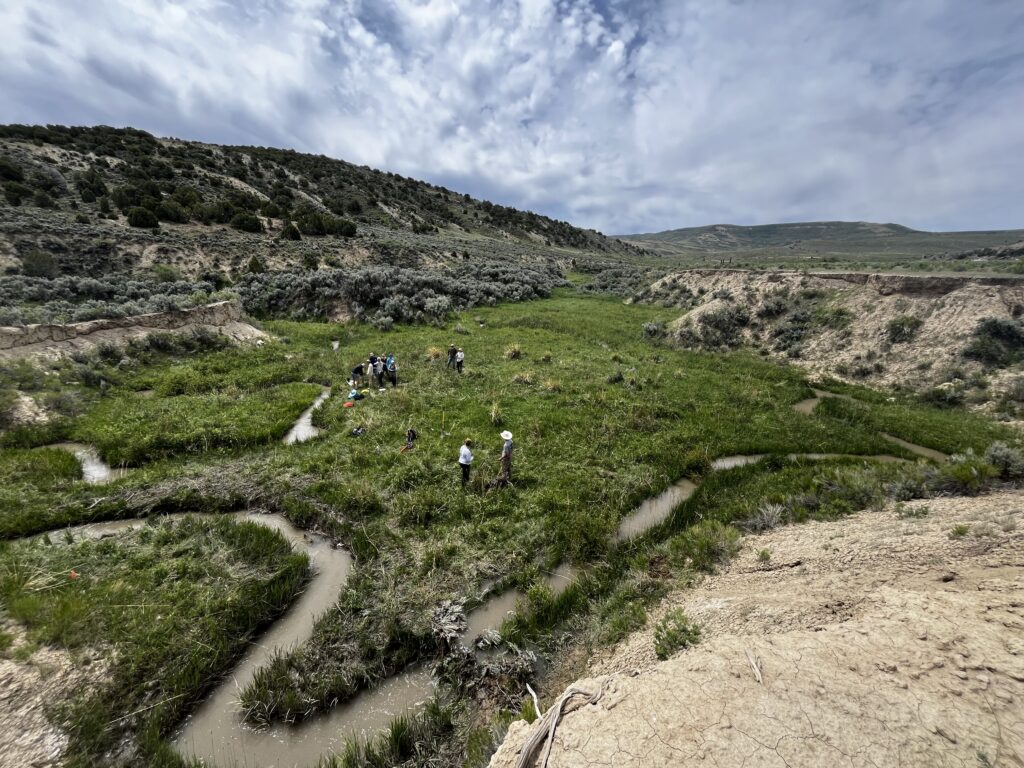
And finally, in Wyoming, TU is working with Wyoming Game & Fish to restore Sage Creek in the southwest corner of the state using beaver dam analogues and other restoration strategies. Collectively, the project will restore 453 acres of valley floor habitat, improve water retention and habitat in 5.6 miles of Sage Creek, reduce erosion, reduce sedimentation into the downstream Flaming Gorge Reservoir and protect almost 80 miles of native cutthroat trout habitat from invasive trout. Reclamation is funding $1.5 million of the $2 million project.
Making water work smarter
In short, what may seem like a small grant in the beginning can lead to massively important infrastructure projects that directly benefit economies, drought resilience and water supply reliability in the West. These important projects not only improve the health of our wild and working lands, but they also provide multiple benefits for agriculture, recreation and our rural and urban communities to boot.
To date, Reclamation has funded 2,376 projects and plans using $3.35 billion in WaterSMART funding, leveraged with $8.85 billion in non-federal funding, across the western states.
Completed WaterSMART projects are saving an estimated 1.7 million acre-feet per year; enough water for more than 4.6 million people.
However, the future of this program is currently being debated in Washington, D.C. Echoing the program’s importance to areas impacted by drought and wildfire, 142 non-federal partners representing water management and use, tribes, agriculture, business, outdoor recreation, conservation and other interests wrote to officials at the Bureau of Reclamation and Department of Interior requesting WaterSMART funding levels for FY27 return to FY24 levels due to the demand for projects in the West.
WaterSMART is the most meaningful conservation program you’ve never heard about.
We urge Congress and the Bureau of Reclamation to continue supporting these projects that bring stakeholders together in collaborative partnerships for rural and urban benefits across the West through this vital program.