Flowing free in ’23
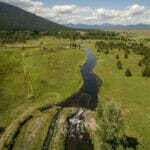
The long campaign to remove four old dams and recover the Klamath River’s legendary salmon and steelhead runs nears completion.


Join our community of optimists and unlock the unlimited power of conservation.
Join our community of optimists and unlock the unlimited power of conservation.
The long campaign to remove four old dams and recover the Klamath River’s legendary salmon and steelhead runs nears completion.
5/5/1999 TU Sues To Protect Fish In Colorado’s Eagle, Fraser Basins TU Sues To Protect Fish In Colorado’s Eagle, Fraser Basins Western Water Project files on St. Louis Creek and Eagle River cases Contact: 5/5/1999 — — Boulder, CO – May 5, 1999 – Trout Unlimited (TU) announced today that it has gone to court…

This spring and summer, as legislators in Washington D.C. consider infrastructure investments to stimulate the economy amid the coronavirus pandemic, Congress can look to partnerships like that of the Kittitas Reclamation District and Trout Unlimited as evidence of the significant value conservation work brings to communities.
Sitting atop the Colorado River Basin in southwest Wyoming, the Green River boasts incredible fisheries, red desert buttes, Seedskadee National Wildlife Refuge and Flaming Gorge National Recreation Area.
Karuk Tribe Klamath Tribes of Oregon Yurok Tribe American Rivers Trout Unlimited California Trout Pacific Coast Federation of Fishermens Associations Salmon River Restoration Council Northern California Council of the Federation of Fly Fishers National Center for Conservation Science and Policy Sustainable Natural Heritage Institute FOR IMMEDIATE RELEASE For more information: Craig Tucker, Spokesman Karuk Tribe…
FOR IMMEDIATE RELEASE Contact: Kim Trotter, (208) 552-0891, x. 712 ktrotter@tu.org Bart Gamett, (208) 588-2224bgamett@fs.fed.us Trout Unlimited Idaho Project Receives Forest Service Award Trout Unlimiteds Idaho Water Project (IWP) recently received the 2009 national Rise to the Future Partner Award from the USDA Forest Service, which recognized IWPs leadership in restoring fish populations in the…
Near the dramatic jagged peaks of the Teton mountains sits Jackson Lake Dam.
Almost every major river in the American West has a dam somewhere along its course. One of the few exceptions is the magnificent Yellowstone River in Montana — at 692 miles long, the Yellowstone is the longest free-flowing river in the contiguous United States. For most other rivers and their fisheries, dams and their operation…
FOR IMMEDIATE RELEASE: May 27, 2014 Contact: Russ Schnitzer: (970) 309-0285 (West) Jeff Hastings: (608) 606-4158 (Midwest) Gary Berti: (304) 704-2731 (East) Steve Moyer: (703) 284-9406 (National) Its a new and better day for fisheries conservation on the farm WASHINGTON, D.C.Trout Unlimited saluted USDA Secretary Vilsacks announcement in Michigan today that the Natural Resources Conservation…
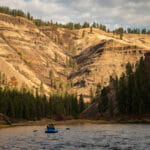
Salmon and steelhead are robust, adaptable creatures. They have survived across the eons, continuously adjusting to a changing ocean and landscape. Unfortunately, Idaho’s salmon and steelhead have not been able to adapt to the construction of the lower four Snake River dams.
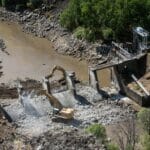
All four dams of the Lower Klamath Project will be gone by the end of 2024
Learn More and Apply Today!

Editor’s note: To kick off our education series exploring the complexities of water in the West, we interview author and TU’s water policy associate for its Western Water and Habitat Program, Sara Porterfield. How long have you been with TU and what do you work on day-to-day? Sara Porterfield: I started with TU in October…
title=”application/pdf” />170330_SENR-Hrg-TU-letter-multi-bills-FINAL.pdf On Thursday, March 30th, the US Senate Committee on Environment and Natural considered and advanced several bills of interest to Trout Unlimited and our members. TU submitted the attached comments outlining our comments on the following bills: TU Supports: S.513, a bill to designate the Frank and Jeanne Moore Wild Steelhead Special Management…
The data show conclusively that the Pacific Northwest’s climate is warming. The Snake River basin will experience hotter temperatures in the summer, which will make water conditions in the lower Snake River more problematic than they are at present. High water temperatures in the Snake under current conditions can take a devastating toll. In 2015,…
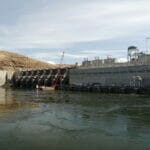
Photo by Eric Crawford. TU has worked for years to restore salmon and steelhead, and a dam-removal proposal is in the works American Rivers today named the Snake River America’s No. 1 Most Endangered River of 2021, pointing to perilously low returns of Snake River salmon and steelhead, and the urgent need for lawmakers and…
Since the mid-nineteenth century, the central question of the American West has been: How much water is there in the region, and how do we best use it? This question has been a topic of debate for more than the past 150 years, and we’re still trying to answer it now in the twenty-first century.…
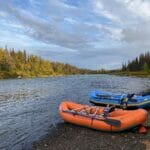
But future public access at risk with Alaska governor’s proposal to strip Susitna Basin waters of “Recreational River” status