


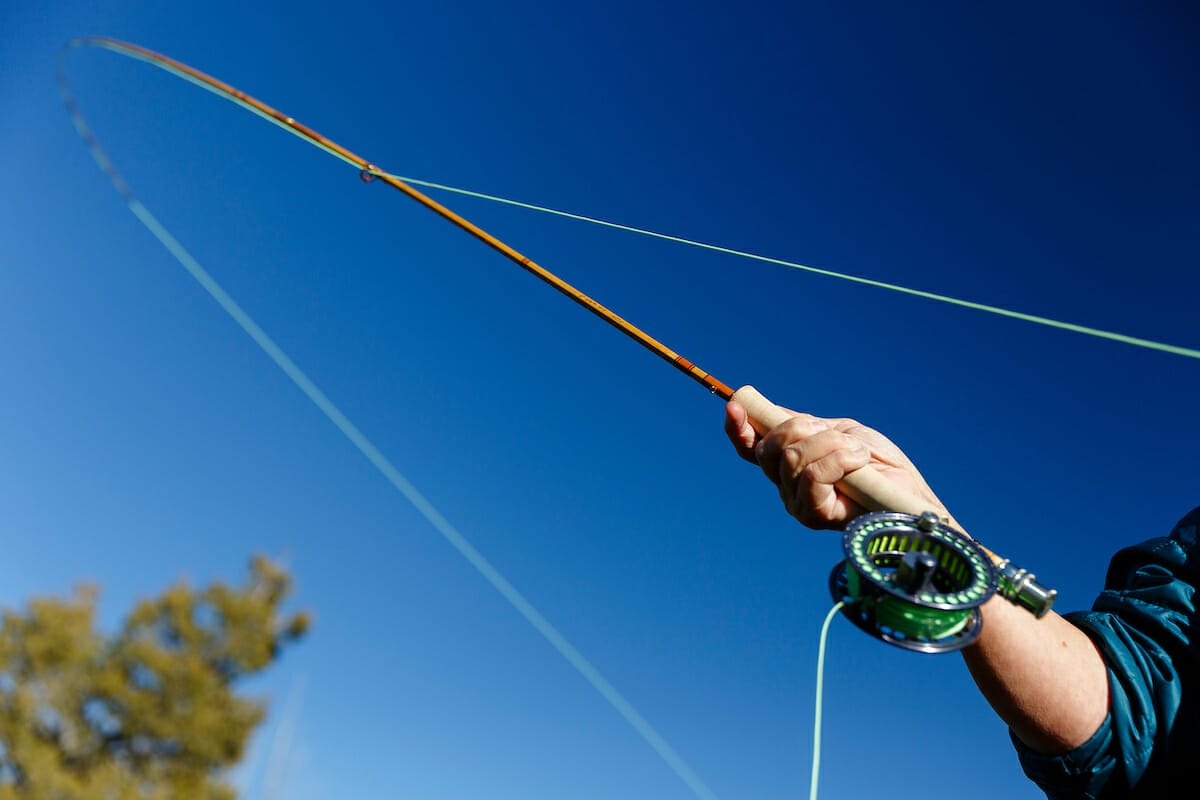
People ask me all the time if I could recommend a fly rod.
Sure, I say, but there are many variables to consider, and what works for me might not necessarily be your cup of tea.
Let’s start with the basics.
Fly rods are categorized by length and “weight,” which doesn’t mean the actual weight of the rod itself. Instead, a “5-weight” fly rod is meant to cast a “5-weight” line, which now very loosely refers to manufacturing standards set by the American Fly Fishing Trade Association (AFFTA, formerly the American Fly Tackle Manufacturers Association or AFTMA). According to those guidelines, the weight of the first 30 feet of the line is measured in grains, and a 5-weight should be 140 grains… 6-weight, heavier, 4-weight lighter, and so on.
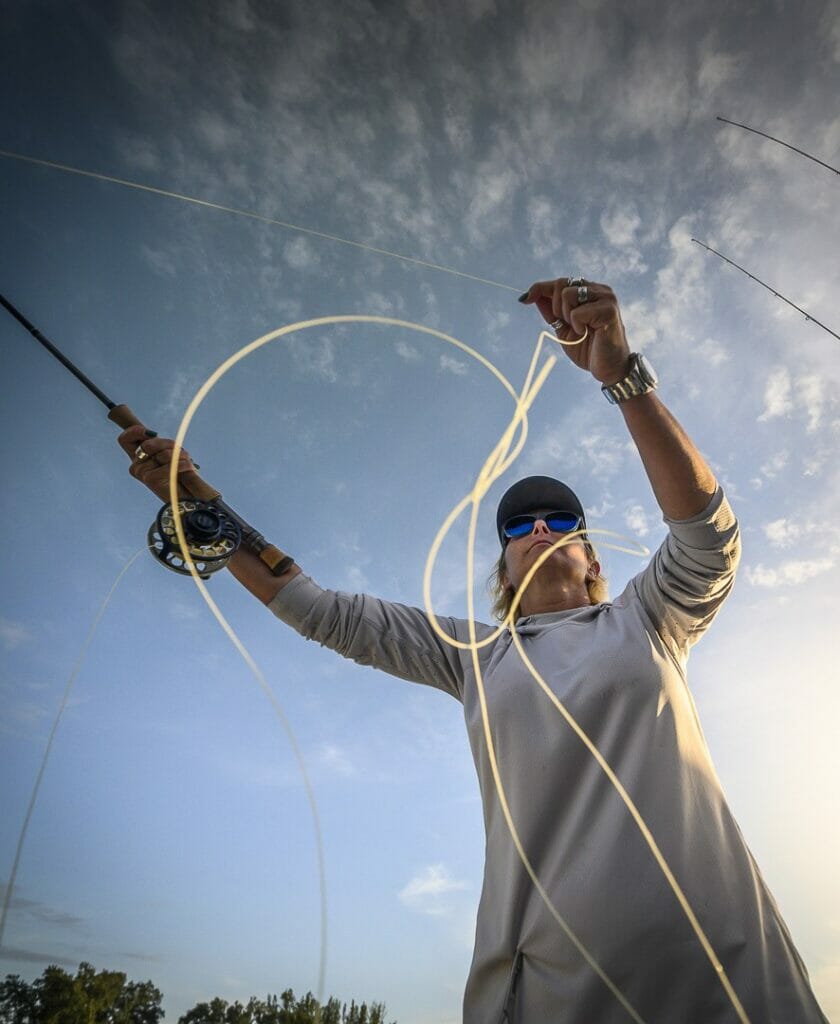
These days, the truth of the matter is that many fly lines are intentionally produced a half size or more heavier than the standard because they work better when loading faster-action graphite rods.
It’s all about the flies, not the fish
The thing to remember is that a certain weight rod/line has less to do with the types of fish you plan on chasing, and more to do with the types of flies you’re going to cast.
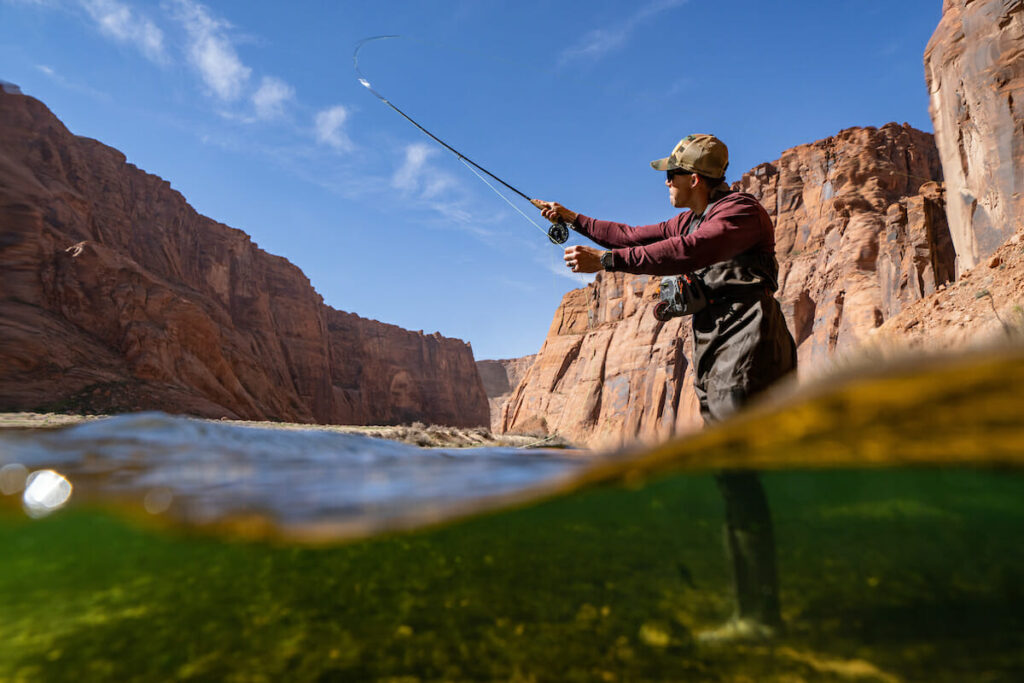
A 9-foot 5-weight is pretty much considered the gold standard in the trout fishing world (over 70 percent of all fly rods sold in the U.S. are 5-weights… the fly-fishing world revolves on an axis of trout). While that might conveniently match up with most 8-20-inch trout, the real reason the 5-weight shines is because it is adept at throwing a wide variety of flies, from small parachute Adams patterns to grasshoppers and size #10 woolly buggers. If you want to fish a nymph rig with weight under the surface, no problem. Dry flies on the surface? Easy peasy. Streamers for bass as well as trout? Sure.

Personally, I like fishing dry flies for trout most of all, so if I had to pick one rod I’d choose an 8-1/2-foot, 4-weight rod. If I were going to throw heavy streamers all day, every day, I’d choose a 7-weight. But that’s just me.
It’s in the action
Now, let’s talk about “action.”
When we call a fly rod’s action “fast,” we’re basically saying that it’s stiffer. With a little more oomph and some refined timing of the casting stroke, an angler can generate more line speed, which often translates to distance. A “moderate” action rod is a bit more flexy, and that translates to “feel.” The average caster is going to feel that line load as they stop the tip of the rod and change directions of the casting stroke.
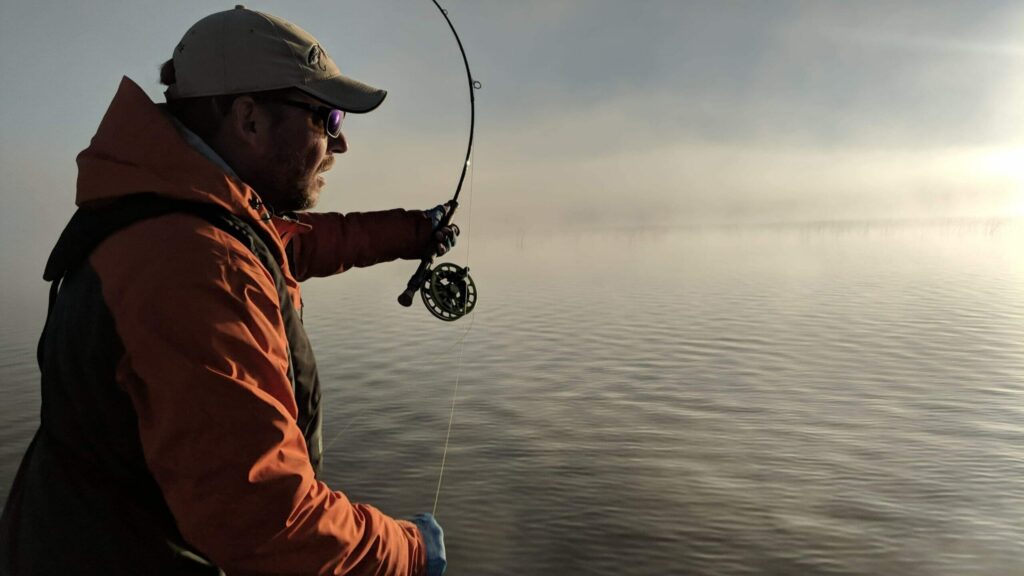
Some will argue that certain actions lend themselves to other things like accuracy and delicate presentations. But to be honest with you, the line has as much to do with all that as a rod does. And practice and skill matter 100 times more when it comes to casting accuracy and effective presentations than any rod or line ever will.
A rod for every scenario, or not
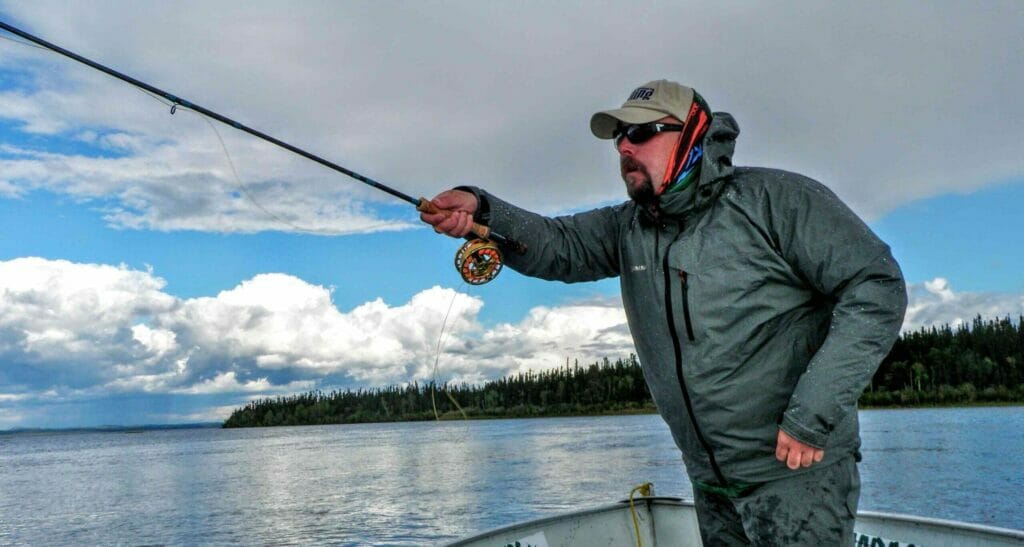
When you start thinking about all of this, it seems like you could justify a different rod and line for just about any fishing scenario—a dry fly, small stream trout rod… a rod for throwing pike bunnies… “Euro nymphing” rods, saltwater setups… it’s almost limitless and that’s exactly how the tackle companies want you to think. You should tread on that path at your own discretion.
To me, the number one factor for choosing a fly rod is very simple.
Do you like it? I mean really like it. Do you like how it looks? Do you like how it feels? Does it make you want to pick it up and cast it? Are you proud of it? A great fly shop is a matchmaker.
If you legitimately love your fly rod, you’re going to get good at fishing with it, because you’re going to use it a lot.
The hours you put into a rod are what ultimately dictate itscreal-world performance, function and value far more than any advice you get from anyone else.