
Several great apps can help anglers navigate to primo fishing spots in the Driftless area. Now, a new interactive ArcGIS StoryMap adds another layer of information, showcasing where Trout Unlimited’s collaboration with the National Fish Habitat Partnership is creating conservation successes across the region and making fishing even better.
The Driftless Area Restoration Effort (TU DARE) is a long-running collaborative initiative focused on restoring coldwater streams, improving fish habitat, and strengthening watershed health across the Upper Midwest.
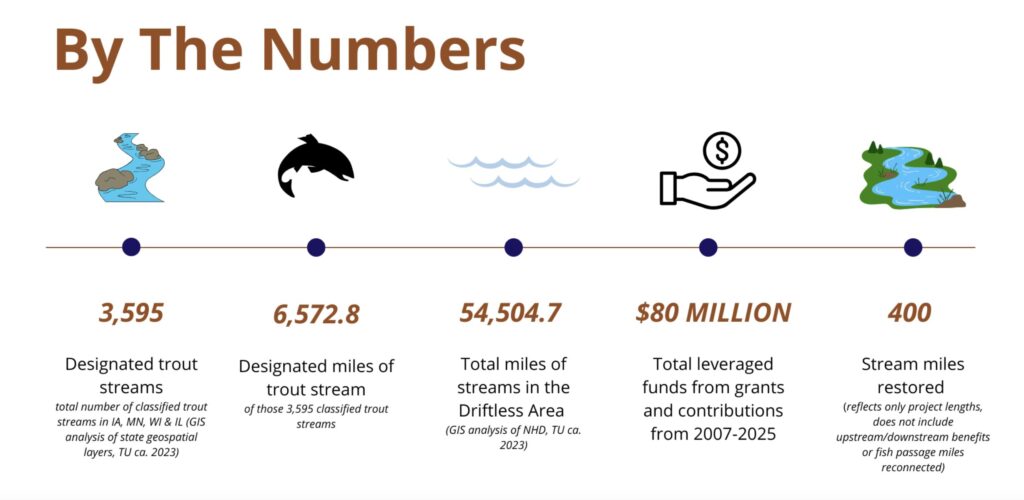
The StoryMap explores the unique geography, conservation challenges, and restoration successes of the Driftless Area, a 24,000-square-mile landscape spanning portions of Minnesota, Iowa, Wisconsin, and Illinois.
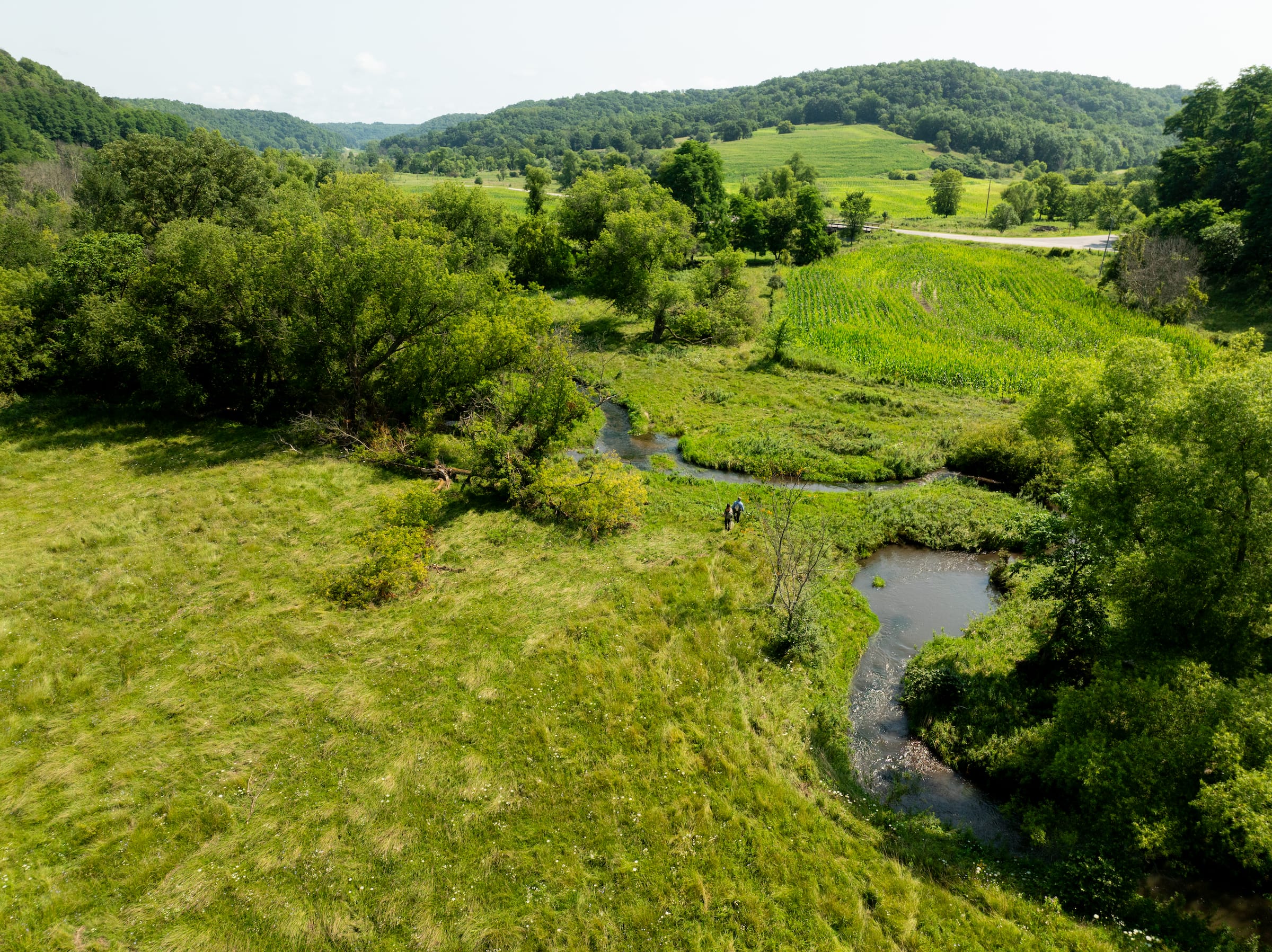
Unlike much of the surrounding region, the Driftless Area was bypassed by the last continental glacier, leaving a rugged landscape of limestone bluffs, steep valleys, and hundreds of spring-fed coldwater streams that support nationally significant trout fisheries and diverse aquatic ecosystems.
The StoryMap combines interactive maps, project examples, and monitoring data to demonstrate how conservation partners are working together to restore and reconnect streams while improving water quality and resilience across the region.
Addressing Challenges to Coldwater Streams
Despite its ecological richness, the Driftless Area has experienced significant habitat degradation resulting from historic land use practices such as intensive agriculture, stream channelization, and loss of perennial vegetation. These practices have contributed to erosion, sedimentation, and declining water quality across many watersheds.
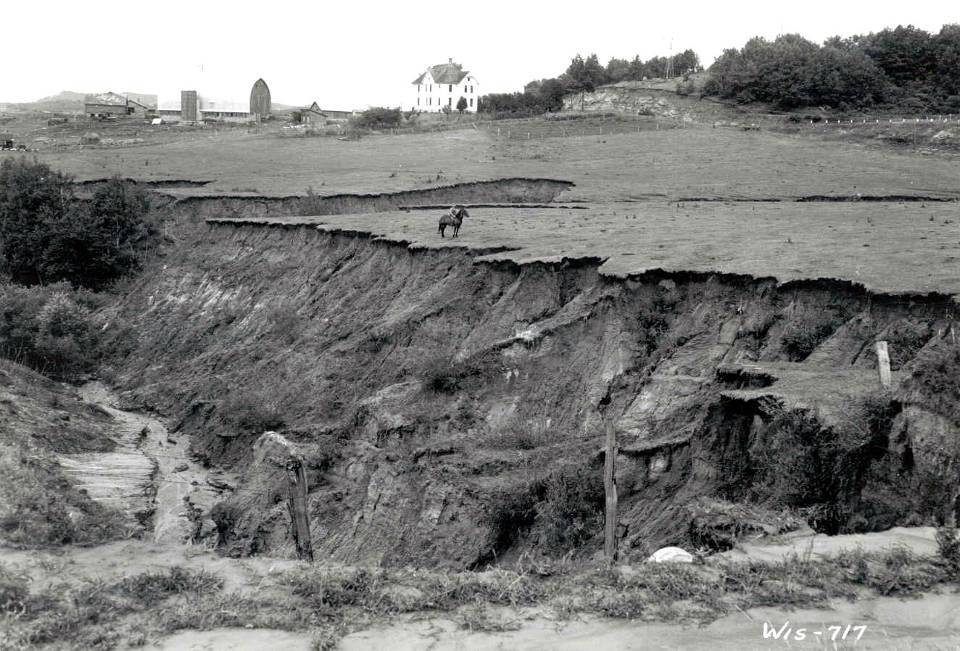
Climate change is also intensifying flood events in the region, placing additional stress on aquatic habitats and infrastructure.
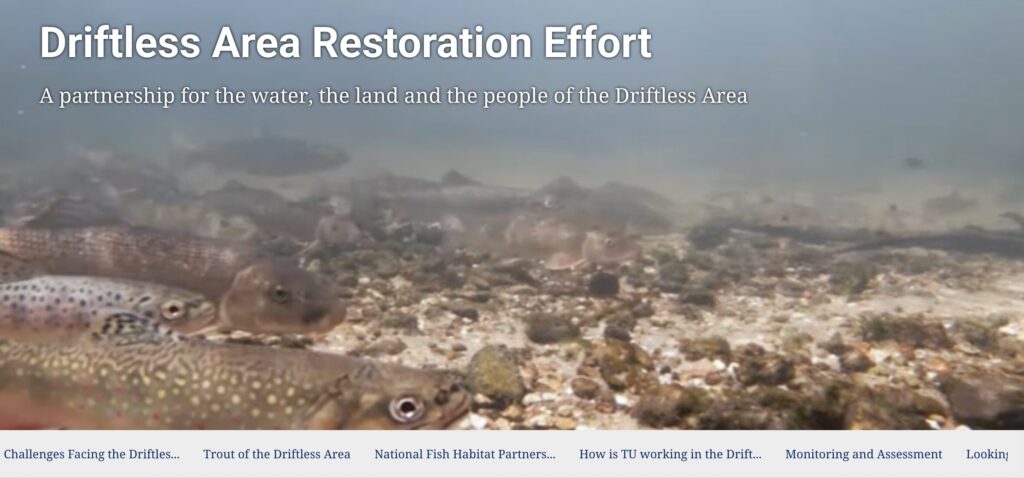
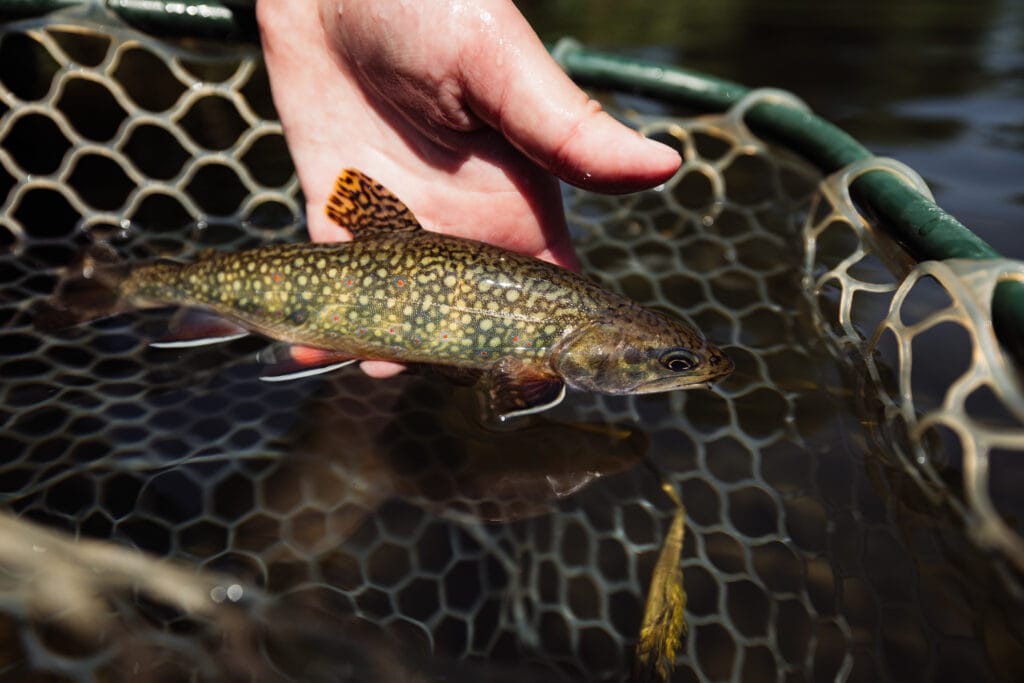
These challenges threaten native species such as brook trout, the original salmonid of the Driftless Area’s cold spring-fed streams. Brook trout are highly sensitive to warming waters and declining water quality, making them an important indicator of ecosystem health.
Introduced brown trout, which are more tolerant of warmer and sediment-impacted waters, now support a popular recreational fishery that contributes tens of millions of dollars annually to local economies.
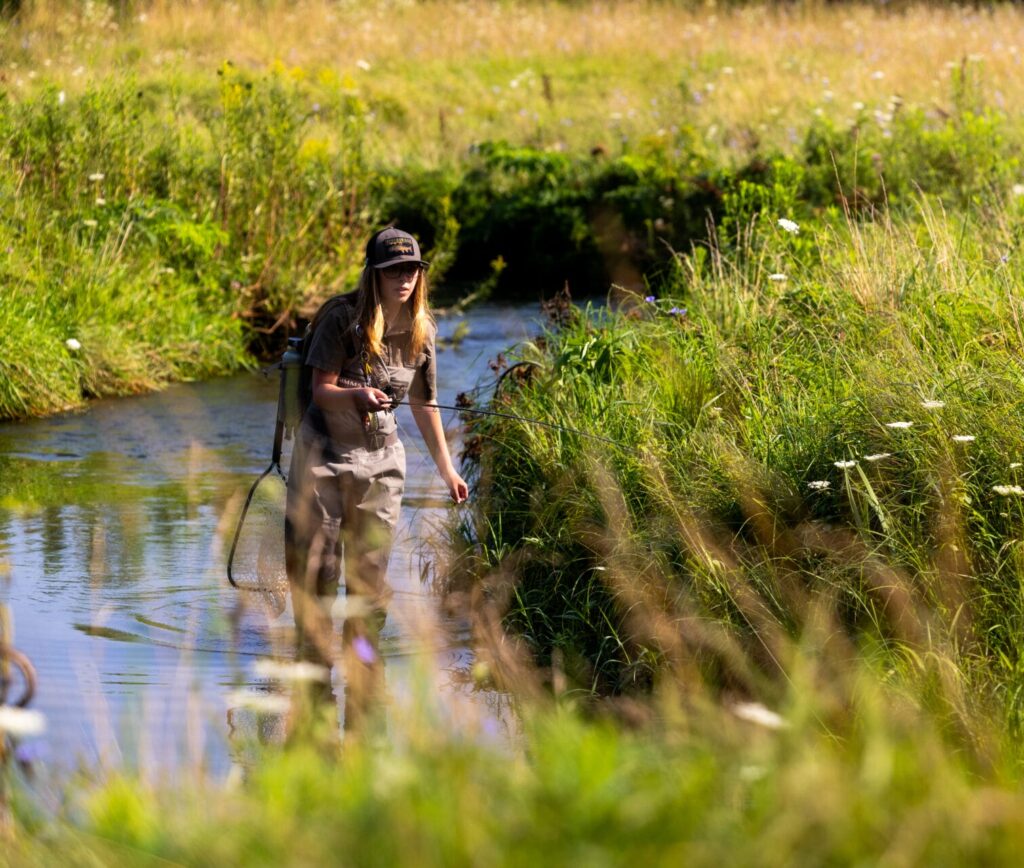
Two Decades of Restoration Success
Trout Unlimited launched the Driftless Area Restoration Effort in 2003 as part of its Home Rivers Initiative. It became a pilot partnership under the National Fish Habitat Partnership in 2005 and the program was formally recognized as a full Fish Habitat Partnership in 2007.
Since its inception, the partnership has invested over $80 million in public and private funding, restoring nearly 400 miles of streams across the region.
Since 2006, NFHP has supported over 1,700 projects and has put over $600 million in conservation projects on the ground benefiting fish habitat throughout all 50 states. This effort works to conserve fish habitat nationwide, leveraging federal, state, tribal, and private funding resources to achieve the greatest effect on fish populations through priority conservation projects of 20 Fish Habitat Partnerships that are organized around key fish species, geographic areas, or important fish habitats.
Across the Driftless Area, restoration work focuses on reconnecting streams with their floodplains, stabilizing streambanks, improving riparian vegetation, and installing instream habitat structures that support trout and other aquatic species.
Projects highlighted in the StoryMap include:
• Danuser Creek Restoration (Wisconsin) — This restoration of a Class II trout stream included floodplain reconnection, habitat structure installation, and replacement of undersized culverts with a span bridge reconnecting approximately 4.5 miles of habitat.
• Trout Run Restoration Project (Minnesota) — Habitat improvements along a spring-fed stream helped to restore spawning areas and improve conditions for trout, sculpin, and other aquatic organisms.
• Casey Springs Brook Trout Habitat Project (Iowa) — Restoration work reconnected floodplain habitats and improved instream conditions in one of only 13 Iowa streams with naturally reproducing brook trout.
These projects illustrate the collaborative approach taken across the region, involving federal and state agencies, local governments, nonprofit organizations, landowners, and volunteers.
Science-Driven Conservation
The StoryMap also highlights innovative monitoring and assessment work guiding restoration decisions across the Driftless Area.
Since 2023, Trout Unlimited has conducted more than 2,650 road-stream crossing assessments in Wisconsin to identify barriers to fish movement and prioritize habitat reconnection projects.
In addition, anglers and volunteers are contributing water quality observations through the WiseH2O mobile application, which has generated more than 2,000 crowdsourced monitoring records across the region.
These data help conservation partners identify priority watersheds and support strategic planning for restoration projects.
Looking Ahead
Two decades into the Driftless Area Restoration Effort, partners continue to expand restoration and monitoring efforts to address emerging challenges and improve watershed resilience.
Future priorities include:
• Replacing flood-prone road-stream crossings that block fish passage
• Removing outdated dams and reconnecting fragmented habitats
• Expanding water quality monitoring and watershed assessments
• Developing a regional Conservation Portfolio to guide restoration and protection priorities beginning in 2026
The initiative is supported in part by the Multistate Conservation Grant Program, funded through the Wildlife and Sport Fish Restoration Program and jointly managed by the U.S. Fish and Wildlife Service and the Association of Fish and Wildlife Agencies.