

After over two decades of advocacy, negotiation and engineering, the four dams blocking the Klamath River came down over the course of 2023 – 2024. With the final barrier breached in September 2024, within weeks Chinook salmon were found in tributaries above the former dam sites.
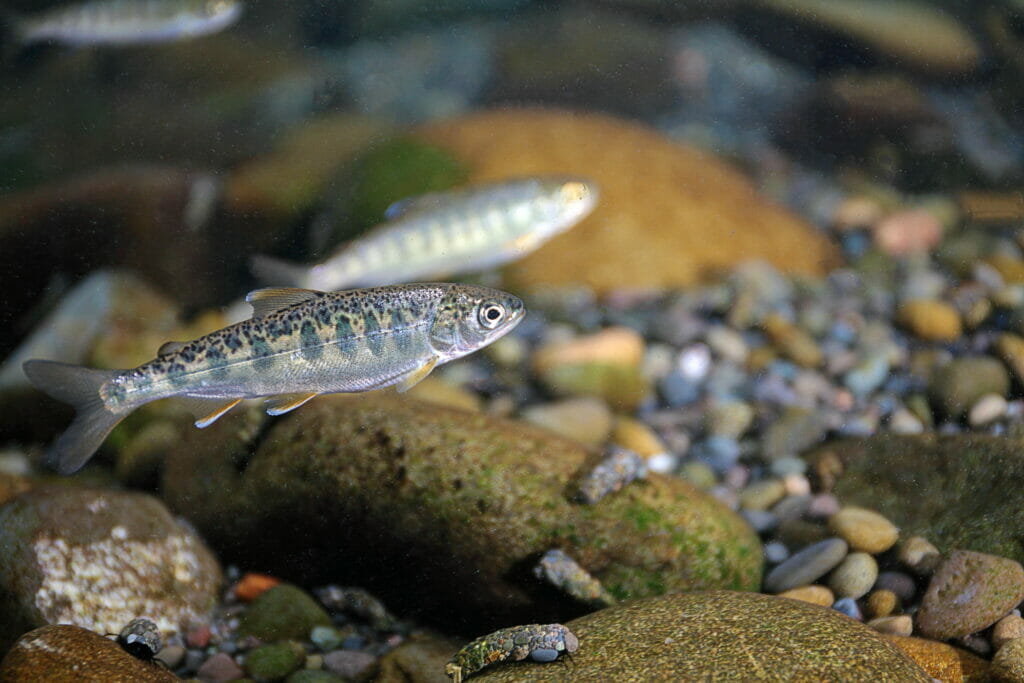
Since then, the fish have astounded biologists by quickly migrating through Keno Dam, the Link River Dam and Upper Klamath Lake to reach headwater streams like the Sprague, Wood and Williamson Rivers. Monitoring by the Klamath Tribes and Oregon Department of Fish and Wildlife (ODFW) has confirmed that juvenile salmon are migrating out of these tributaries, profound evidence that salmon are successfully spawning in these portions of the watershed for the first time in over a century.
While fall Chinook have had the most dramatic return to the basin since dam removal, coho salmon and steelhead have been documented above the former dams, too, and reintroduced spring Chinook smolts have been found moving downstream through the system on their way to the Pacific Ocean. Astoundingly, a spring Chinook adult was recently documented above Upper Klamath Lake as well.
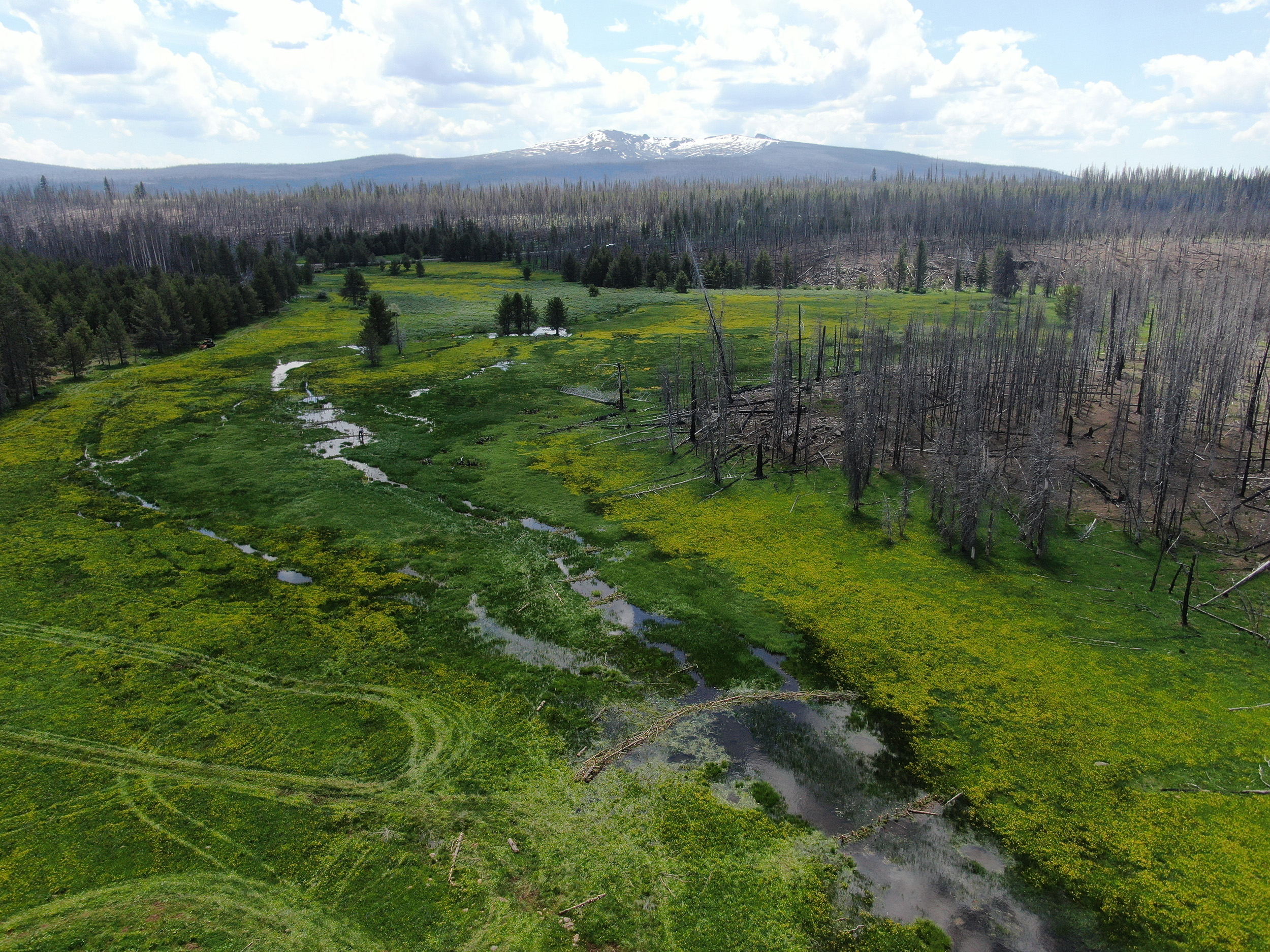
The lower Klamath’s water quality and temperatures have also improved since the dams were removed and their impoundments were drained. Today, after millions of native seeds were planted, those former reservoirs are now filled with blooming native plants instead of stagnant hot water, invasive warmwater fish and algae blooms.
An ongoing commitment to restoring the upper Klamath
TU staff, grassroots and supporters were deeply committed to working alongside tribes, conservationists, government agencies, scientists, commercial fishing groups and recreational anglers to reconnect the Klamath River.
While the dam removal campaign was underway, TU simultaneously led critical work to restore habitat, bolster water supplies and quality, improve wildfire resilience and protect native redband trout and threatened bull trout in the Klamath headwaters. As dam removal grew imminent, TU staff partnered with the NOAA Restoration Center and the Pacific States Marine Fisheries Commission to map and prioritize needed restoration in the river’s hydropower reach, work that is guiding multiple current and recent projects, including dam removal on Jenny Creek.
(Learn more about TU’s work in the Upper Klamath in Chrysten Rivard’s 2024 blog post.)
Restoration on the Sprague River
For the last five years, much of TU’s restoration work in the Klamath headwaters has centered on the Sprague River watershed, one of the primary headwater tributaries to Upper Klamath Lake. The work is ongoing, but to date the ambitious effort has spanned over 34 miles of stream habitat, most of which has been on private agricultural and timber lands. One project took place within the Fremont-Winema National Forest.
Fed by spring water and snowmelt, the Sprague River is a popular destination for anglers targeting native redband trout. It provides critical habitat for remaining populations of threatened bull trout and, historically, was important spawning and rearing habitat for salmon and steelhead.
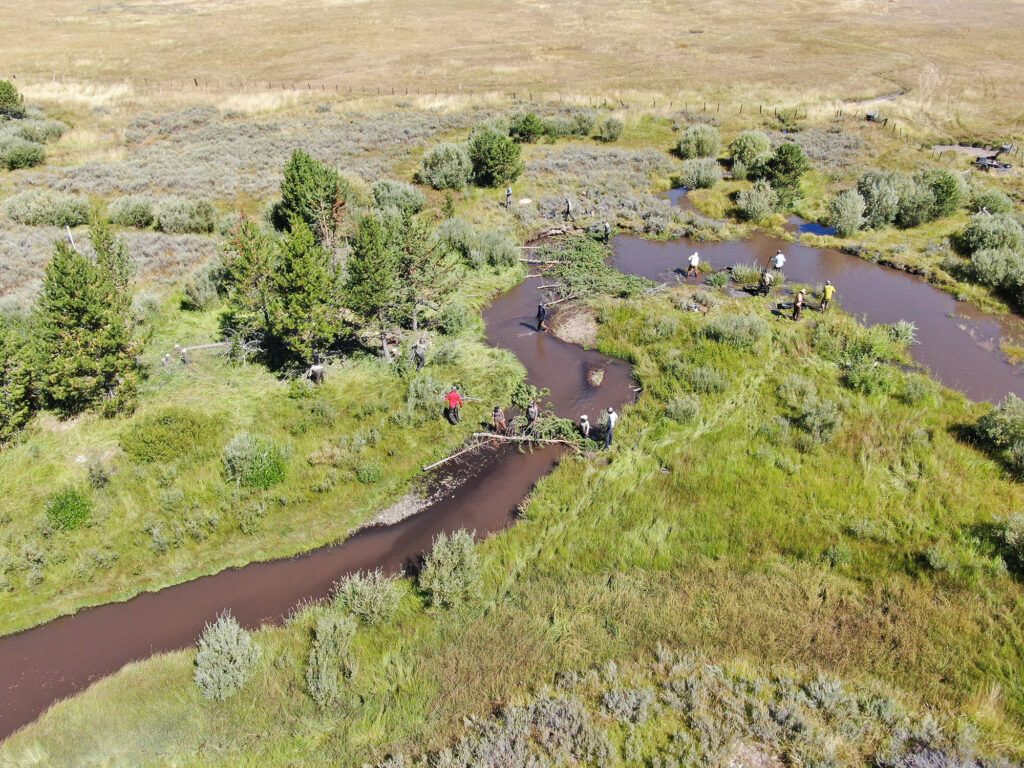
TU’s habitat restoration work in the Sprague watershed has centered on Low-Tech, Process-Based Restoration (LTPBR) techniques and has been supported by some of the leading practitioners in the field, Anabranch Solutions and Swift Water Design.
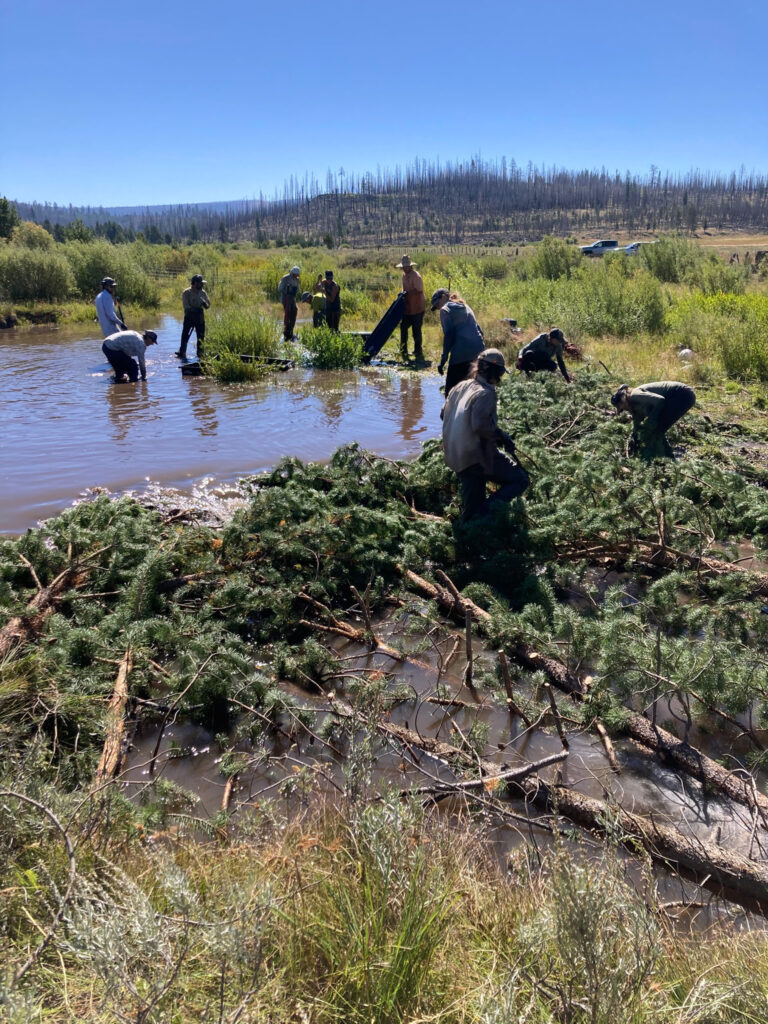
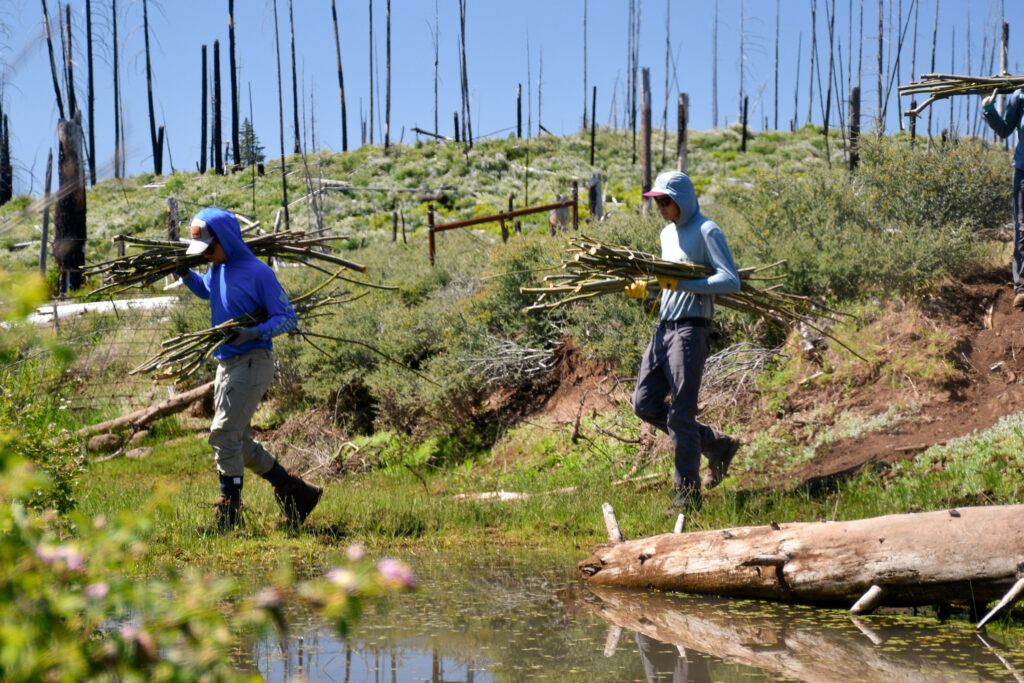
Broadly speaking, this work involves hand crews building structures that mimic beaver dams and woody debris accumulations to restore historic habitat complexity and reconnect stream floodplains. LTPBR is a low-cost and effective methodology for creating pools, recharging groundwater, increasing wet floodplain habitat, supporting riparian vegetation growth and capturing sediment.
In the Sprague and its tributaries, TU’s teams and contractors have built and maintained over 2000 structures as a part of their multi-year effort.
The initial phases of TU’s work began in the footprint of the Bootleg Fire, the third largest wildfire in Oregon since 1900. After a fire, natural beaver dams and LTPBR structures capture sediment, ash and debris flowing off the burned landscape. This material would otherwise smother small headwater streams, killing fish and aquatic insects by burying habitat and decreasing dissolved oxygen levels.
Sediment capture also helps reestablish stream function by raising the channel, letting water spill into adjacent floodplains during flooding and runoff. These reconnected floodplains are important wildlife habitat throughout the year and critical refugia during wildfire.
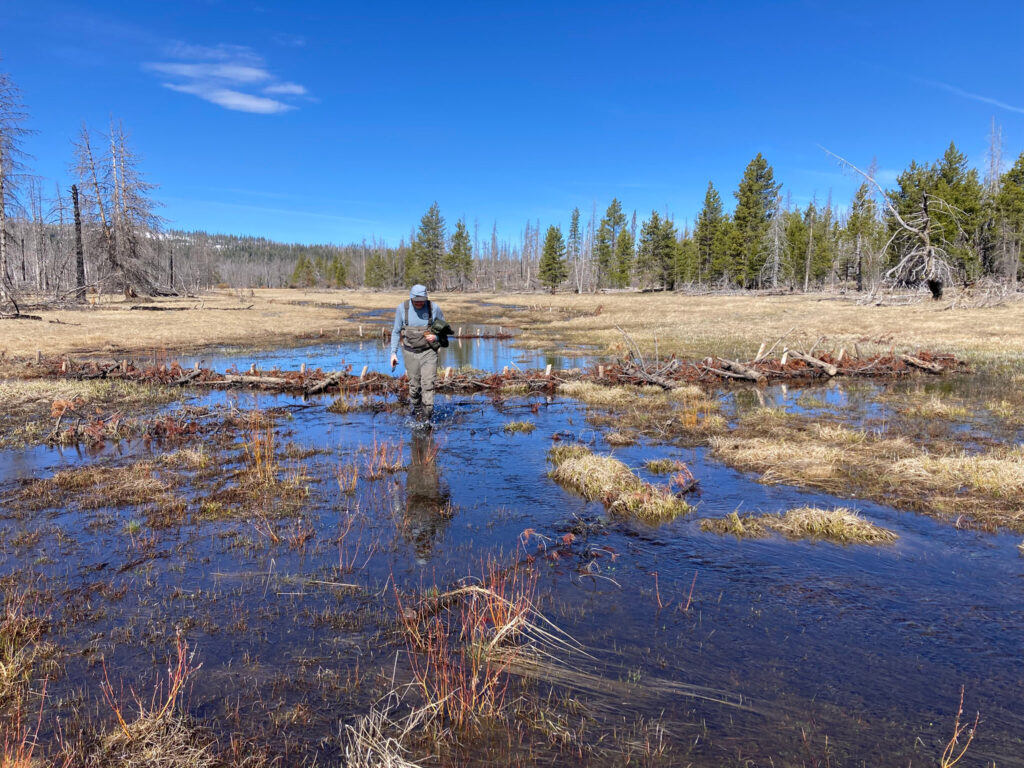
In later years, TU’s LTPBR work expanded outside of areas directly impacted by the Bootleg Fire. Beyond the benefits of improved water storage and stream habitat, sediment capture also benefits water quality downstream in Upper Klamath Lake. Degraded habitat combined with the basin’s naturally phosphorus-rich soils contribute to nutrient loading in the lake, which contributes to summer algae blooms and subsequent dissolved oxygen crashes. Capturing sediment in the headwaters reduces nutrient loading and improves water quality in the lake, which benefits two endangered species of endemic suckers, C’waam and Koptu, struggling to persist in Upper Klamath Lake.
Studying the restoration results
Alongside designing and implementing the restoration work, TU staff have been undertaking extensive pre- and post-project monitoring at key project locations in the Sprague watershed. This important work measures the local benefits to fish populations, riparian habitat and groundwater and contributes to the larger scientific understanding of LTPBR techniques and impacts.
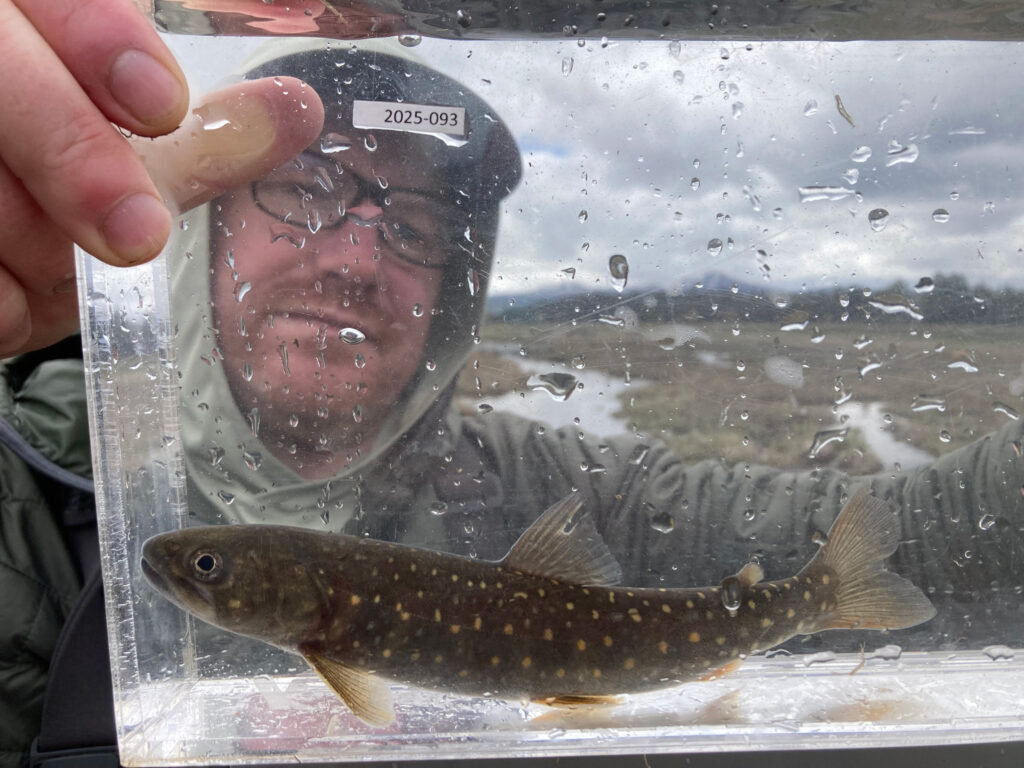
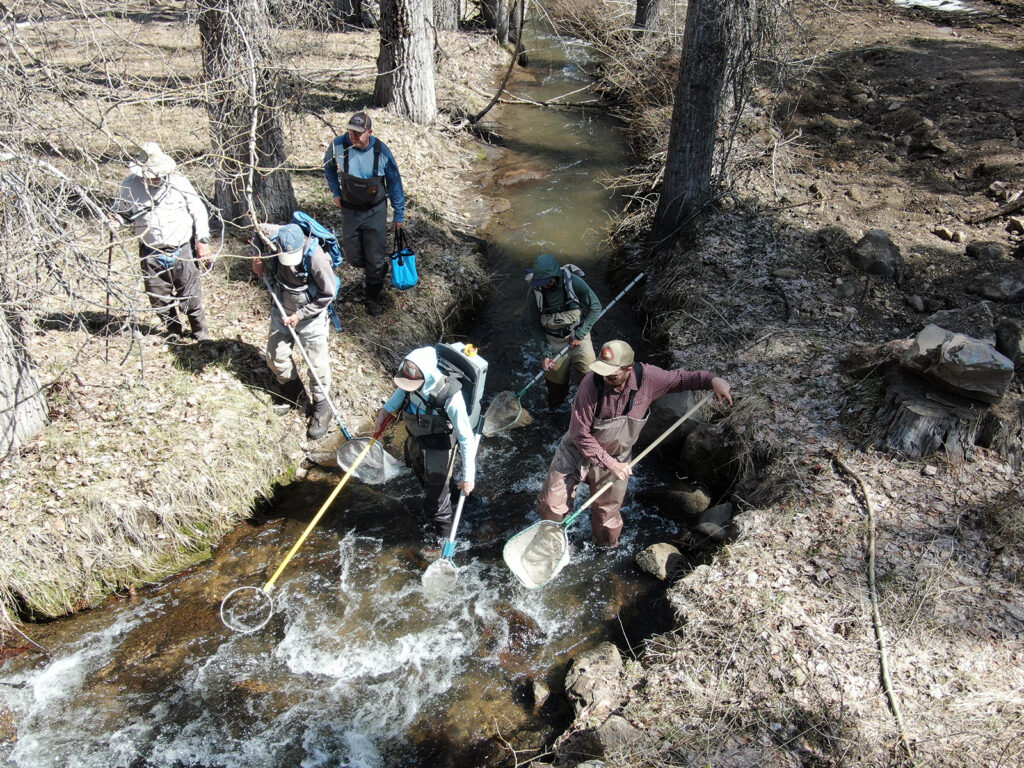
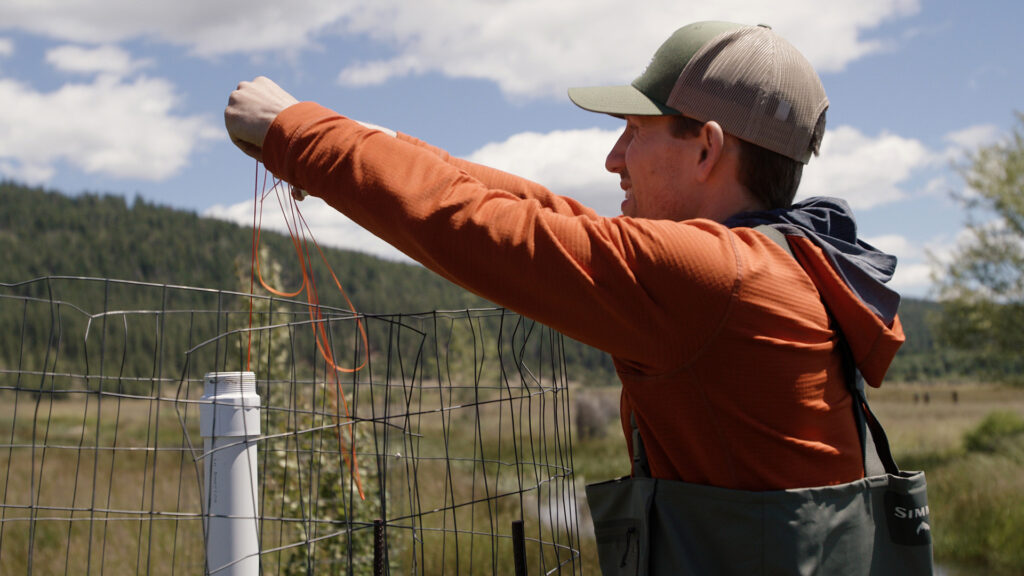
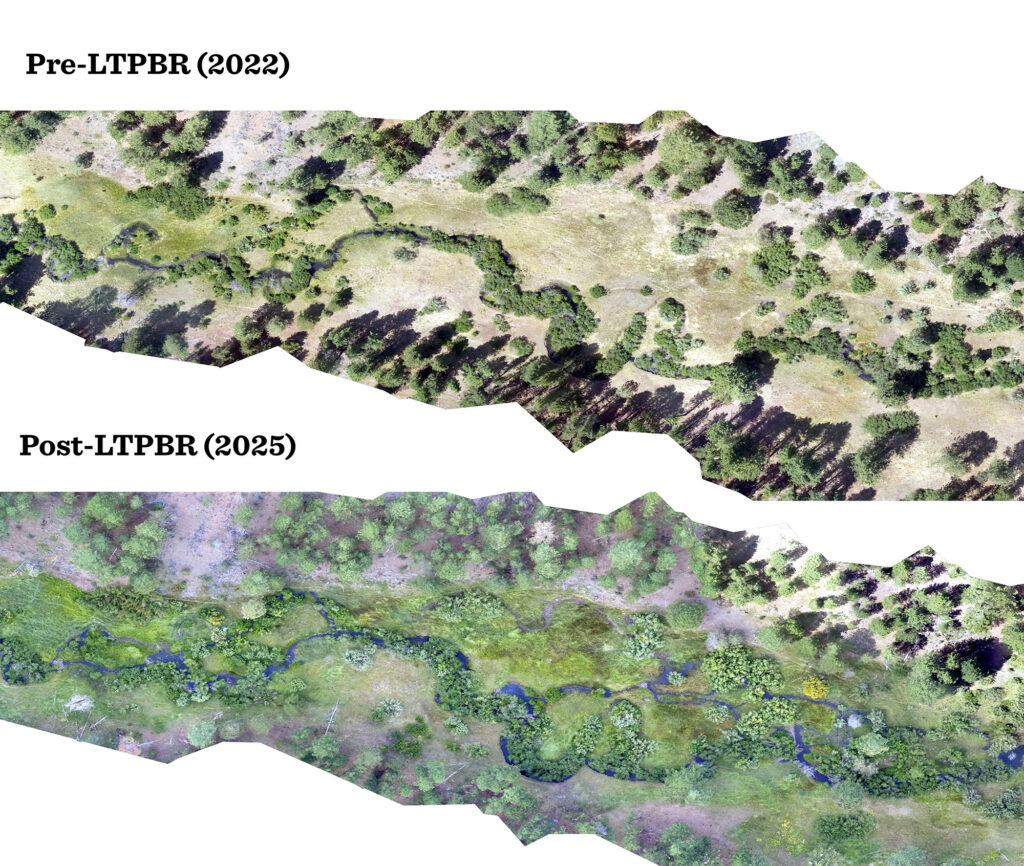
The robust scope of monitoring includes before-and-after surveys of fish populations, drone flights with multispectral cameras to document increases in riparian vegetation and the expansion of reconnected floodplains, a series of shallow wells near project sites to document changes in groundwater levels and a study being led by TU’s science team to measure the amount of carbon sequestered within restored floodplains.
The initial results have been encouraging.
In monitored reaches, riparian vegetation is increasing in area and productivity, stream habitat complexity is increasing, sediment is being captured, floodplain connectivity has increased.
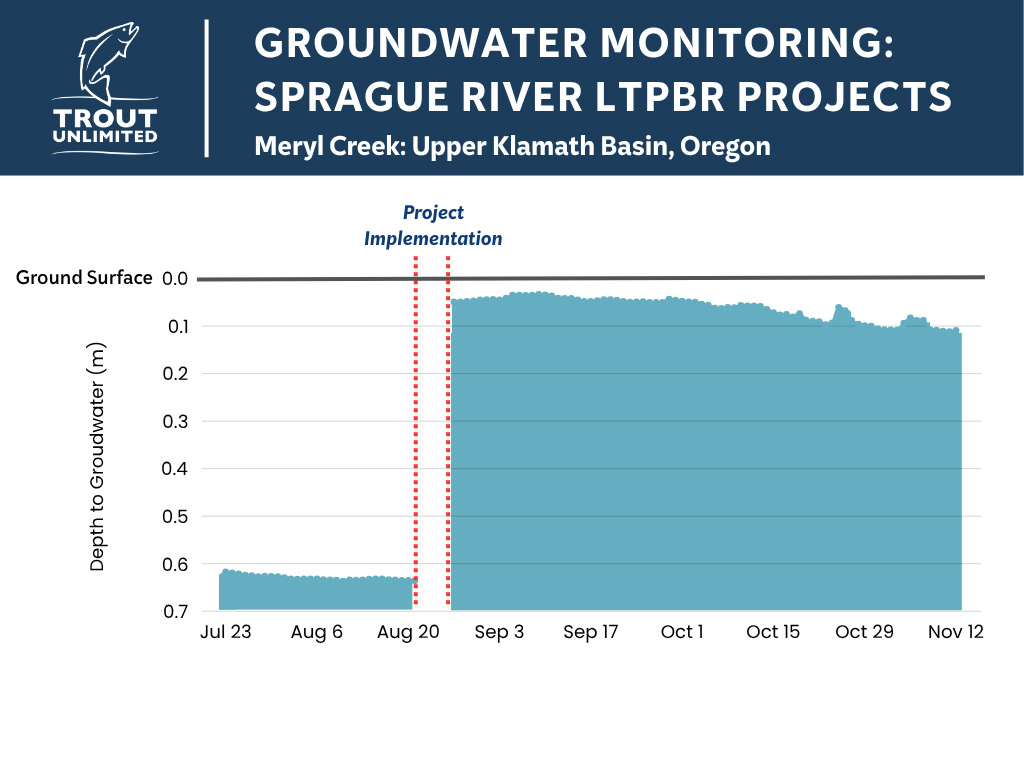
Groundwater levels have shown significant, and durable, improvements compared to nearby locations where LTPBR work has not been done.
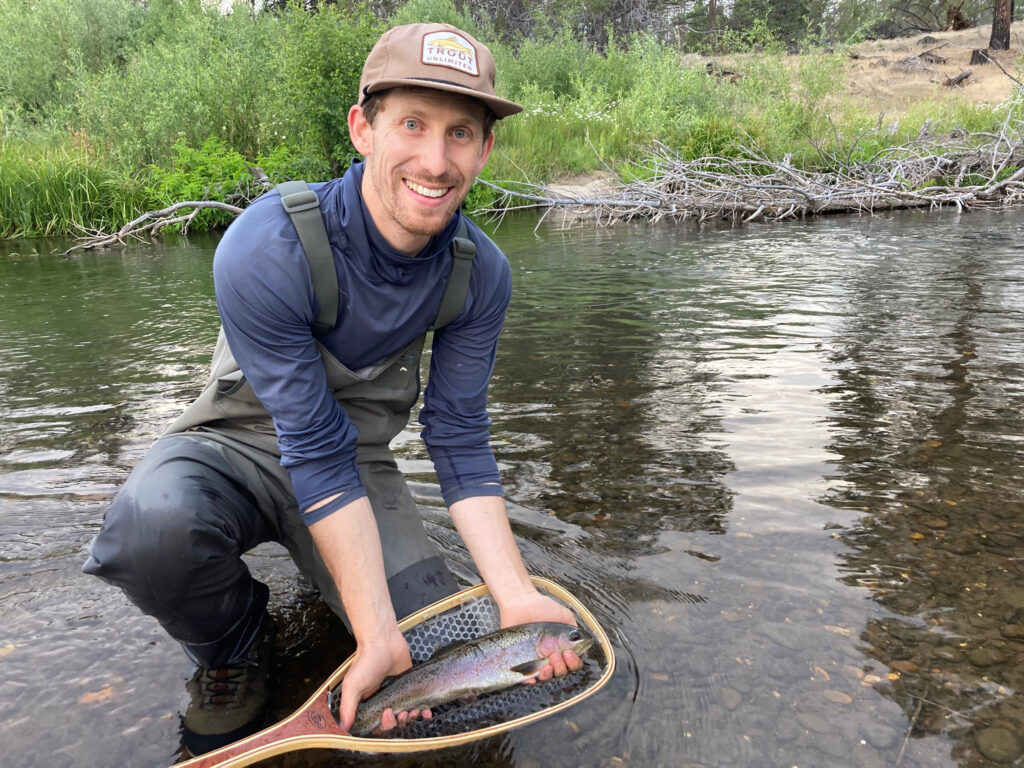
At one project site, an initial post-implementation survey found larger redband trout on average compared to redbands captured in a control reach and pre-restoration conditions. Although these results are preliminary and more data and analysis are necessary, they offer insight into short-term impacts of LTPBR on redband trout in the Klamath headwaters.
Sprague Restoration: Support and partners
Large-scale, ongoing projects like this work in the Sprague depend on many funders and partners to make the work possible and sustain it over the course of multiple years.
Substantial funding provided by the U.S. Fish and Wildlife Service (USFWS) has driven most of TU’s habitat restoration since work began in the footprint of the Bootleg Fire. The Upper Klamath Basin Ag Collaborative has facilitated a large portion of the federal USFWS funding through its Big Swing Project, a partnership between local agricultural and restoration landowners and organizations.
Regional USFWS and Forest Service staff have also assisted with key project permitting.
Private and foundation support have also played an important role in the Sprague LTPBR work, monitoring and science.
Allen Family Philanthropies has directly supported three miles of habitat restoration and funded an innovative study led by TU’s Jordan Fields, an aquatic resiliency scientist, to better understand how much carbon is durably stored in intact and restored stream floodplains.
TC Energy has directly supported a mile of stream habitat restoration. Their support also provided critical funding to purchase electrofishing equipment, which ensures that TU staff can track native and non-native fish response to LTPBR projects in the basin.
Long term impacts
The benefits of TU’s work in the Sprague basin extend beyond the on-the-ground impacts. The team’s robust monitoring and new research will improve our collective understanding of LTPBR techniques and impacts, and the projects themselves have provided important opportunities to share best practices and educate the next generation of conservationists.
In recent years, groups of practitioners from California, British Columbia and France have visited the Sprague River to train and learn LTPBR approaches alongside TU staff, Anabranch Solutions and Swift Water Design. The visitors carried those skills back to their home rivers and local restoration projects.
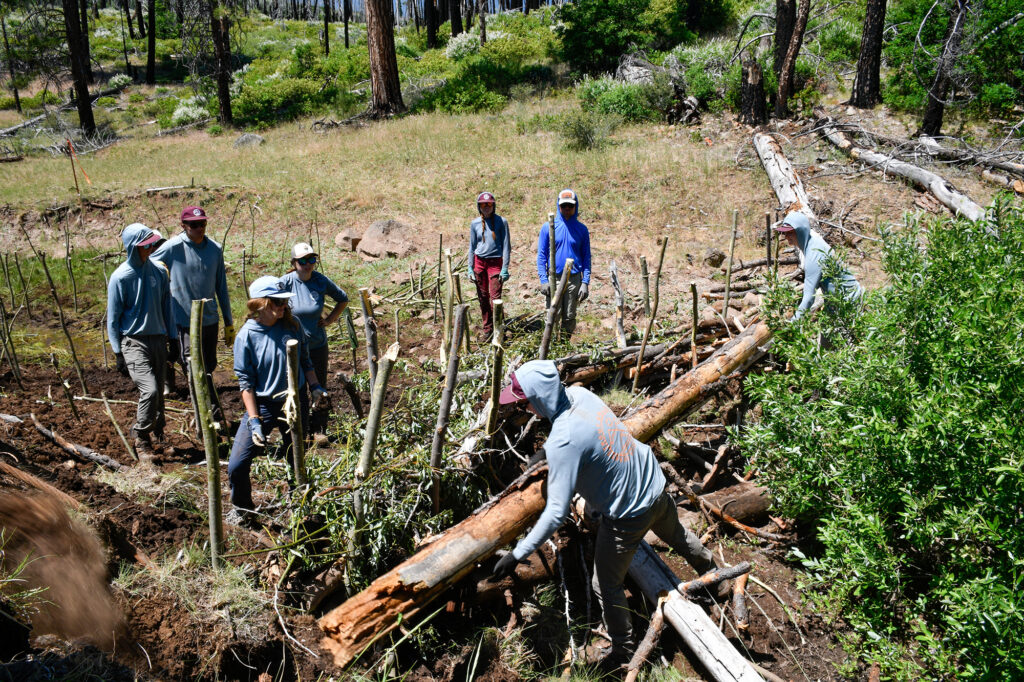
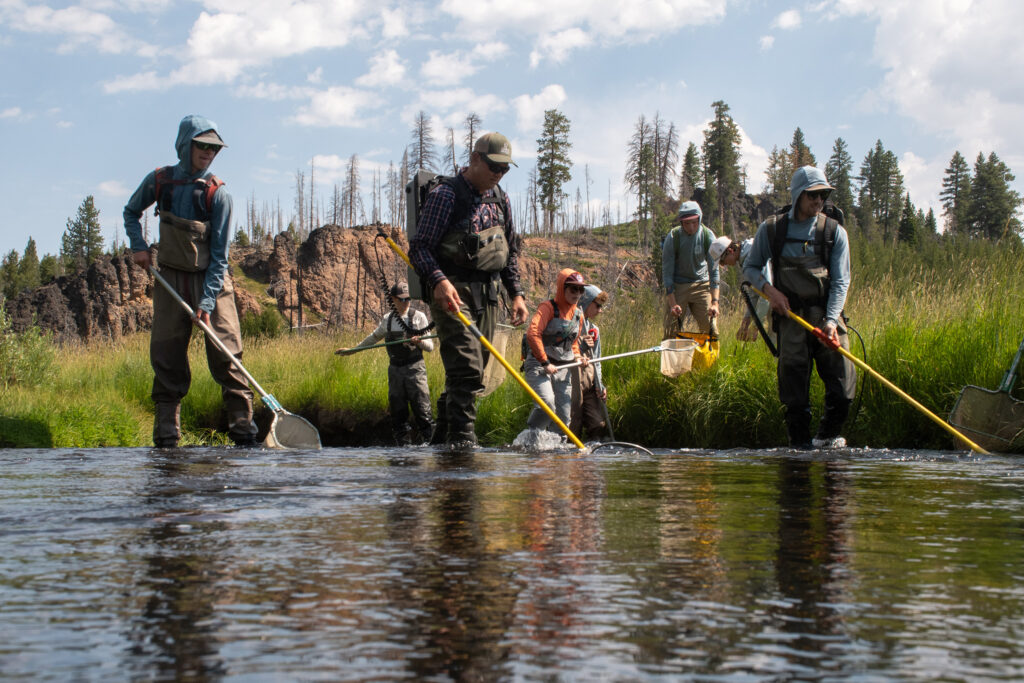
During the summer of 2025, high school and college students participating in the Trout Unlimited Expeditions program spent time in the Klamath Basin and built beaver dam analogues (BDAs) with TU staff at Sprague project sites. The young adults gained firsthand experience working on restoration projects and learned valuable lessons in stream ecology and hydrology, complementing their studies in school.
Numerous positive impacts
TU’s work in the upper Sprague River and its tributaries is improving groundwater resources, reconnecting floodplains, supporting wildfire recovery and resilience, increasing stream habitat complexity and supporting important native fish populations, including resident species and recently returning anadromous fish.
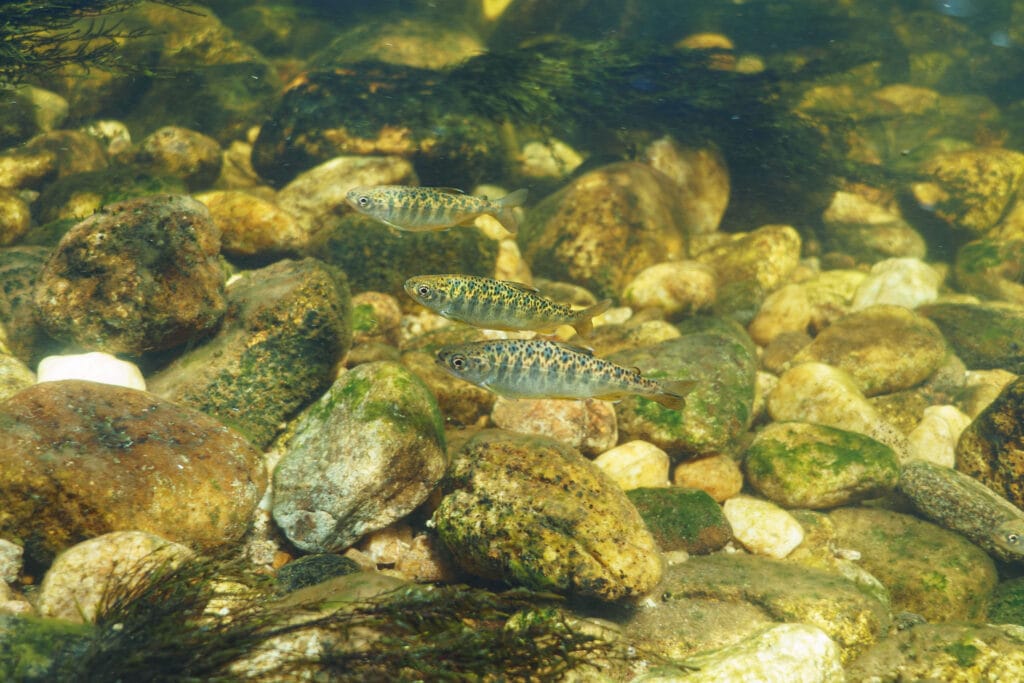
Reintroduced spring Chinook juveniles have been released at TU restoration sites and the hope is that the salmon and steelhead now returning to the basin following dam removal will soon be able to also take advantage of the improving habitat and coldwater resources in the watershed to help recover their populations.
Like all our work across the Klamath headwaters and former reservoir reach, the work in the Sprague is built on strong partnerships and seeks to build long-term benefits for native fish and local communities.