

I absolutely love catching fish. I live for the thrill of the tug. Ever since I was a little boy, when I went fishing, I wanted to catch as many as I could. The difference between a so-so day and a fantastic day on the water boiled down to two things—how many did you catch, and did you get anything really big?
It’s been that way for eons—probably back to the Sea of Galilee or well before. Heck, when I call my own mom after a day on the water, the first thing she asks me is often “how many did you get?” or “did you catch a big one?”
That’s all fine, and completely understandable. And these notions have been ingrained in the minds of anglers for centuries.
A new era
But we’re living in a different era now, and for the sake of sustainability, we need to start thinking about things differently. That especially applies to aficionados of catch-and-release fishing.
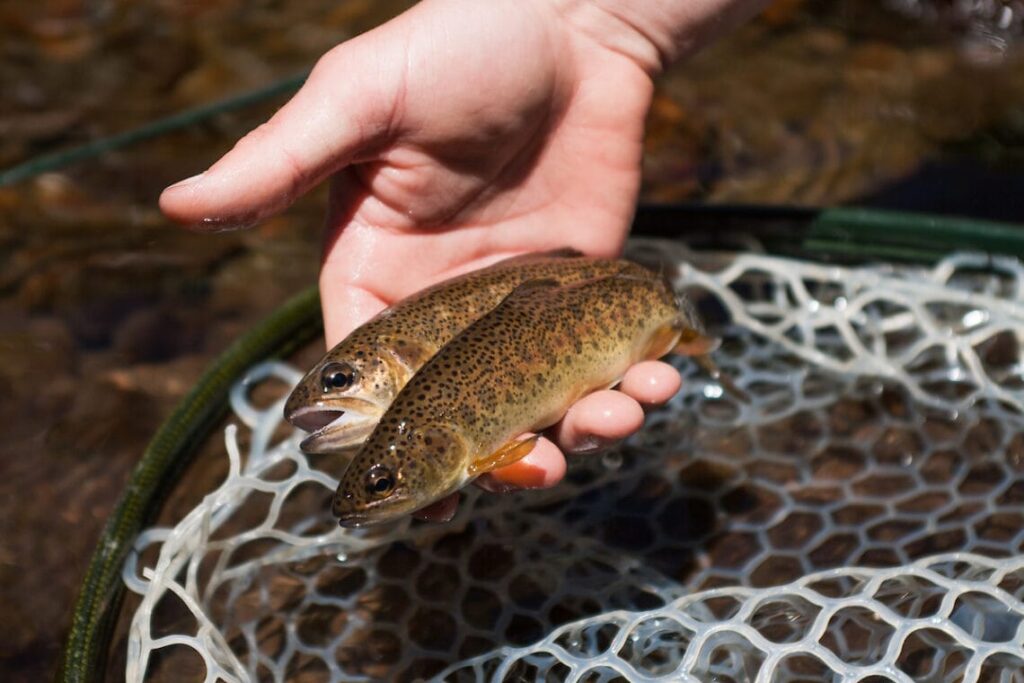
Iron-clad science will tell you that, even as you practice catch-and-release, some of the fish you land are bound to die. You can mitigate that to some degree by keeping them wet, using barbless hooks, using heavier leaders and tippets, and minimizing fight times. You can shun the grip-n-grin photo ops and try to nurse caught trout back to health. But the fact is, some of them are going to die, no matter what you do. That’s just the truth.
For catch-and-kill anglers who want to eat what they land, the rules are clear. There are size limits and catch quotas. It’s not much different than hunters who shoot waterfowl, hunt upland birds, chase big game, or any of that. Wherever the pursuit ends in kill, the boundaries are well defined, with good reason. Some would argue, with very good reason, that this is more respectful of the resource. I cannot disagree. I hunt birds, and big game, and I have absolutely no issues with complying with the rules set forth. I am, in fact, grateful that they exist in the first place.
After all, this gives “game management” agencies defined parameters with which to set regulations, and keep everything, well… sustainable. None of this stuff happens by accident.
Trust me, I don’t want to be that guy who pees in the Cheerios when it comes to fishing. I don’t want to be the buzz-stomper. And heck yeah, I’ve been that guy, when the hatch was on, and the fish were going gonzo, who kept rolling and racking them up, just because I could.
But, in hindsight, I was wrong.
All about us
Ya know… we’re living in a time where its often, sadly, about “me, me, me.” Yet, I’ve always thought that the true beauty of the fly-fishing community has always been more about things like sharing, and mentoring, stewarding and looking well down the road with the hopes of passing great opportunities on to future generations. Fly fishing is better than conquest and “me, me, me.” Fishing is really about “us,” and it will always be that way.
The “us” factor is what ultimately got me hooked. Sure, the tugs have been fun, but they’ve all come at a price, and that price has been feeling an obligation to pass the opportunity forward. I haven’t caught a single darn fish in my life that I wouldn’t trade for the opportunity to see my son, or any of my nieces and nephews, or close friends, or their kids catch something just as wonderful, or even better.
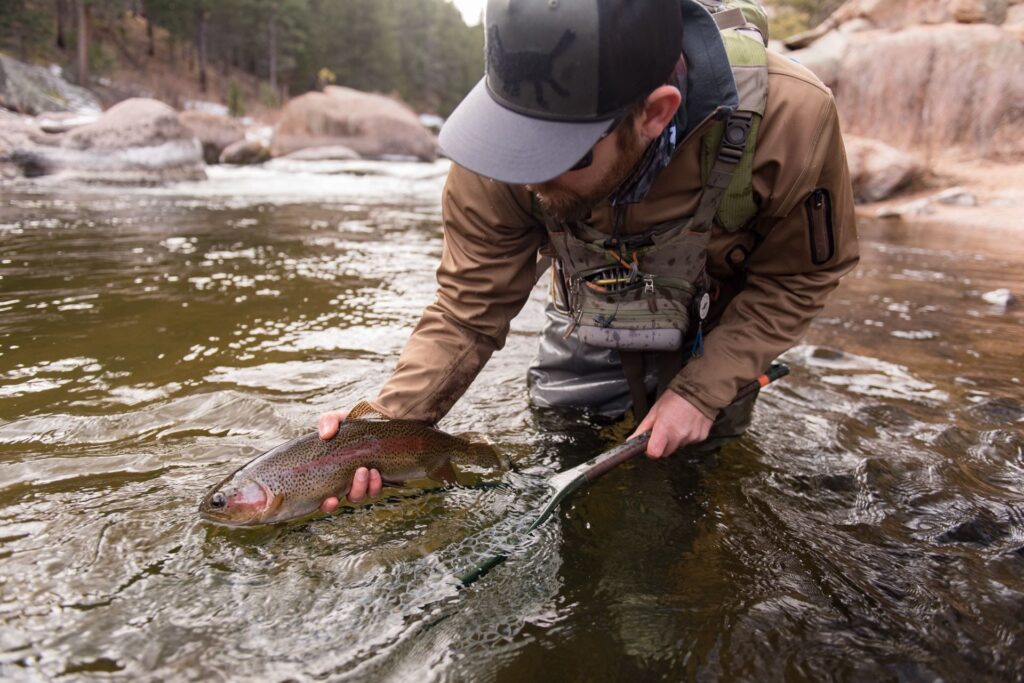
“Limit your catch… don’t feel you need to catch your limit,” has played well in the keeper world for generations.
I think we all need to start thinking hard about that, especially amongst the catch-and-release crowd.
How anglers interact with fish and rivers as they play the fishing game is, in and of itself, a major conservation concern, perhaps second only to climate change.
Thus, the “how” should overshadow the “how many.”
And the “why” should matter most of all.
I am profoundly grateful that so many friends and colleagues within the TU community who already understand this and feel the same way.