Search results for “arizona”
Climate change is not waiting for us in some distant day. It’s here, now. For trout and salmon, the problem is clear enough at the most basic level. Trout and salmon rely on cold, clean water in a world that is rapidly warming. Persistent drought, massive wildfires, catastrophic flooding—our newsfeeds are filled with threats to…
Trout Unlimited scientists work with recovery teams for various species to help bring science-based solutions to guide the recovery planning for native trout and salmon. Our work includes threat and risk assessment, quantitative modeling efforts, and developing management scenarios. In September 2022, our Fisheries Science Director Dan Dauwalter and several Arizona agency partners completed a…
New calls to review monument boundaries ignore previous decades of work
Some great news out of New Mexico—the egg count at the Mora National Fish Hatchery hit 130,000, which offers hope for the fire- and drought-ravaged native range for threatened Gila trout. Gilas are native only to the Gila River drainage in New Mexico and Arizona, and recovery efforts were hampered in recent years by devastating…
3/15/2007 Report: Ground Water Pumping Poses Serious Threat to the West’s Fish and Wildlife Resources and Senior Surface Water Right Holders EMBARGOED UNTIL: March 15, 2007 10:00 A.M. (MST) Contact: Melinda Kassen (303) 440-2937 x100 David Stillwell (303) 440-2937 x105 CA — Brian Johnson (510) 528-4772 ID — Kim Goodman (208) 552-0891 x712 MT —…
Thanks to dedicated volunteers, loyal partners, and strong allies, we racked up wins in 2022
Questions for Bryce Albright, executive director of the National Dude Ranchers’ Association
By Chris Wood I went to see Art Neumann a few months before he passed away. As I left, he punched me on the leg, and asked, “What are you going to do to keep up the fight for trout?” He died later that year after nearly 100 years of life and almost 75 years…
Since the mid-nineteenth century, the central question of the American West has been: How much water is there in the region, and how do we best use it? This question has been a topic of debate for more than the past 150 years, and we’re still trying to answer it now in the twenty-first century.…
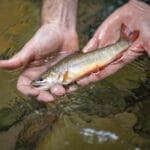
Like your first kiss, no one ever forgets their first native trout.
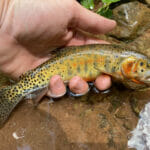
Colorado River cutthroat trout (Oncorhynchus clarkii pleuriticus) Species status and summary: The Colorado River cutthroat trout (CRCT) historically occupied most cool water habitats of the Colorado River watersheds in Colorado, southern Wyoming, eastern Utah, extreme northwestern New Mexico and northeastern Arizona. Currently, however, Colorado River cutthroat trout occupy approximately 16 percent of their historic range, primarily…
Here are some things you might not know are possible in Roadless Areas…
Quick, name your favorite Inventoried roadless area. Do any come to mind?
Elected officials know they have one last shot to hammer out deals before the Congressional landscape changes permanently in January. The result? The lame-duck session … a sprint-to-the-finish flurry of legislative action defined by compromise we don’t see too often on the Hill
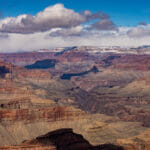
Baaj Nwaavjo I’tah Kukveni Grand Canyon National Monument will help preserve the beauty of this idyllic landscape for generations to come
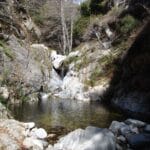
There are only a handful of streams in all of southern California where one can fish for trout. The East and West Forks of the San Gabriel River are two of them.