Sustaining the Susitna River in Alaska
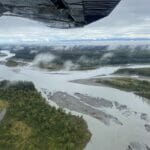
What an industrial access road means for a remote region with some of the best hunting and fishing in southcentral Alaska.


Share your feedback + donation for a limited-edition RepYourWater TU Trout Badge Hat.
Share your feedback + donation for a limited-edition RepYourWater TU Trout Badge Hat.
What an industrial access road means for a remote region with some of the best hunting and fishing in southcentral Alaska.
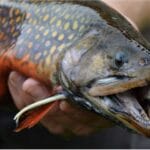
On the Lake Superior coast, a coalition of partners facilitated by Trout Unlimited are coming together to breathe new life into the study and recovery of native coaster brook trout – a life history variation of brook trout that spend part of their lives in Lake Superior. Scientists do not consider them to be genetically…

Helping organize rallies, like this one at the Idaho State Capitol, to show elected officials how sportsmen and sportswomen feel about legislation is an important part of the politics of conservation. Trout Unlimited photo. By Brett Prettyman Waders and work boots are the uniforms people typically think of when they envision Trout Unlimited staffers, members…
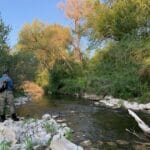
“The Provo River stakeholders mimicked a model of collaboration seen often but not enough in other parts of the West. We found a win-win scenario that worked within the existing system. We’ve worked with a water supplier whose primary goal is to use all their water allocation in the best use possible and a corporation striving to make rivers and streams around where they use water and do business healthier. That’s a formidable partnership moving forward to keep people, businesses, and our fish happy.”
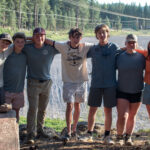
During the first several days, we were excitedly introduced to the undamming, the sowing of native plants, salmon populations, fencing, the aquatic ecosystem, and over a hundred other aspects of the project—and that was only the beginning.
Trout Unlimited Asks Court To Expedite Decision In The Case Involving California’s State Fish Trout Unlimited Asks Court To Expedite Decision In The Case Involving Californias State Fish Contact: Steve Trafton California Policy Coordinator (510) 528-4772 1/17/2002 — Albany, CA — The national conservation organization Trout Unlimited has asked a federal judge to grant their…
Trout Unlimited Joins in Historic Pact on Future Operation of Bear River Dams Trout Unlimited Joins in Historic Pact on Future Operation of Bear River Dams Signing ceremony Wed. at 10 a.m. at Gov. Kempthornes office in Boise Contact: Scott Yates Western Native Trout Programs Director: TU 208.552.0891; Cell: 208.520.3467 8/27/2002 — Idaho Falls, Idaho…
11/19/2003 Statement of Trout Unlimited Calling on the Senate to Fix or Eliminate Energy Bill Provisions HArmful to Fish and Wildlife Statement of Trout Unlimited Calling on the Senate to Fix or Eliminate Energy Bill Provisions Harmful to Fish and Wildlife Contact: Chris Wood Vice President of Conservation Trout Unlimited 703.284.9403 11/19/2003 — Washington, D.C.…
4/19/2006 States and feds agree to work together to restore and enhance the Driftless Area EMBARGOED UNTIL 10:00 a.m., April 19, 2006 Contact: Duke Welter, 715-579-7538 or Kathleen Campbell, 571-274-0597 States and Feds Agree to Work Together to Restore and Enhance the Driftless Area Wisconsin, Minnesota, Iowa and Illinois join with the U.S. Department of…
7/23/2001 Sennebec Pond Association & Trout Unlimited Host Information Meeting Sennebec Pond Association & Trout Unlimited Host Information Meeting Contact: 7/23/2001 — — July 23, 2001 Union, Maine . . . The Sennebec Pond Association and the St. George Chapter of Trout Unlimited will host a Public Information Meeting on Monday, July 30 to explain…

Morgan Werner, Matt Anderson, Niyah Banfill, and Meriah Gannon planting riparian trees along Blakeslee Creek. By Jamie Vaughan Rockford locals may have noticed green-clad students working throughout the community this summer, usually covered in mud and always sporting a smile. It may look like a typical summer gardening job, but don’t be fooled: This group…
11/06/2007 Whirling Disease Foundation Merges with Trout Unlimited November 6, 2007 Media Contacts: Dave Kumlien, Executive Director, Whirling Disease Foundation 406-570-0023Jack Williams, Senior Scientist, Trout Unlimited 541-261-3960 FOR IMMEDIATE RELEASE: Whirling Disease Foundation Merges With Trout UnlimitedAlliance Bolsters Efforts to Combat the Impacts of Aquatic Nuisance Species and Whirling Disease on Nations Trout and Salmon…
06/25/2008 Trout Unlimiteds Upper Big Lost Project Will Receive Proceeds From Silver Creek Outfitters Film Festival June 25, 2008 FOR IMMEDIATE RELEASE: Contact: Ed Northen: 208-788-316 Trout Unlimiteds Upper Big Lost Project Will Receive Proceeds From Silver Creek Outfitters Film Festival KETCHUM, ID The Hemingway Chapter of Trout Unlimited (TU) will receive the proceeds from…
Contact:Russ Schnitzer, (307) 438-1365Steve Moyer, (703) 284-9406 FOR IMMEDIATE RELEASE: Trout Unlimited Praises Senate Reauthorization of Farm Bill, Urges Swift House Passage Conservation Programs a Proven Investment in Nation’s Outdoor Heritage and Rural Communities Arlington, Va. Trout Unlimited today commended the U.S. Senate for voting to reauthorize the Farm Bill and ensure that its highly…
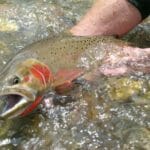
chalk_creek_bonneville.jpg A Chalk Creek native Bonneville cutthroat: Reconnected to spawning habitat FOR IMMEDIATE RELEASE Nov. 6, 2013 Contact: Paul Burnett, 801-436-4062 pburnett@tu.org Tim Hawkes, 801-928-9008 thawkes@tu.org Trout Unlimited, rancher boost fish habitat on Chalk Creek Project reconnects Weber River cutthroats with spawning habitat (Salt Lake City)The Weber River is home to one of Utahs most…

For Immediate Release: Wednesday, Feb. 26, 2014 Contacts: Judith Kohler, National Wildlife Federation, 303-441-5163; kohlerj@nwf.org Katie McKalip, Theodore Roosevelt Conservation Partnership, 406-240-9262; kmckalip@trcp.org; Shauna Sherard, Trout Unlimited, 307-757-7861; ssherard@tu.org Youths, DOI secretary talk public lands Winners of sportsmens essay contest share with Secretary Jewell how their experiences on public lands have shaped their lives WASHINGTON…
Senator Cantwells precedent-setting water and fisheries legislation passes Senate Energy and Natural Resources Committee CONTACT: Michael Garrity, American Rivers, 206-852-5583 Lisa Pelly, Trout Unlimited, 509-630-0467 Ben Greuel, The Wilderness Society, 360-670-2938 (Nov. 19, 2015) Seattle, Wash. Today federal legislation to protect and enhance the Yakima River basins fisheries, ecosystem and water supply was passed by…
Oct. 31, 2016 Contact: Laura Ziemer, lziemer@tu.org, (406) 599-2606 Trout Unlimited, Senior Counsel and Water Policy Advisor Steve Moyer, smoyer@tu.org, (571) 274-0593 Trout Unlimited, Vice-President for Governmental Affairs FOR IMMEDIATE RELEASE Trout Unlimited lauds WaterSMART program New criteria prioritizes both water savings and river health WASHINGTON, D.C. Trout Unlimited today praised the Bureau of Reclamations…
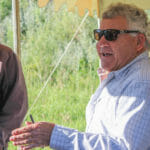
Mark Fowden retired ater 39 years with Wyoming Game and Fish in early January. He passed away March 31. Photo courtesy Wyoming game and Fish. By Cory Toye Wyoming lost a man who dedicated his life to the conservation and management of our great fisheries when Mark Fowden passed away March 31. Mark led a…
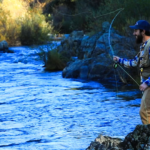
Fishing the Bear River. This reach would be inundated by the proposed Centennial Dam. By Chandra Ferrari With California just emerging from five years of punishing drought, there continues to be a lot of discussion about creating more water storage. While the fastest and most affordable way to capture and store more water is to…