Search results for “tomorrow fund”

Many conservation organizations are great at on-the-ground habitat restoration. Others excel at policy advocacy. Trout Unlimited is one of the few that shine at both. Our recipe for success is simple. We take the results and good will generated by the partnerships, relationships, and in many cases, friendships created through our restoration work, and use…
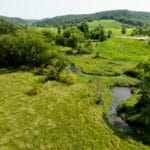
Several great apps can help anglers navigate to primo fishing spots in the Driftless area. Now, a new interactive ArcGIS StoryMap adds another layer of information, showcasing where Trout Unlimited’s collaboration with the National Fish Habitat Partnership is creating conservation successes across the region and making fishing even better. The Driftless Area Restoration Effort (TU DARE) is a long-running collaborative initiative focused on restoring coldwater streams, improving fish habitat, and strengthening watershed…
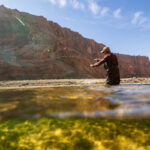
From securing national monuments to scaling up multi-million-dollar projects, Arizona’s policy and restoration work is ready to take center stage
8/12/1999 ASF And TU Sue To Protect United States’ Last Wild Atlantic Salmon ASF And TU Sue To Protect United States’ Last Wild Atlantic Salmon Suit Asks US For Immediate Listing Under Endangered Species Act Contact: 8/12/1999 — — The Atlantic Salmon Federation (ASF) and Trout Unlimited (TU), two of North America’s leading salmon conservation…

According to the Outdoor Industry Association, 28 percent more Americans went camping in 2020 than during the previous year, and 8.1 million more of us went on a hike. Fishing numbers soared too

Lady Anglers! Join JHTU and many partnering organizations this Saturday, August 4th at WorldCast Angler’s free instructional and informative fly fishing day at the Snake River Sporting Club. From 11 am to 4pm choose from Fly Casting, Knot Tying and Rod Rigging, Fly selection/Entomology and Drift Boat/Raft set up and trailer tips from instructors and…
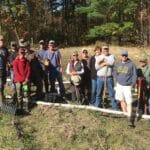
Volunteers in Michigan helped with native plantings at project sites. By Jeremy Geist Several initiatives in Michigan are helping Trout Unlimited connect with the public to improve habitat and to guard against threats to native fish and wildlife populations. “Trout and Trees” aims to educate the public about the importance of the connection between streams and…
We have a real shot at finally passing Good Samaritan legislation in this Congress. Your voice and support are needed. Please consider signing onto the below letter with your colleagues, your response is needed by close of business on Wednesday August 11th. The outdoor recreation industry – fishing and hunting in particular – rely on…
The Truchas Chapter, based in Santa Fe, New Mexico, has more than 500 members. We work to carry out TU’s vision in the waters of northern New Mexico through our conservation projects and youth programs, through our fund-raising efforts, and our communications and advocacy efforts. Through our conservation projects, the Truchas Chapter seeks to secure…
8/18/2004 TU Releases “Settled, Mined and Left Behind” Report TU Releases “Settled, Mined and Left Behind” Report Ten Western watersheds affected by pollution from abandoned mines profiled in report Contact: Tim Zink Manager, Media Relations Trout Unlimited 703.284.9427 8/18/2004 — Washington — The national conservation organization Trout Unlimited (TU) today released a report entitled Settled,…
12/05/2007 New Report Looks at Impact of Climate Change on Trout and Salmon December 5, 2007 FOR IMMEDIATE RELEASE Contact: Jack Williams, TU Senior Scientist (541) 261-3960Erin Mooney TU Press Secretary (703) 284-9408 New Report Looks at Impact of Climate Change on Trout and SalmonReport Analyzes Warming Climates Effect on Fish and Rivers Washington, D.C.…
09/15/2008 New Yorks Laws Fail to Protect States Rivers and Streams September 15, 2008 FOR IMMEDIATE RELEASE Contact: Kirt Mayland, (646) 302-3639 Erin Mooney, (571) 331-7970New Yorks Laws Fail to Protect States Rivers and Streams Report Details Where Laws and Systems Fall Short in Protecting the States Waters Albany, N.Y. As New York incurs pressure…
Contact:Elizabeth Maclin, Trout Unlimited, emaclin@tu.orgBill Eyre, Orvis, eyreb@orvis.com FOR IMMEDIATE RELEASE: Orvis, TU begin project to open 1,000 miles of water over next decade MANCHESTER, Vt. Orvis and Trout Unlimited this week announced the first two streams that will be improved to allow better passage for wild and native trout as part of the new…
July 16, 2014 Contact: Chuck Caulkins, Cortland Line Co. (646) 549-0795 Joel R. Johnson, TU Chief Marketing Officer (646) 573-6410 FOR IMMEDIATE RELEASE: Cortland supports Trout Unlimiteds restoration program As it prepares to celebrate its centennial, Cortland partners with TUs signature restoration funding effort, Embrace-a-Stream ORLANDOAs Cortland Line Co. prepares to celebrate its 100th year…
Bristol Bay fishermen. Photo by Cory Luoma, Alaska Fly Out Media October 6, 2015 Contact: Nelli Williams, Director of Trout Unlimiteds Alaska Program, (907) 230-7127 or nwilliams@tu.org FOR IMMEDIATE RELEASE: Pebble Limited Partnership funded report ignores key stakeholders, fails to address actual facts Cohen Group releases report that distracts from mining companys failure to file…
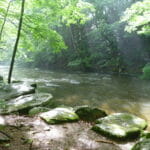
A section of the Musconetcong River in New Jersey restored by TU. (TU/Brian Cowden) By David Kinney For the first time, Congress is setting aside dedicated funds for conservation efforts in the Delaware River Basin. Consider the $5 million appropriation included in the new budget agreement a down payment for the Delaware River Basin Restoration…