
Trout Unlimited’s project managers are accustomed to encountering challenges in the field.
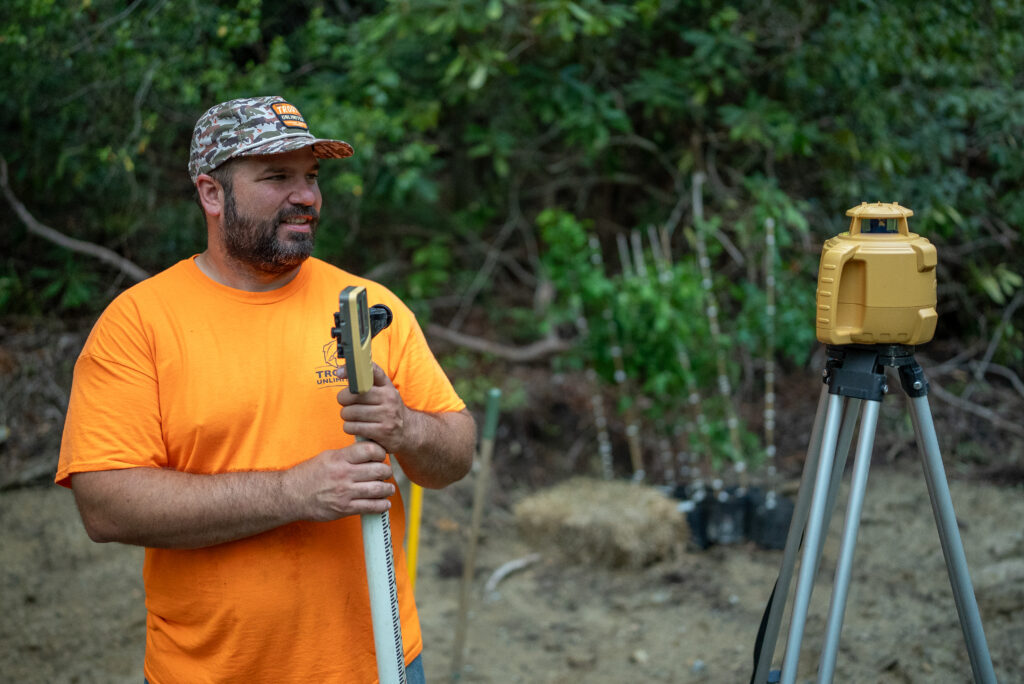
Jeff Wright, who until recently was TU’s Southern Appalachians program manager, had no idea what he might face during a major culvert replacement project deep in the Pisgah National Forest in North Carolina.
Hurricane Helene, which devastated large swaths of landscape across the Southeast early in the fall of 2024, set in motion a cascade of complications. Colder-than-usual winter weather and a disruptive temporary freeze on federal funding added insult to injury.
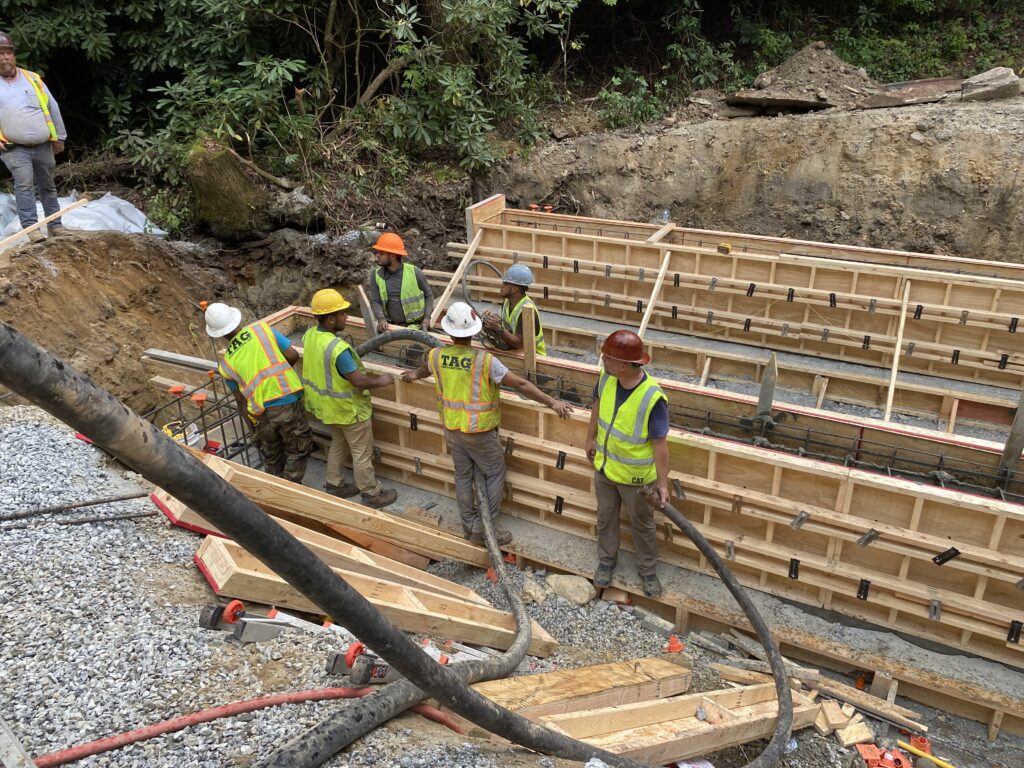
But the crew persevered, completing the massive project this summer.
A big lift
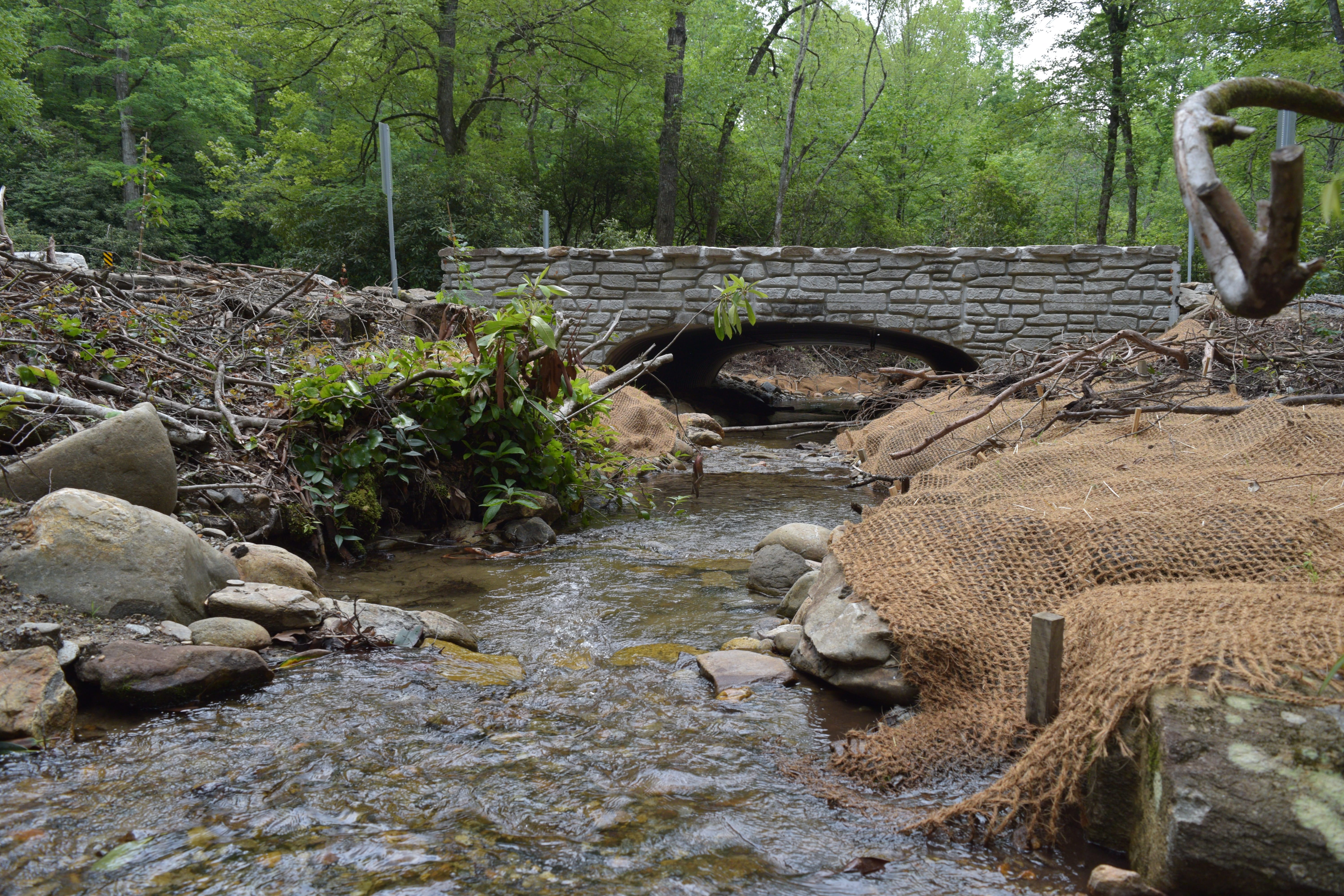
The project addressed two adjacent problematic culverts where Catheys Creek and a smaller tributary converge. A tumbling freestone stream with native brook trout and wild brown trout, Catheys Creek eventually pours into the French Broad River near Brevard.
“Creating a complete fish barrier, both creeks were too narrow for the stream channel and perched above the culverts,” said Wright. “Erosion happened around the outlets, upstream on the bed and banks and the culverts often got blocked with material.”
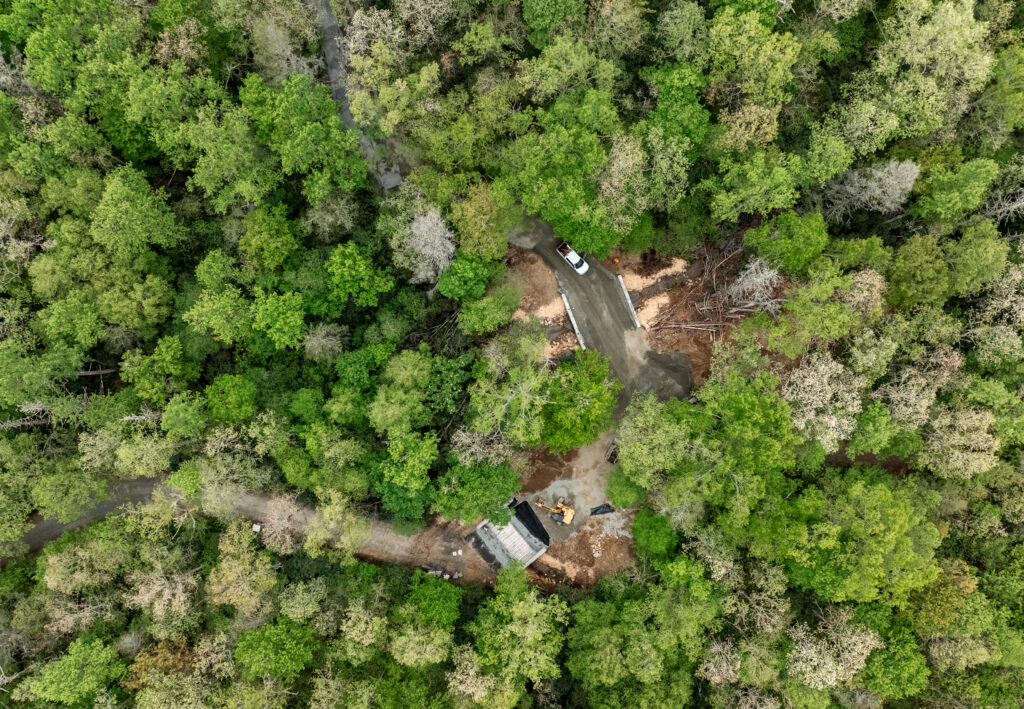
Five years ago, TU volunteers fanned out across the region to survey road-stream crossings, and this site came out on top of the list for a future project.
The U.S. Forest Service prioritized the project in a Watershed Restoration Action Plan.
Federal funding covered a significant portion of the project’s roughly $800,000 cost, with a $230,000 grant from North Carolina’s Land and Water Fund providing critical matching funds.
TU oversaw construction, which got underway late in the summer of 2024, shortly before Helene’s arrival.
Patience required
The storm didn’t directly impact the site, but it unavoidably impacted the project.
“The hurricane interrupted workflow, period,” Wright said.
Nearby communities with critical, acute needs pulled away heavy equipment contractors. Supplies like gravel were difficult to source.
“Then we ended up having one of the coldest winters we’ve had since I’ve lived here, and we lost a month to that,” Wright said. “And then we lost another month and a half to the federal funding freeze.
“It was just a lot that was outside the contractor’s control.”
The site itself proved challenging, too, because it was difficult to fully divert flows from the work sites.
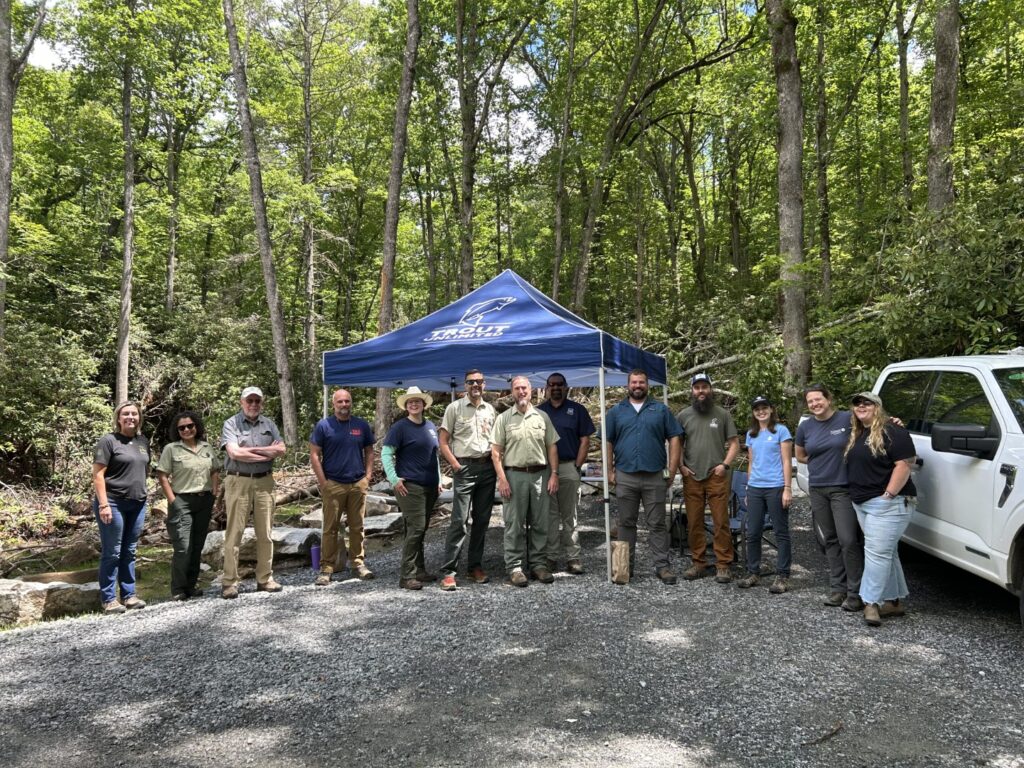
Finally completed in late spring, Wright signed off on the big project in early June with a sigh of relief.
Bird’s eye view of success
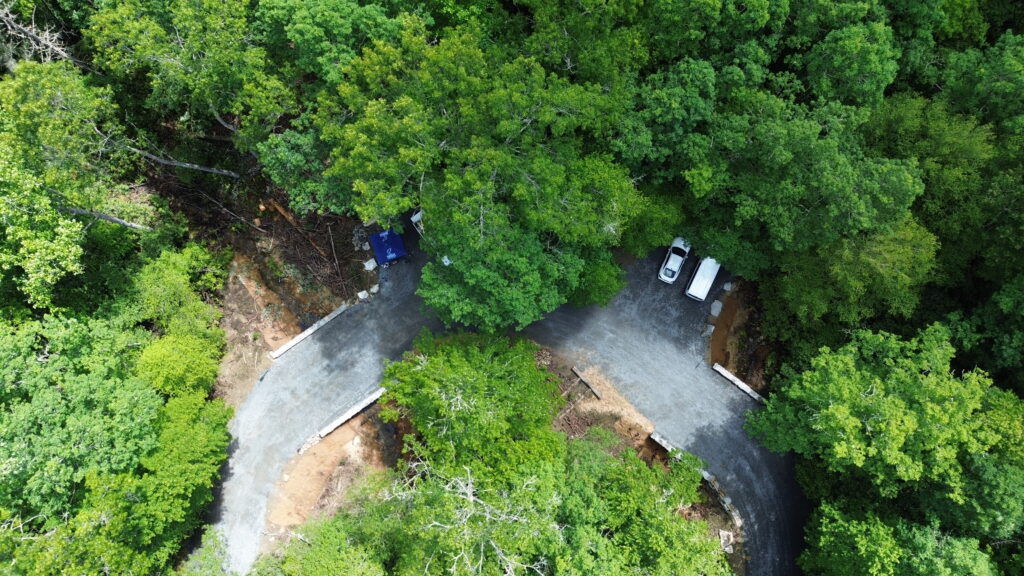
Having recently obtained his drone pilot license, Wright flew over the site to get a bird’s eye view.
“One picture I got is pretty cool,” he said. “You can see the restoration site but then you’ve got our TU tent visible, too.”
Collaboration between TU and the Forest Service will continue on a significant number of projects in 2026. Projects include additional crossing repairs and replacements, stream habitat restoration and decommissioning and obliteration of long-abandoned roads that are eroding and contributing sediment to streams.
Some of the work was included in Watershed Restoration Action Plans, but TU is also collaborating with the Forest Service to address Helene-related damage.