
The Salmon SuperHwy team had a busy summer on Oregon’s North Coast in 2025.
The partnership completed five culvert replacements and one tide gate replacement, bringing their habitat reconnection total to 137 stream miles.
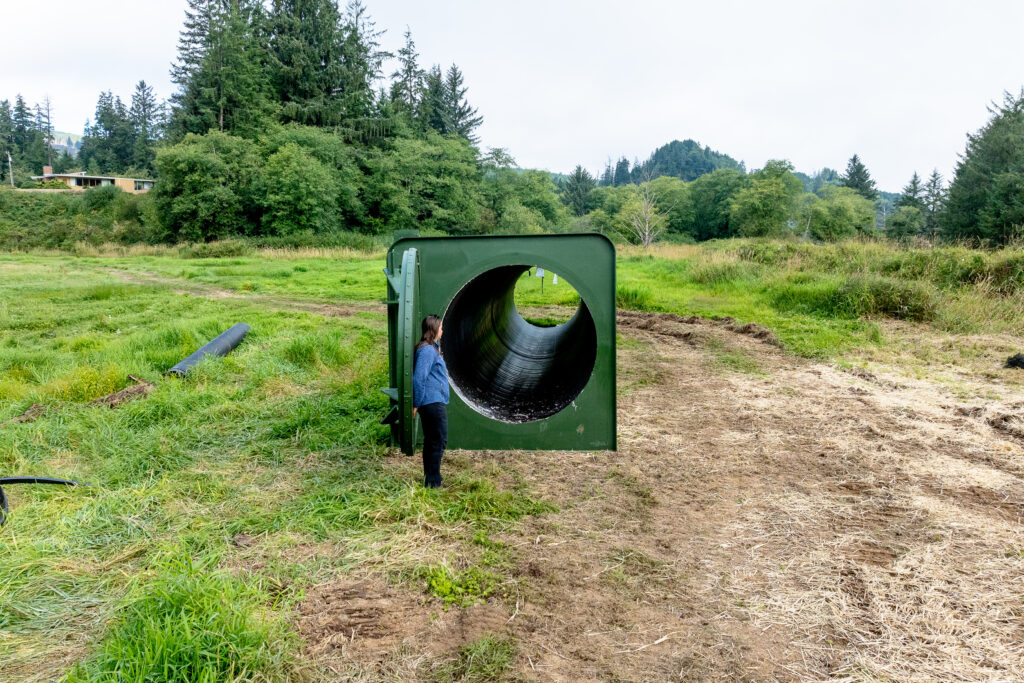
The completed projects moved them closer to their long-term goal of reconnecting 180 miles of blocked, high-priority spawning and rearing habitat in the Tillamook, Nestucca and Sand Lake watersheds.
Each year, this work not only restores access to historic salmon, steelhead, cutthroat trout and lamprey habitat, the improved infrastructure installed by the partnership helps reduce chronic flooding, improve recreation opportunities and stimulates the local economy through restoration and road improvement projects.
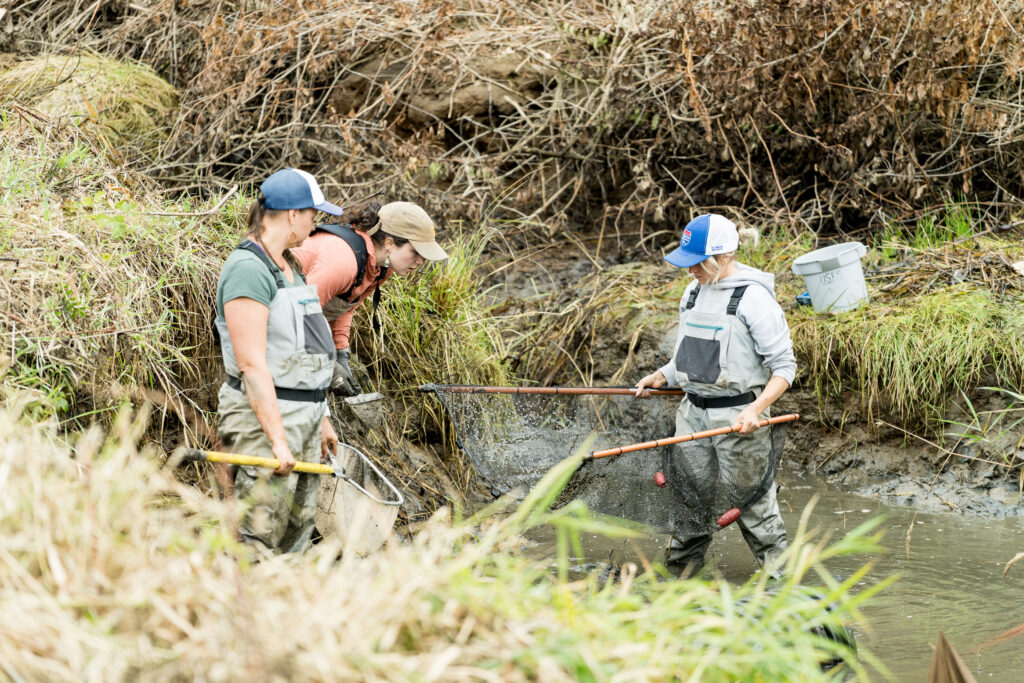
Like previous seasons, the summer of 2025 encompassed an impressive amount of work benefitting native fish and local communities.
Overcoming challenges on Flower Pot Creek
The Flower Pot Creek project proved one of the most challenging Salmon SuperHwy (SSH) projects to date.
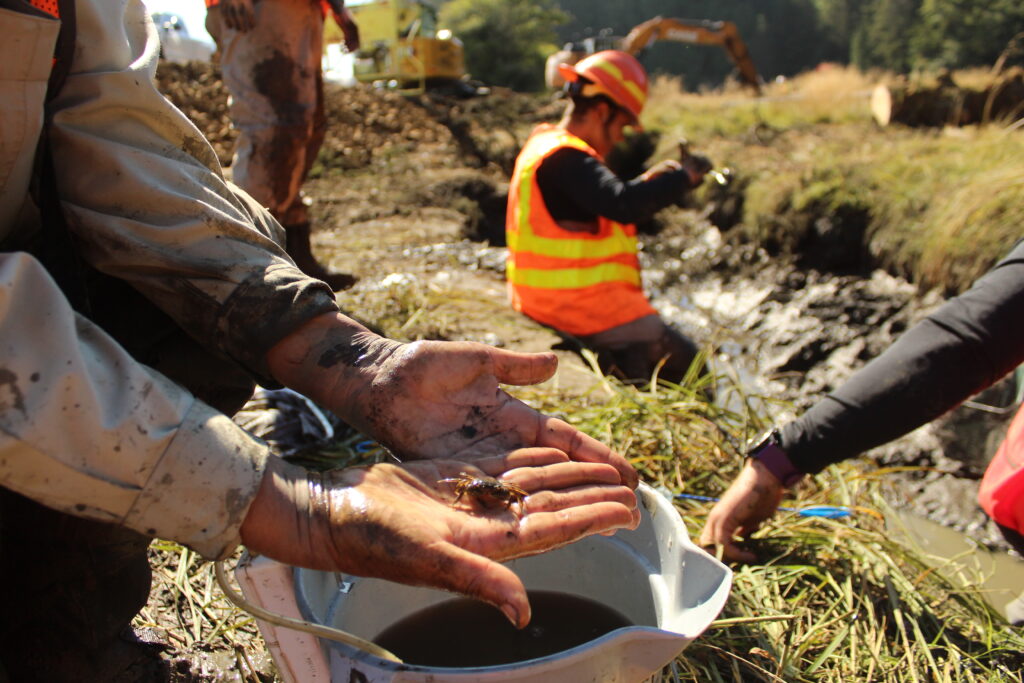
This particular site, located in an estuarine system, empties into Tillamook Bay through an undersized and failing concrete culvert. The project leveraged nearly $2 million in funding from multiple partners including NOAA Fisheries, U.S. Fish and Wildlife Service and U.S. Forest Service, along with local support from Tillamook County Public Works.
In six years of planning, the SSH team worked to overcome permitting and design challenges to maintain a project to be both fish and wildlife friendly while also providing more robust infrastructure for local residents. Bayocean Road is one of two emergency access points for the residents of Cape Meares on the Oregon coast, and any road closure severely impacts both civilian and emergency vehicle travel.
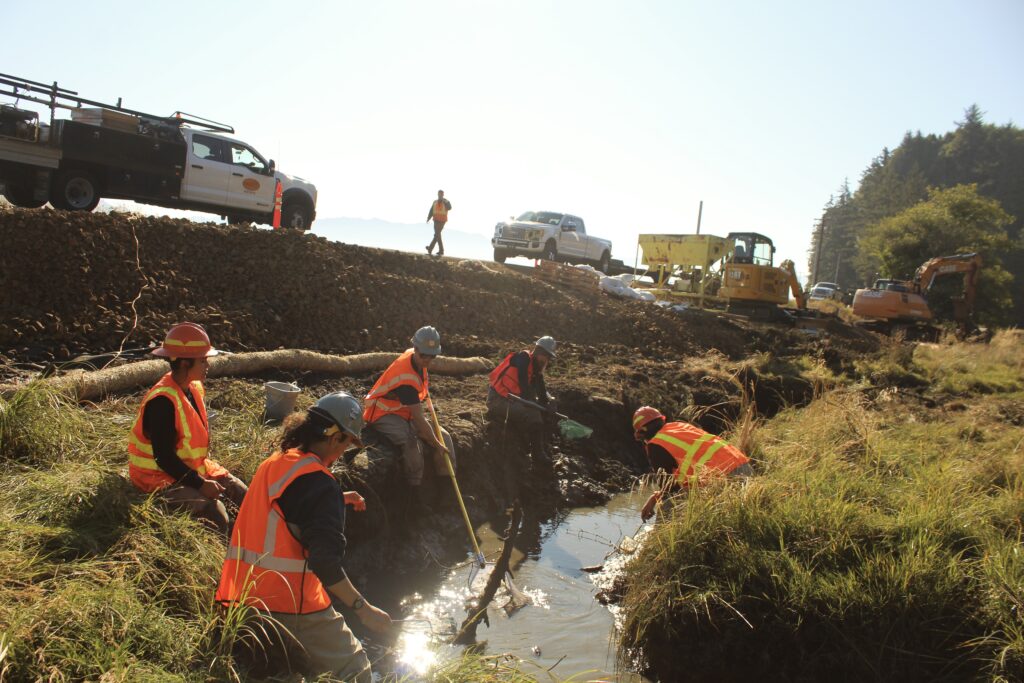
With just over a month of total road closure, the team completed the project by plugging the original culvert, building a temporary berm to isolate the work site from the tides, installing a bridge in the isolation zone, rebuilding the stream channel and reconnecting the estuary channels with the new channel that connects Flower Pot Creek to Tillamook Bay.
The project restored access to 1.4 miles of fish habitat, reinvigorated tidal exchange for the 14-acre estuary and gave the local community a new bridge over the creek.
Victory on Myrtle Creek
Myrtle Creek, a project that had been in progress for over a decade as the partnership worked to secure funding and finalize designs, reached completion this summer.
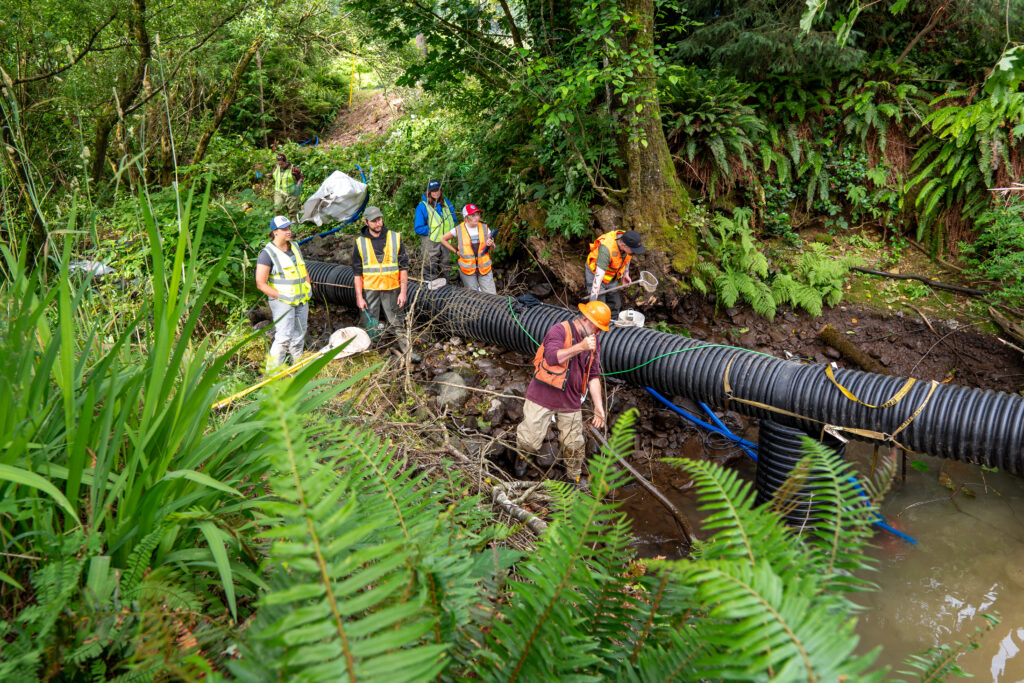
Myrtle Creek flows into the Kilchis River, a tributary of Tillamook Bay. An undersized and failing culvert impeded access to 1.6 miles of valuable spawning habitat for Chinook, coho and, chum salmon, winter steelhead and sea-run cutthroat. A failure at this culvert would have cut off public access to numerous residences, timberland and one of the coast’s most popular campgrounds.
TU partnered with Tillamook County to replace this culvert with a 35-foot bridge and add large boulders and pools for fish habitat. The project was primarily funded by the Oregon Department of Fish and Wildlife, U.S. Fish and Wildlife, Oregon Department of Transportation and NOAA Fisheries.
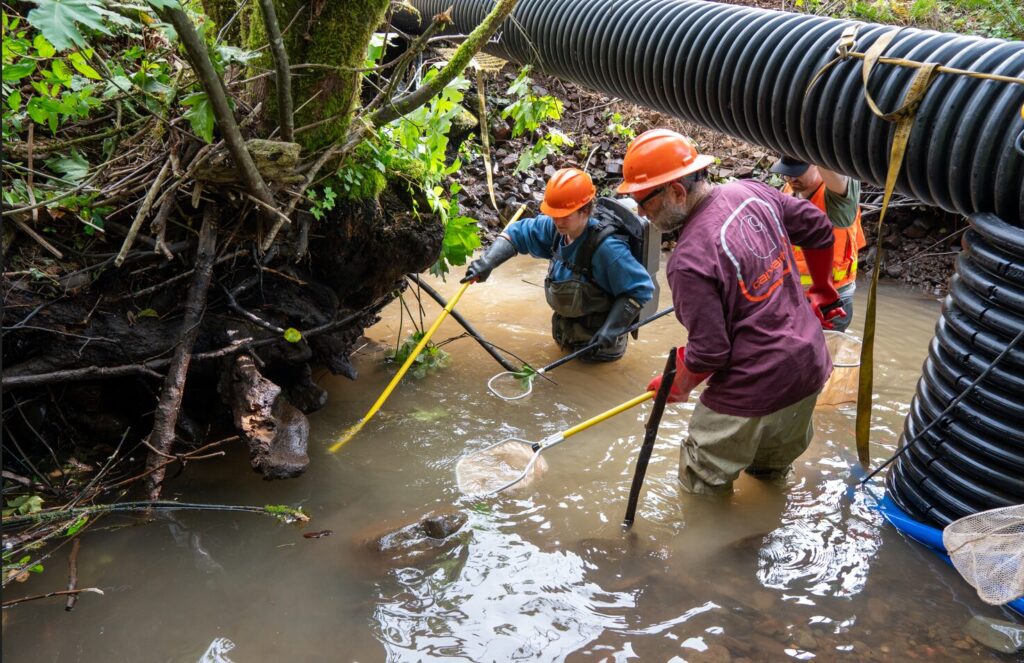
After years of planning and fundraising, completing Myrtle Creek was a huge victory for the Salmon SuperHwy.
Esther Creek tide gate
The team conquered their first tide gate project in 2025, and now the Esther Creek tide gate project has restored an additional 3.1 miles of spawning and rearing habitat for migratory fish.
Esther Creek is the furthest downstream of all the Tillamook River tributaries, with its confluence just upstream of Tillamook Bay. The Tillamook River and its tributaries, such as Esther Creek, are low gradient stream habitats with high levels of sediment accumulation and abundant beaver activity.
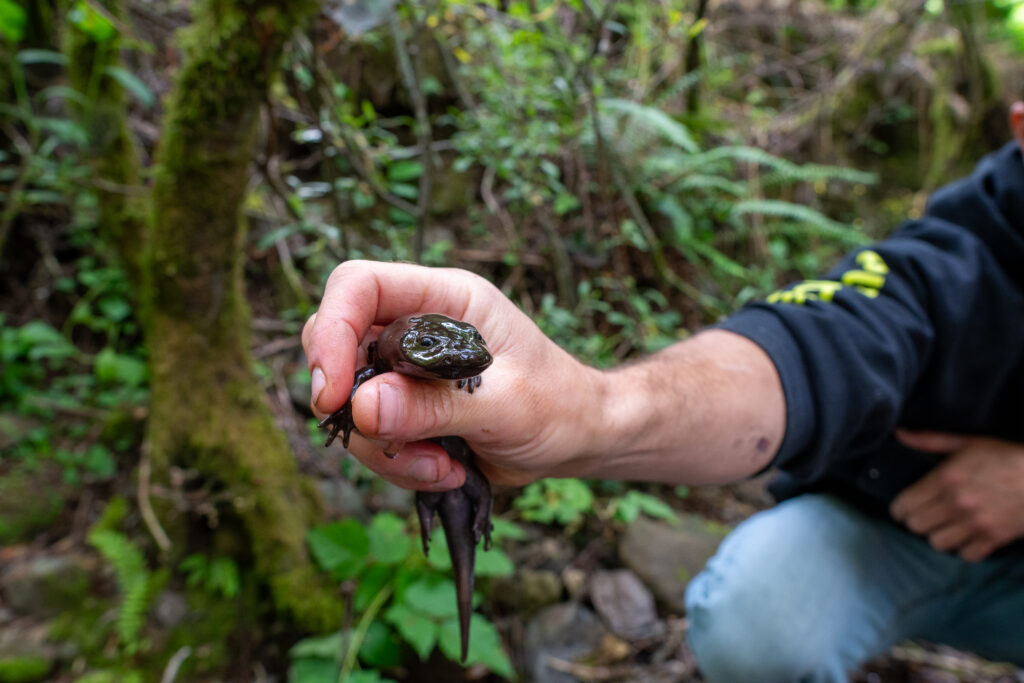
These factors contribute to Esther Creek’s habitat value and ability to provide cooler summer stream temperatures and higher abundance of spawning substrates—all of which benefit its migratory fish, including ESA-listed coho salmon.
Replacing a corroded and failing culvert attached to a semi-functional tide gate with a brand-new tide gate equipped with a muted tidal regulator proved a challenging undertaking for the SSH team. After permitting delays, our contractor completed the replacement in September.
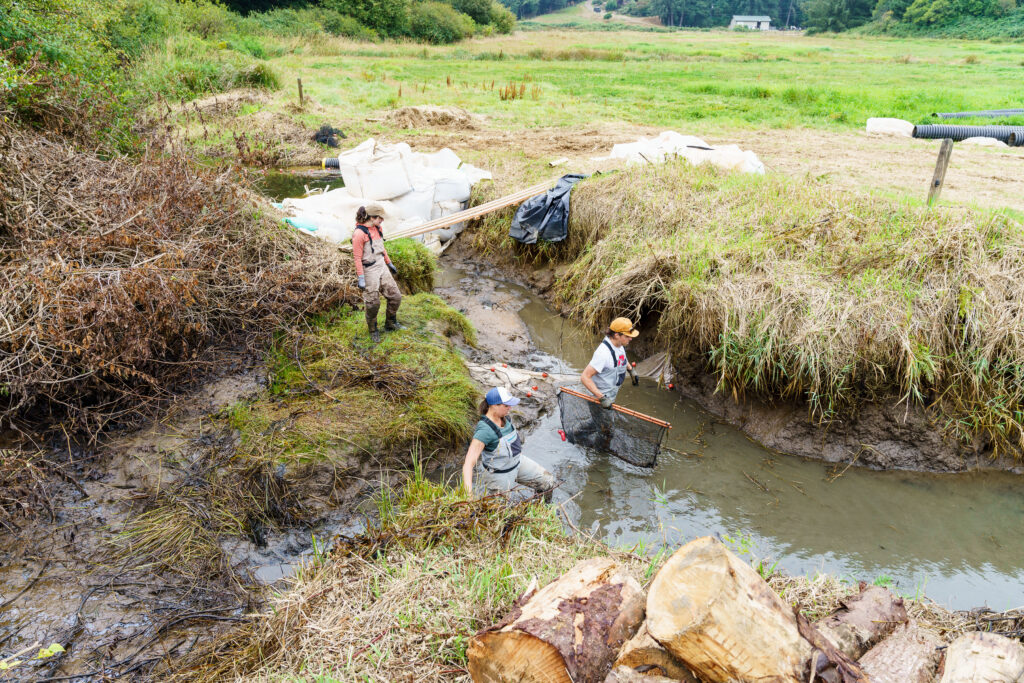
The new tide gate allows for increased fish passage at peak spawning runs because the tide gate manager now has the ability to set the level at which the tide gate opens and closes. This new tide gate also benefits the landowner who now has the ability to control how much water his agricultural fields receive throughout the year.
Funding for the project was provided by the Oregon Department of Fish and Wildlife along with US Fish and Wildlife and NOAA Fisheries. We learned a lot during this project and look forward to bringing our newfound understanding of tide gates to future tidal projects.
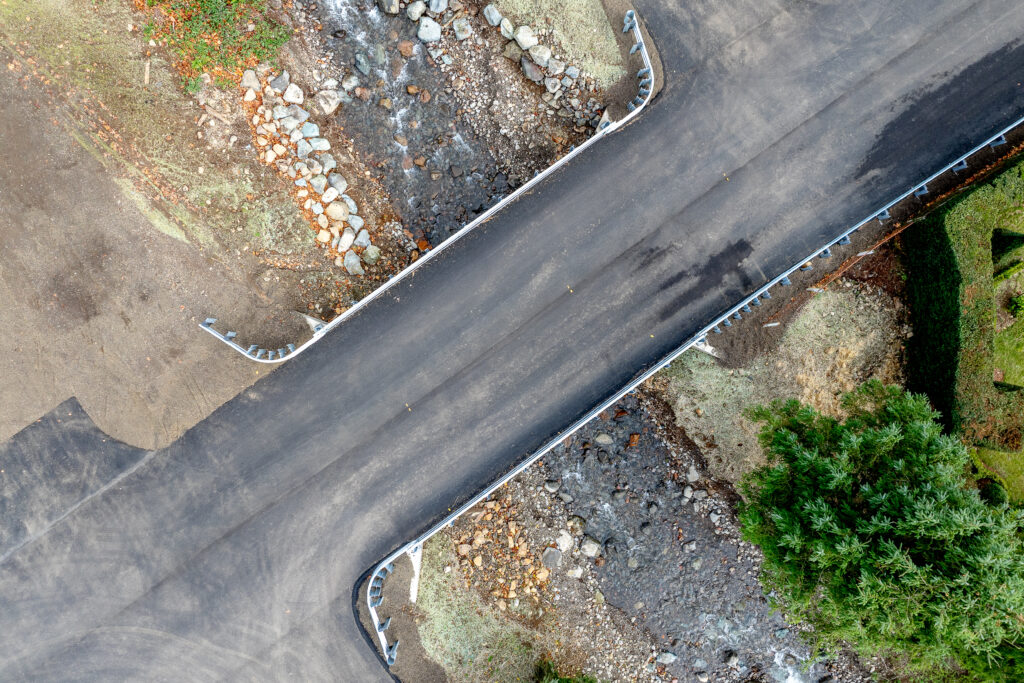
Looking ahead
The SSH team had a great summer in 2025, and they’re continuing to work towards their reconnection goal in the coming years. The team currently has over 23 projects in progress.
Keep up to date on the projects by following the Salmon SuperHwy on Instagram and Facebook.
Photos taken by Trav Williams (Broken Banjo Photography), Jacob Jesionek, & Emmah Johannes