Search results for “California Priority Waters”
Legislation would promote responsible development and healthy fisheries on public land FOR IMMEDIATE RELEASE Contact: Corey Fisher, Public Lands Policy Director, Trout Unlimited, corey.fisher@tu.org, 406-546-2979 WASHINGTON, D.C.—Trout Unlimited today voiced support for legislation that would help modernize the federal oil and gas leasing system and facilitate responsible energy development on public land. The Competitive Onshore…
Editor’s note: TROUT Magazine Online will publish frequent essays on “American Places,” lands and waters that make the nation unique. These essays will be crafted by Trout Unlimited staffers, contributing writers and volunteers. These places are near and dear to many and worthy of sharing in hopes of creating more advocates for the treasures so…
This week, Congress passed the omnibus spending bill, which will fund the federal government until next year. The legislation also includes several significant western water bills critical to Trout Unlimited’s work in the West. TU thanks the House and Senate leadership for the passage of these important water bills
I finally realized it’s because every time I get new genetic results it’s like receiving a surprise gift.

In a world where salmon and steelhead continue to dwindle and disappear, Alaska Governor Dunleavy has proposed changes to Alaska’s water management regulations that head us in the exact wrong direction.
November 5, 2015 Testimony of Trout Unlimited to the Senate Committee on Agriculture, Nutrition, and Forestry hearing on: Wildfire: Stakeholder Perspectives on Budgetary Impacts and Threats to Natural Resources on Federal, State and Private Lands. Chairman Roberts, Ranking Member Stabenow, and Committee Members: My name is Chris Wood. I am the President and CEO of…
12/22/1999 With 40 Years Of Conservation Work Under Our Belt…Trout Unlimited Outlines Goals For New Millennium With 40 Years Of Conservation Work Under Our Belt . . .Trout Unlimited Outlines Goals For New Millennium Contact: 12/22/1999 — — Over 100,000 volunteer members of Trout Unlimited (TU) are reflecting on 40 years of conservation commitment to…
May 2, 2014 Contact: Laura Ziemer, (406) 522-7291 x 103, lziemer@tu.org FOR IMMEDIATE RELEASE: Trout Unlimited praises Forest Service for tackling groundwater rules to protect headwaters and fishing New groundwater policy a needed step to steward water resources and prized fisheriesin the face of climate change, drought (Washington, D.C.) Trout Unlimited today praised the Forest…

Recognizing Trout Unlimited’s amazing chapters, volunteers and partners is one of the most important parts of our organization’s annual meeting. This year in Redding, California, two chapters, five volunteers and four partners were singled out for their contributions to Trout Unlimited efforts across the nation. TU’s national conservation awards have been a part of our…

What makes them so remarkable is how typical they are of others in Trout Unlimited. They are simply two ordinary people doing extraordinary work.
02/11/2008 Salmon Treaty must do more to protect wild salmon FOR IMMEDIATE RELEASE Salmon Treaty must do more to protect wild salmonScientific review needed to ensure conservation objectives are met February 11, 2008 VANCOUVER A coalition of conservation groups is calling for a scientific review of the Pacific Salmon Treaty to ensure that it is…
Our suite of analytical, decision support, and communication tools provide a conduit for relaying our scientists’ work to our membership, partners, and the public. These tools include story maps, more focused web mapping applications, and decision support tools. TU scientists developed the Steelhead Atlas and Eastern Brook Trout Conservation Atlas to gather the best map…
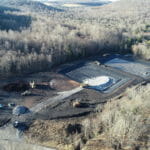
By Rachel Kester As a college intern at the Clearfield County Conservation District, I first sampled Potts Run in the summer of 2002 as part of an assessment of Clearfield Creek, a tributary to the West Branch Susquehanna River in northcentral Pennsylvania. Potts Run sticks in my mind because after spending all summer sampling streams degraded…
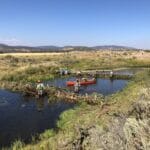
As the Klamath River is reconnected, Chrysten Rivard reflects on the partnerships and dedication guiding TU’s work for the basin’s fish, water and communities
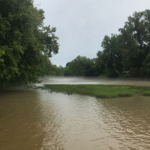
By Mark Taylor The river was brown. Coffee-with-heavy-cream brown. It’s-been-raining-for-days brown. You-don’t-have-a-chance-in-hell brown. “Top off the raft and get the stuff down to the shore while I go drop off the truck,” I told my fishing partner for the day, Brett Prettyman. “I’ll probably be back before you’re done.” So, if conditions were more appropriate…
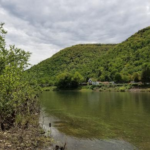
By Shawn Rummel The West Branch Susquehanna drains an area of approximately 7,000 squares miles in north-central Pennsylvania, a watershed that’s double the size of Yellowstone National Park. Due to the large amount of public land in the basin —more than one-third is state forest, state park, or state game lands — it is a tremendous…
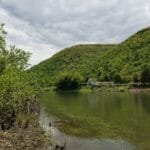
By Shawn Rummel The West Branch Susquehanna drains an area of approximately 7,000 squares miles in north-central Pennsylvania, a watershed that’s double the size of Yellowstone National Park. Due to the large amount of public land in the basin —more than one-third is state forest, state park, or state game lands — it is a tremendous resource for outdoor recreation.…
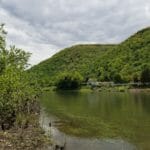
By Shawn Rummel The West Branch Susquehanna drains an area of approximately 7,000 squares miles in north-central Pennsylvania, a watershed that’s double the size of Yellowstone National Park. Due to the large amount of public land in the basin —more than one-third is state forest, state park, or state game lands — it is a tremendous…

Lahontan cutthroat trout genetics expand conservation options
I was driving home the other morning from my son’s school, where a prospective head of school had fielded questions from an auditorium full of parents. One father had asked how the candidate would promote critical thinking in an environment so well known for its “indoctrination” of our nation’s youth. He seemed to accept this reality, yet expressed hope that debate would be encouraged on controversial topics. One of them, no surprise, was…