Wielding the conservation power of the President
Conservation is the best idea that America ever gave the rest of the world.

Join our community of optimists and unlock the unlimited power of conservation.
Join our community of optimists and unlock the unlimited power of conservation.
Conservation is the best idea that America ever gave the rest of the world.
And what anglers who value the abundance of these fisheries can do to help
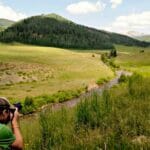
Josh Duplechian on a photo shoot in southwest Colorado. Scott Willoughby photo. As a rule of thumb, the media team at TU doesn’t talk about itself–we’re in the business of making great content and putting the spotlight on other people who fix and protect rivers. But as editor-in-chief of TU, I am grateful every day…
It’s been a year since the America the Beautiful Initiative launched, which set the ambitious goal of preserving 30% of our land and waters by 2030. Trout Unlimited supported this goal and even pushed it a step further. Here at TU, we’ve been saying “30 by 30 plus 20” because the Global Deal for Nature…
“Clean water and healthy waterways are critical elements of the Nation’s infrastructure system,” said Chris Wood, president and CEO of Trout Unlimited. “They are rightly recognized as such by the ‘Moving Forward Act.’ Today, amidst the COVID-19 pandemic, we can see that more clearly than ever before. As individuals, we need clean water to wash our hands and to drink. As communities, we need healthy waterways to sustain our farms, fisheries, our recreation, and our economies
Trout Unlimited recommends utilizing the Good Samaritan Remediation program to advance the initiative Last week, the White House Make America Beautiful Again (MABA) Commission released its strategic initiative MABA 250 to coincide with the 250th anniversary of the United States. Trout Unlimited looks forward to working alongside the commission and federal partners to advance shared priorities including: “balancing stewardship and economic growth, encouraging responsible conservation, restoring America’s wildlife, lands and waters, and protecting our Nation’s…
For the past seven years, Mark Hieronymus has been on a mission to explore and document previously unknown anadromous waters in Southeast Alaska for Trout Unlimited’s Fish Habitat Mapping project.
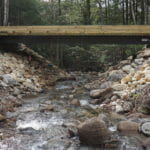
The bipartisan Infrastructure Investment and Jobs Act, just passed by the U.S. Senate, would deliver a major shot in the arm to trout and salmon conservation efforts across the country. This bill would rebuild, improve and restore America’s infrastructure through a variety of programs, many of which directly support TU’s water, restoration, forest health and mine remediation efforts.
Restoration Ripple Effects: Co-benefits to fish, wildlife, and communities. River restoration benefits more than fish. Healthy and restored river corridors have room to move, taking on complex and connected forms. Water can readily access the floodplain as water rises, slowing a river’s flow, providing diverse habitats to both aquatic and terrestrial species, and cleaning water…
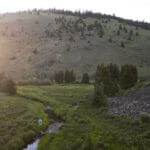
USFWS fish passage funding provided by the Bipartisan Infrastructure Law will support TU projects in Priority Waters across eight states
With the end of the 115th Congress rapidly approaching, America’s lawmakers have a prime opportunity to advance the interests of anglers and sportsmen and -women across the country. Trout Unlimited urges members of Congress to do just that prior to January 3, 2019.In particular, the current lame-duck session of Congress provides the opportunity to reauthorize…
By Kate Miller Nearly halfway through fiscal year 2018, Congress finally approved an appropriations bill to fund government ag encies for the remainder of the year. Last week, President Trump signed the bill into law, bringing to a close months of tense negotiations, two government shutdowns, five continuing resolutions and lots of high drama and…
By Corey Fisher What can you do in a roadless area? Just about anything. What is a roadless area? Roadless areas, or Inventoried Roadless Areas, are generally those undeveloped portions of National Forests 5,000 acres or larger that are not designated as Wilderness, but that meet to minimum criteria for for consideration under the Wilderness…
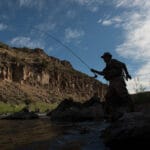
There is no opportunity for productive fishing or hunting if there is no productive habitat in which to sling a line, spot and stalk or swing an over-under. Bottom line.
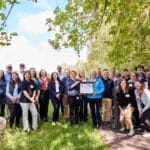
TU’s sticktuitiveness at work on a Priority Water in California
Trout Unlimited Media Resources Trout Unlimited is the nation’s leading conservation organization uniting people behind clean waters, healthy fish, and thriving communities. Are you a reporter on deadline? Reach out to one of our communications directors to get the information you need. Working on a longer piece about trout and salmon, rivers and streams, and…
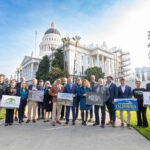
Contacts: Katie Hawkins, California Policy Manager, Trout Unlimited katie.hawkins@tu.org, (530) 414-0388 Joel Weltzien, California Chapter Coordinator, Backcountry Hunters and Anglers weltzien@backcountryhunters.org, (406) 925-3771 Sacramento, CA — Trout Unlimited (TU) and the California Chapter of Backcountry Hunters and Anglers (BHA) announced their support for California Assembly Bill 1624, which will conserve habitat and sporting opportunity by protecting the conservation value of any federal public lands within the state that are…
Bill simultaneously creates jobs and healthier rivers and communities For immediate release 7/1/2020 Contact: Shauna Stephenson (307) 757-7861 shauna.stephenson@tu.org (July 1, 2020) WASHINGTON DC — The “Moving Forward Act,” H.R. 2, passed the U.S. House today with a vote of 233 to 188. “Clean water and healthy waterways are critical elements of the Nation’s infrastructure system,” said…
By Mark Taylor In the early morning hours Saturday, Congress stepped up to protect one of America’s most historic watersheds. The Delaware River Basin Conservation Act, first introduced in 2010 and long a priority for Trout Unlimited and our partners in the region, finally cleared both the House and Senate as a provision…
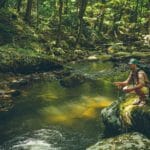
An angler in the George Washington National Forest By Corey Fisher Trout Unlimited is devoting the month of September to celebrating public lands and the agencies dedicated to upholding America’s public land heritage. It’s no coincidence that National Hunting and Fishing Day and National Public Lands Day are both during September — the month is…