In Michigan, schoolkids get their hands dirty for healthy trout
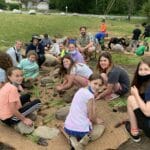
In Michigan’s Rogue River watershed, TU has been looking to schoolyards adjacent to trout streams to analyze their potential to improve local watershed health.

Join our community of optimists and unlock the unlimited power of conservation.
Join our community of optimists and unlock the unlimited power of conservation.
In Michigan’s Rogue River watershed, TU has been looking to schoolyards adjacent to trout streams to analyze their potential to improve local watershed health.
Abandoned mines are a problem – a big problem. Today, there are some 500,000 abandoned mines across America. Many of these chronically leak heavy metals and other toxic residues into streams and groundwater. In the western U.S., 33,000 abandoned mine sites have degraded the environment, including popular trout streams such as the Animas River in…
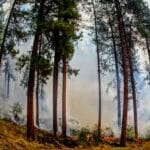
With massive projects like the proposed forest and watershed restoration efforts in Arizona come massive roadblocks. But roadblocks won’t deter Arizona Trout Unlimited from accomplishing its critical goals of forest and, therefore, watershed restoration. If you’ll recall in our first blog post in this series, AZTU has been at the table urging forest restoration initiatives through the Four Forest Restoration Initiative (4FRI) to enhance watershed health…
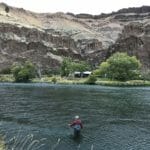
Among the many charms of autumn is the advent of steelhead runs in many rivers. Where I live, on the central California coast, most streams aren’t yet connected to the ocean—until the rainy season begins in earnest, the sandbars that have set up over the summer between their mouths and the salt remain intact. That…

Mabel Creek is in the Upper Youngs River, above 90-foot-tall Young River Falls, so the native coastal cutthroat trout populations above the falls persist largely undisturbed by decades of hatchery production focused on targeted anadromous fisheries downstream in Youngs Bay near Astoria. While located on private timber land, the Upper Youngs River area is open…

Last fall, Grand Valley State University students from the ‘Producing for Clients’ class worked with Trout Unlimited staff in Michigan to produce a video covering the exciting new initiative called the Rogue River Tree Army. Students filmed footage and interviews over multiple field days as the Tree Army, made up of staff and volunteers, planted thousands of…
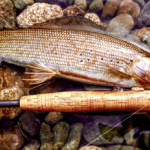
Grayling are a tough fish to reintroduce to former habitat. For a long time, it was assumed that once the sailfish of the north winked out of a certain watershed, they were gone for good. Over the last 20 years, though, grayling reintroduction in Montana has shown promise. And, in just the last five years,…

Wader sales that give back will help raise money for ecosystem restoration after devastating floods
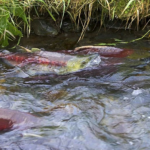
By Charlie Schneider Note: California’s Russian River is famous among anglers for its steelhead fishery, but in recent years this watershed has been the focus of an intensive effort to recover coho salmon, now one of the rarest native fishes in California. TU grassroots and programs such as the Coastal Streamflow Stewardship Project have been…
Conservation should be a true partnership between landowners, agencies, municipalities, and all stakeholders. We protect critical habitat, reconnect degraded waterways, and restore populations to coldwater fisheries. We use sound science to inform our priorities, using critical data on the health of these fisheries to guide our conservation efforts. Fisheries management Our ‘whole watershed’ vision of…
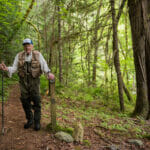
A life spent not just chasing steelhead but fighting to protect the water they called home.
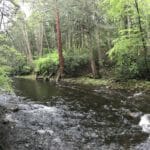
More than 600 miles of streams in New Jersey have gained additional protections On April 7, the New Jersey Department of Environmental Protection (NJDEP) solidified a yearlong effort by Trout Unlimited and our partners to formally upgrade more than 600 miles of rivers and streams to Category One (C-1) protections, one of the strongest clean water protection standards offered in the Garden State. …
STATE OF THE BASIN For far too long, the Colorado River has been overused and overworked. Despite this year’s epic winter, the system’s largest reservoirs are still less than a third full, while the Basin faces threats to its environmental, economic, and cultural values. With so much at stake for the future of the Colorado…
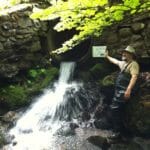
By Keith Curley I left New Hampshire 16 years ago to come work for TU in Arlington, Va., but often return home to visit family and reconnect with the rivers, lakes and streams where I learned to fish. On one recent trip I had the good fortune of joining TU’s New Hampshire State Council for…
July 11, 2014 Contact: Steve Moyer (703) 284-9403 FOR IMMEDIATE RELEASE: Trout Unlimited welcomes Rep. DeFazios mining reform legislation Bill provides mine cleanup funding and helps voluntary cleanups WASHINGTONTrout Unlimited welcomed a bill introduced by Rep. Peter DeFazio of Oregon to create a revenue stream for abandoned mine cleanups and provide much-needed liability relief for…
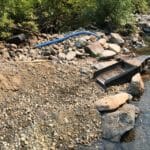
Washington commonly institutes fishing restrictions to protect vulnerable fish populations, like they did for steelhead in Scotty Creek, but these restrictions, unfathomably, do not extend to a destructive form of recreational gold mining called suction dredge mining.
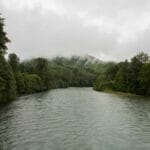
TU volunteers greatly expand their restoration work through new collaboration with state and federal partners Last summer, the Clackamas River TU chapter partnered with the Oregon Department of Fish and Wildlife (ODFW) and the US Forest Service to have a powerful, twin-engine helicopter place nearly 400 huge logs into Berry and Cub Creeks, two important…

As the year draws to a close, let’s celebrate a few of the victories that all of you—members, supporters, partners, donors, and our staff around the country—made possible
3/15/2007 Report: Ground Water Pumping Poses Serious Threat to the West’s Fish and Wildlife Resources and Senior Surface Water Right Holders EMBARGOED UNTIL: March 15, 2007 10:00 A.M. (MST) Contact: Melinda Kassen (303) 440-2937 x100 David Stillwell (303) 440-2937 x105 CA — Brian Johnson (510) 528-4772 ID — Kim Goodman (208) 552-0891 x712 MT —…
FOR IMMEDIATE RELEASE Contact: Erin Mooney, National Press Secretary: (571) 331-7970emooney@tu.org Trout Unlimited Receives Prestigious American Fisheries Society AwardEastern Abandoned Mine Program receives distinction for work in Pennsylvania Arlington, Va. Trout Unlimited’s Eastern Abandoned Mine Program (EAMP) was recently honored with one of the American Fisheries Society’s (AFS) highest awards, the Presidents Fishery Conservation Award.…