Search results for “delaware river basin”
By Jake Tomlinson The past year was a big one for Trout Unlimited’s Pennsylvania Coldwater Habitat Program, which works with a variety of partners and funding sources to protect critical habitat, reconnect degraded waterways, and restore populations of coldwater fisheries. During the 2018 field season, TU completed more than 8,000 feet of streambank stabilization and habitat improvement, reducing by approximately 37 tons the…
How TU staffers in Utah are taking their local landscapes back to the times of mountain men
As TU founder Art Neumann famously stated, “Take care of the fish and the fishing will take care of itself.” But we’re predominantly fly fishing, after all. So what about the bugs? Who’s looking after them? As it turns out — on the Colorado River below Glen Canyon Dam, anyway — the U.S. Geological Survey is doing just that. It may mark the dawn…
The Upper Rio Grande Initiative aspires to leverage our ongoing and future efforts towards basin scale resilience. This vision not only entails the protection and enhancement of the Rio’s natural ecosystems, but its profoundly adaptive human resources as well. The Initiative acknowledges the interconnectedness of the basin’s ecosystems, its economy and culture. Thus, the ecological outcomes we achieve will not be at the expense of the cultural and economic resilience of our partner communities, but exactly because of it. Protect Protecting functioning streams and habitat–as in our efforts to secure Outstanding Natural Resource designations for several New Mexico streams–will be a top priority. Protecting the Pecos River basin from…
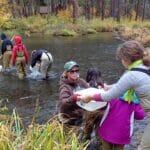
Students have connected to our restoration projects and helped us improve sections of 5 watersheds and 50 river miles for our fish and wildlife. Our goal has been to inspire students to study their local river, appreciate the unique habitat, and empower our youth and families to care for each river now and into the future.
12/21/2000 White House Releases Final Snake River Plan White House Releases Final Snake River Plan Environmental leaders encouraged that plan has been improved, but still have concerns Contact: 12/21/2000 — — A joint press release from: American Rivers Friends of the Earth National Wildlife Federation Sierra Club: Bill Arthur Taxpayers for Common Sense Trout Unlimited…
Here’s everything you need to know to plan your trip to Arapaho NWR.
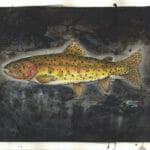
Today we only have Lahontan cutthroat trout in 73 streams across the Great Basin — almost all are isolated and most of those populations exhibit low genetic diversity
11/17/2008 Ladders Boost Fish Recovery in Idahos Big Lost River Nov. 17, 2008 FOR IMMEDIATE RELEASE Contact: Kim Goodman Trotter, director, Idaho Water Project, (208) 552-0891 or ktrotter@tu.orgOr Bart Gamett, (208) 588-2224, or bgamett@fs.fed.us Ladders Boost Fish Recovery in Idahos Big Lost RiverIdaho Water Project clears habitat hurdle: Whitefish cant jump Idaho Falls, Idaho A…
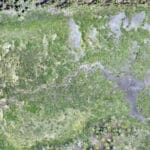
Process-Based Restoration Process-Based Restoration (PBR) is an approach to stream and river restoration that mimics sediment transport, wood recruitment and transport, beaver dam building, and other natural processes to achieve restoration goals. For example, beaver dam analogs may be used to trap sediment and raise the elevation of the streambed, which can increase water table…

I’ve found that the most dedicated anglers tend to be those who relish challenges, even simple ones like, “how am I going to trick that creature, hiding behind that rock, to eat this fly?”
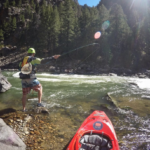
By Scott Willoughby They call it Fisherman’s Nightmare. And as scare tactics go, it’s as accurate as it is effective. Floating into the chaotic jumble of rocks and water that serves as sentinel to the Colorado River’s daunting Gore Canyon, it’s easy to imag ine how the rapids earned their name. Dropping precipitously from the…

Chris Wood is joining the leaders of other national conservation organizations to move forward with solutions for wild salmon recovery in the Snake River.
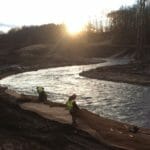
Trout Unlimited has been acting as a sub-contractor to provide construction oversight of the Boardman Dam Removal river restoration project in Traverse City, Mich., an effort that will continue through early 2018. The Boardman Dam, originally constructed in 1894 as a hydropower generation dam, had no fish passage capabilities. The project is one of three…
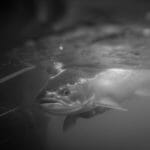
Editors note: Every Friday, our science junkies over at Trout Unlimited’s Wild Steelhead Initiative give us an inside look at what’s happening in the world of steelhead science. During the Holidays, we’re running the best of those Science Friday pieces on the TU blog. If you’ve ever spent any time thinking about the sheer game…
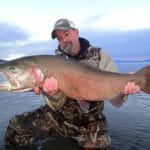
Doug Ouelette, Sagebrush Trout Unlimited Chapter board member, with a 21-pound Lahontan cutthroat trout caught at Pyramid Lake in Nevada. Courtesy photo. By Brett Prettyman If you dream of landing big trout chances are you have heard of the mighty Lahontan cutthroat of Pyramid Lake in Nevada. While the native fish approaching 30 pounds are…
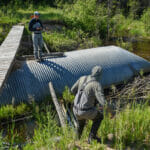
Bipartisan Infrastructure Law funding supports projects in Washington State, California, Michigan, and Wisconsin
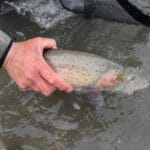
Lahontan cutthroat trout (Oncorhynchus clarki henshawi) Species Summary and Status: The Lahontan cutthroat trout is native to the Lahontan Basin of northern Nevada, northeastern California, and southeastern Oregon. One of the oldest lineages of cutthroat trout, it originally inhabited the ancient Lahontan Basin at least several 100,000 years ago. As of publication, 72 self-sustaining Lahontan…
This week, Congress passed the omnibus spending bill, which will fund the federal government until next year. The legislation also includes several significant western water bills critical to Trout Unlimited’s work in the West. TU thanks the House and Senate leadership for the passage of these important water bills
The rest of us, not so much. Winter continues in the West, but that’s ok with us anglers.