Search results for “delaware river basin”
Wheeler wants the fish back. The Nez Perce people want the fish back. So does the Yakima nation, the Nisqually, the Sauk-Suiattle, the Nooksack. All united to one cause—bring the Snake River salmon back for once and for all. Bring the dams down.
A stream roiling dark with Chinook salmon in central Idaho’s wilderness high country. A throb, a pulse of life into a pristine river, the abundance of the ocean arriving in the flesh of thousands of salmon in a wild mountain river hundreds of miles inland. This was. This was life itself, for the land, for the water, for the people.
TU volunteers greatly expand their restoration work through new collaboration with state and federal partners Last summer, the Clackamas River TU chapter partnered with the Oregon Department of Fish and Wildlife (ODFW) and the US Forest Service to have a powerful, twin-engine helicopter place nearly 400 huge logs into Berry and Cub Creeks, two important…
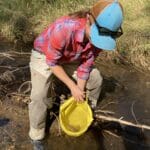
The new programs and authorizations under the Water for Conservation and Farming Act are designed to invest in the nexus between our agricultural sector and healthy, free-flowing streams.” ~TU’s Chrysten Lambert

By Cary Denison As we welcome in the final act of this chain of Dumpster fires known as the year 2020, I thought I’d take a bit of time to reflect on what last year provided and what the future may hold. Aside from the obvious pandemic, wildfire, crippling drought, social and political unrest, I…
1/14/2003 Trout Unlimited Buys Renewable Energy to Power Columbia Basin Field Offices Trout Unlimited Buys Renewable Energy to Power Columbia Basin Field Offices Contact: Alan Moore Western Communications Coordinator Trout Unlimited (503) 827.5700 1/14/2003 — Portland, Oregon — Trout Unlimited, the nation’s largest trout and salmon conservation organization, today launched its “Salmon Generation” green power…

Get to know Lindsay Slater, TU vice president for government affairs

An historic mill, and its former owner, are playing a key role in a collaborative effort to save native fish in an important Rogue River tributary. This campaign reached a milestone recently with a formal agreement to sell the mill’s historic water right to Trout Unlimited, with two years to raise the funding.
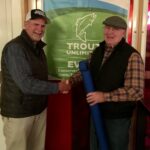
The Oregon Council of Trout Unlimited is proud to announce that Terry Turner and Dick Hollenbeck are the newest recipients of the Forest Service’s Rise to the Future Award. Both Turner and Hollenbeck hail from the Clackamas Chapter of Trout Unlimited (TU), where they have each served in various leadership capacities. Dick Hollenbeck also served…
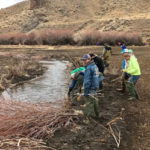
Sawmill Creek is a tributary to the Lemhi River. The Lemhi River watershed is one of the highest elevation and farthest inland reaches for fish migration in the world, as the new signs point out. The watershed is also one of the most important spawning and rearing habitat areas for salmon and steelhead in the Columbia Basin.
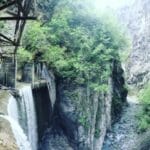
The Eklutna River basin, tucked away in a valley not far from Anchorage, is rich with history. It’s the homeland of the Native Village of Eklutna, a source of drinking water for Southcentral Alaska, and a favorite recreation area for local residents. The river, once a thriving salmon fishery, has been greatly diminished by inadequate…
The impacts of dams on anadromous (sea-run) fish are well documented. But today, many dams have outlived their usefulness, or become unprofitable or unsafe. Removing such dams is now a proven way to recover salmon and steelhead populations. Trout Unlimited has supported the removal or retrofitting of dams on a number of high-profile salmon and…
The Trout Unlimited Driftless Area Restoration Effort (TUDARE) was started by Trout Unlimited volunteers to expand capacity for stream restoration projects in the unglaciated region of the Upper Mississippi River Basin in Wisconsin, Minnesota, Iowa and Illinois. TUDARE works to bring together partners from nonprofit conservation groups, community groups, schools, federal, state, and other agencies…
Nov. 17, 2008 FOR IMMEDIATE RELEASE Contact: Kim Goodman Trotter, director, Idaho Water Project, (208) 552-0891 or ktrotter@tu.orgOr Bart Gamett, (208) 588-2224, or bgamett@fs.fed.us Ladders Boost Fish Recovery in Idahos Big Lost RiverIdaho Water Project clears habitat hurdle: Whitefish cant jump Idaho Falls, Idaho A rare strain of native whitefish is poised for recovery in…
TROUT UNLIMITED CALLS FOR RENEWED FOCUS ON STREAMFLOWS AND HABITAT RESTORATION AS CALIFORNIA SALMON COLLAPSE LEADS TO FISHING CLOSURES Dramatically reduced commercial and recreational salmon fishing in California for 2017 season linked to recent drought, water management miscues CONTACT:Brian Johnson, California/Oregon Directorbjohnson@tu.org / 510-528-4772 (April 11, 2017) EMERYVILLE, Calif.Trout Unlimited today decried the collapse of…
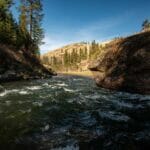
Half-measures will ensure the extinction of salmon and steelhead in the Snake River basin, and nothing more.
Trout Unlimited Press Release Oct. 29, 2013 Contact: Laura Ziemer, 406-599 2606 lziemer@tu.org Steve Moyer, 571-274-0593 smoyer@tu.org FOR IMMEDIATE RELEASE Trout Unlimited urges infrastructure upgrades to secure Western water supply, protect river habitat Water supply solutions often require new thinking, not a bigger bathtub WASHINGTON, D.C., Oct. 29, 2013Speaking today at a U.S. House hearing…

On World Water Day, we ask ourselves not just what water means to us, but “What we can do to make it better, cleaner and more available in our communities and environment?” Learn more about the impacts of abandoned mine pollution on communities across the United States. And then check out this video to learn…

“Removing the Lower Snake River dams is a move to make sure that steelhead and salmon can reach their native waters and continue to inspire generations to come. They are simply too important not to remove a giant thorn in their side.”
Trout Unlimited works with our conservation partners to identify areas where protection and restoration can benefit not only trout and salmon, but also other fish, aquatic species and human communities. TU scientists were instrumental in developing the Native Fish Conservation Area concept, where watershed management is focused on the long-term persistence of native fish communities…